
Lifestyle
Vancouver’s SkyTrain: Inspired by Vienna’s Modern Transit Design

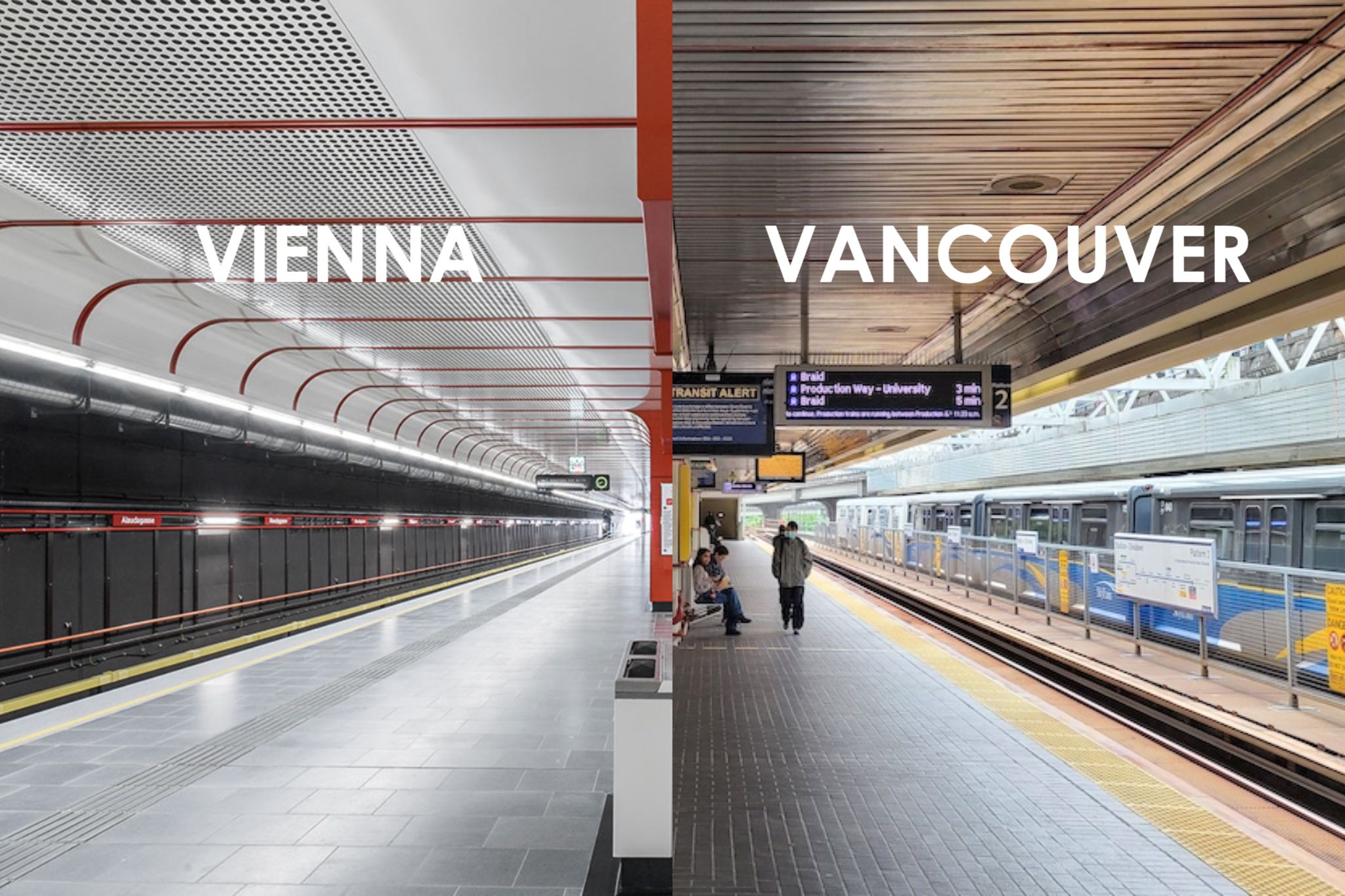
When the SkyTrain system debuted in Metro Vancouver on December 11, 1985, it marked a significant advancement in urban transit technology. This fully automated, driverless rail system was among the largest of its kind globally and served as a vital component of the transportation framework during the Expo ’86 World’s Fair. The original line, named the Expo Line in 2002, was constructed in phases from 1982 to 1994, with the first segment running from Waterfront Station to New Westminster.
Subsequent extensions followed the successful completion of the Expo, with construction reaching Columbia Station by 1989, Scott Road Station in 1991, and King George Station in 1994. In 2016, the lines were restructured to accommodate the Evergreen extension, leading to a reclassification of segments and changes in the operational routes. Currently, a major extension of the Expo Line, spanning 16 kilometers from King George Station to Langley City Centre, is underway and will add eight new stations to the system.
The architectural evolution of the SkyTrain system reflects changing design paradigms, with the latest stations showcasing a departure from the original 1980s designs. These changes are influenced by updated best practices in materials, accessibility, passenger flow, and crime prevention strategies, alongside evolving architectural styles. Despite the system’s acclaim as a leader in North American rail transit, the design origins of the early SkyTrain stations are often overlooked.
What many commuters might not know is that the design of Vancouver’s initial SkyTrain stations drew inspiration from the Vienna U-Bahn. The provincial government, through BC Transit, collaborated with the Austrian architectural firm Architektengruppe U-Bahn (AGU), which had recently designed modern stations for the Vienna metro system. This partnership marked a rare instance of a Canadian transit system adopting European design principles, contributing to a distinct architectural identity that revitalized public transit in the region.
Between 1982 and 1986, AGU worked closely with Vancouver’s Allen Parker & Associates to develop the first 15 stations of the Expo Line. The minimalist modernist design of Vienna’s U-Bahn stations, characterized by efficient layouts and human-scaled architectural elements, became evident in the early SkyTrain stations. Local public transit advocate Darryl Dela Cruz has highlighted the similarities through recent photographs, which reveal clear parallels between the Vienna stations and those found in Vancouver.
The use of standardized designs and materials facilitated the rapid construction of the Expo Line, allowing it to meet the deadline for the World’s Fair. The first prototype station, Main Street-Science World, was completed in 1983, followed by the remaining stations built from Summer 1983 to late 1985. Unique architectural features like rounded structural forms and hoop-truss designs are visible in several stations, including Waterfront and Stadium-Chinatown, echoing Vienna’s U-Bahn aesthetics.
Despite the shared design heritage, maintenance practices have resulted in a noticeable divergence in the condition of the two systems. While Vienna’s U-Bahn stations have remained well-preserved, Vancouver’s early SkyTrain stations show signs of aging and wear. Dela Cruz notes that frequent renovations have led to the loss of distinctive design features in several major stations, such as those at Commercial-Broadway and Metrotown.
The subsequent phases of the Expo Line, designed by different architects, maintained some of the initial design principles but adopted a more diverse architectural expression. The original Millennium Line stations, built in the early 2000s, embraced individuality over standardization, leading to a collection of unique station designs. Notably, Brentwood Town Centre Station, designed by Busby + Associates Architects, received accolades for its innovative use of glass and wood materials.
Later projects, such as the Canada Line, returned to a more standardized approach primarily for cost reasons, although some stations, like YVR Airport Station, featured expressive designs funded by the Vancouver Airport Authority. The Evergreen extension of the Millennium Line opened in 2016 with a blend of design philosophies, striving for both efficiency and unique character, reminiscent of the original Millennium Line’s architectural intent.
Looking ahead, the upcoming Millennium Line Broadway Extension is set to open in Fall 2027, with a design approach that emphasizes functionality and clarity. The Expo Line’s Surrey-Langley extension, projected for completion by late 2029, will also reflect a return to the principles established in the 1980s. Each of the eight new stations will incorporate distinct colored glass panels, enhancing visual appeal and aiding wayfinding for passengers.
As the SkyTrain system continues to evolve, it remains essential to recognize its architectural roots. The influence of the Vienna U-Bahn serves as a reminder of the importance of thoughtful design in public transit, contributing to both functionality and passenger experience.

Community Remembers Margaret Gross, Beloved Matriarch and Friend

BusinessAI Launches as Australia’s First Full-Service AI Partner

Google Forms Introduces Automated Closure Features for Users

Quebec Watchdog Critiques SAAQclic Project for Lack of Transparency

Lake Babine Nation Student Teachers Secure Global Placements

Nova Scotia Power Allocates $20M to Refurbish Soon-to-Retire Coal Plant

Calgary Drops in Global Quality of Life Rankings, Now 95th

University of Saskatchewan Secures $7 Million for Crop Research

Arctic Winter Games Implements Measles Isolation Protocol for Participants

X Platform Recovers After Global Outage Disrupts Thousands

Brandon University’s Failed $5 Million Project Sparks Oversight Review

Microsoft Confirms U.S. Law Overrules Canadian Data Sovereignty

Winnipeg Celebrates Culinary Creativity During Le Burger Week 2025

Montreal’s Groupe Marcelle Leads Canadian Cosmetic Industry Growth

Tech Innovator Amandipp Singh Transforms Hiring for Disabled

Dragon Ball: Sparking! Zero Launching on Switch and Switch 2 This November

New SĆIȺNEW̱ SṮEȽIṮḴEȽ Elementary Opens in Langford for 2025/2026 Year

Red River College Launches New Programs to Address Industry Needs

Rocket Lab Reports Strong Q2 2025 Revenue Growth and Future Plans

Google Pixel 10 Pro Fold Specs Unveiled Ahead of Launch
-
 Education4 months ago
Brandon University’s Failed $5 Million Project Sparks Oversight Review
-
 Science5 months ago
Microsoft Confirms U.S. Law Overrules Canadian Data Sovereignty
-
 Lifestyle5 months ago
Winnipeg Celebrates Culinary Creativity During Le Burger Week 2025
-
 Health5 months ago
Montreal’s Groupe Marcelle Leads Canadian Cosmetic Industry Growth
-
 Science5 months ago
Tech Innovator Amandipp Singh Transforms Hiring for Disabled
-
 Technology5 months ago
Dragon Ball: Sparking! Zero Launching on Switch and Switch 2 This November
-
 Education5 months ago
New SĆIȺNEW̱ SṮEȽIṮḴEȽ Elementary Opens in Langford for 2025/2026 Year
-
 Education5 months ago
Red River College Launches New Programs to Address Industry Needs
-
 Business4 months ago
Rocket Lab Reports Strong Q2 2025 Revenue Growth and Future Plans
-
 Technology5 months ago
Google Pixel 10 Pro Fold Specs Unveiled Ahead of Launch
-
 Top Stories1 month ago
Canadiens Eye Elias Pettersson: What It Would Cost to Acquire Him
-

 Technology3 months ago
Discord Faces Serious Security Breach Affecting Millions
-

 Education5 months ago
Alberta Teachers’ Strike: Potential Impacts on Students and Families
-

 Business1 month ago
EngineAI Unveils T800 Humanoid Robot, Setting New Industry Standards
-

 Business5 months ago
BNA Brewing to Open New Bowling Alley in Downtown Penticton
-

 Science5 months ago
China’s Wukong Spacesuit Sets New Standard for AI in Space
-

 Lifestyle3 months ago
Canadian Author Secures Funding to Write Book Without Financial Strain
-

 Business5 months ago
New Estimates Reveal ChatGPT-5 Energy Use Could Soar
-

 Business3 months ago
Hydro-Québec Espionage Trial Exposes Internal Oversight Failures
-

 Business5 months ago
Dawson City Residents Rally Around Buy Canadian Movement
-

 Technology5 months ago
Future Entertainment Launches DDoD with Gameplay Trailer Showcase
-

 Top Stories4 months ago
Blue Jays Shift José Berríos to Bullpen Ahead of Playoffs
-

 Technology5 months ago
World of Warcraft Players Buzz Over 19-Quest Bee Challenge
-

 Top Stories3 months ago
Patrik Laine Struggles to Make Impact for Canadiens Early Season