
Technology
Innovative Building in Henan Grows Food on Every Floor

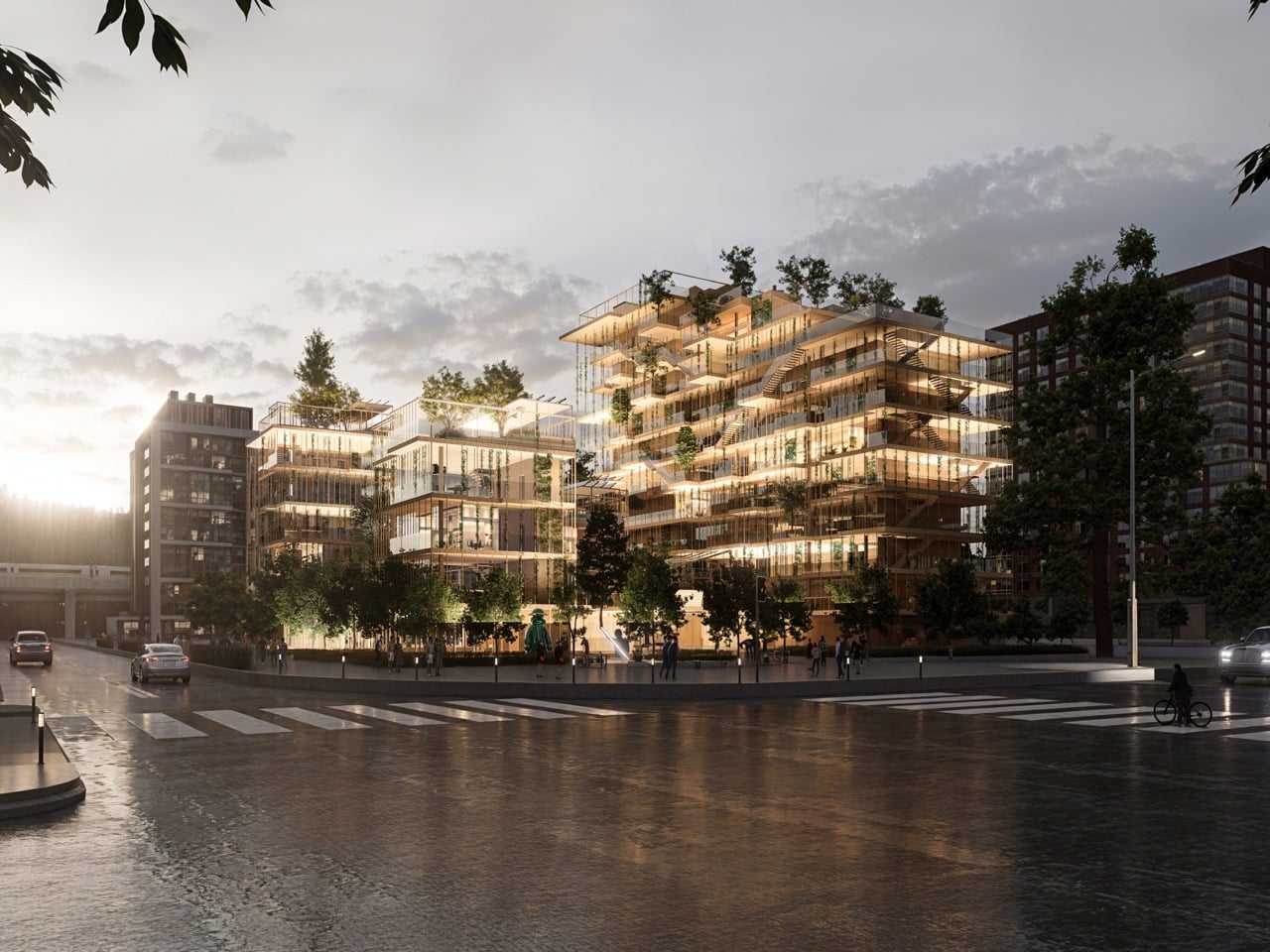
A new architectural project in Henan, China, exemplifies a transformative approach to urban development by integrating agriculture into its structure. The **Verdant Syndicate**, designed by architect **Wei Dou**, is a mixed-use complex that occupies **4,269 square meters** of former farmland. This innovative building not only preserves the agricultural identity of the site but also redefines how urban spaces can coexist with nature.
The complex consists of two offset stepped volumes that flank a shared courtyard. The design features warm timber cladding and cascading vertical vegetation that extends from the ground to the roof. This living system is made possible by a tenant-operated planting board system. Modular growing panels are connected to embedded water and nutrient lines, allowing tenants to cultivate food directly within the building. This approach transforms every terrace and balcony into productive growing surfaces.
The building utilizes a gravity-powered rainwater collection system for irrigation, eliminating the need for mechanical pumping. This sustainable feature closes the resource loop on a plot that historically provided food for the surrounding community. By integrating agricultural methods into the urban landscape, the **Verdant Syndicate** challenges conventional notions of city living.
Design Elements and Community Impact
The decision to separate the complex into two volumes rather than a single block ensures optimal solar access for the courtyard, a vital element for a vertical farm. The stepped terrace profile of the taller volume reflects traditional terraced agricultural landscapes, while the offset placement of the two blocks creates a communal ground-level space. This area serves as the social backbone of the entire complex, promoting community interaction.
Tenants have the flexibility to install, reconfigure, or remove individual planting panels, adapting the building’s productive surfaces to their specific needs and preferences each season. Unlike many biophilic buildings that treat greenery as a static aesthetic feature, the **Verdant Syndicate** fosters a dynamic system where maintenance is a shared, intentional effort among its occupants. This model enhances the potential for long-term sustainability.
The facade features slender vertical elements in a warm timber tone, with terraces designed to support substantial planting depth rather than mere decorative window boxes. Solar panels are integrated into a mid-level roof deck canopy, allowing for simultaneous energy harvesting and shade provision under the mature tree canopy. The ground floor incorporates retail space, creating an active commercial environment rather than the often lifeless pedestrian zones found in similar developments.
Addressing Urbanization Challenges
Located in a province with a rich agricultural heritage, **Henan** faces significant pressures from rapid urbanization. The **Verdant Syndicate** serves as a case study in how architectural innovation can address this challenge by merging agricultural and urban realities. It employs a gravity-fed water loop and a modular tenant farming system, alongside GIS and CAD-optimized solar orientation, to create a cohesive and functional living environment.
While the framework of the project is promising, the real test will be whether the planting board system performs as effectively in practice as it does in simulations. The building not only presents a visually striking solution to urban farming but also raises important questions about the future of sustainable living in rapidly changing environments.
The **Verdant Syndicate** stands as a testament to the potential of architecture to adapt and thrive in the face of urbanization, offering a glimpse into a future where cities and agriculture can coexist harmoniously.

iShares Core Dividend Growth ETF Faces Challenges; Alternatives Suggested

Discover 7 Scenic Hikes Near Calgary to Explore This Spring

Scientists Uncover Life’s Building Blocks in Ryugu Asteroid Samples

Windsor-Essex Unveils New Action Plan to Combat Substance Use

Boost Your Business Visibility with These Local SEO Strategies

East Algoma OPP Urges Public to Limit Travel Amid Hazardous Conditions

Universities Must Rethink Failure to Support Student Growth

Canada Invests $6.4 Million to Boost Green Shipping Corridors

Stony Plain Secures 14th Consecutive Award for Financial Reporting Excellence

Rhythm Pharmaceuticals Reports Strong Q4 Growth Ahead of FDA Decision

Brandon University’s Failed $5 Million Project Sparks Oversight Review

Microsoft Confirms U.S. Law Overrules Canadian Data Sovereignty

Discover Aritzia’s Latest Fashion Trends: A Comprehensive Review

Winnipeg Celebrates Culinary Creativity During Le Burger Week 2025

New SĆIȺNEW̱ SṮEȽIṮḴEȽ Elementary Opens in Langford for 2025/2026 Year

EngineAI Unveils T800 Humanoid Robot, Setting New Industry Standards

Montreal’s Groupe Marcelle Leads Canadian Cosmetic Industry Growth

Tech Innovator Amandipp Singh Transforms Hiring for Disabled

Canmore’s Le Fournil Bakery to Close After 14 Successful Years

Dragon Ball: Sparking! Zero Launching on Switch and Switch 2 This November
-
 Education8 months ago
Brandon University’s Failed $5 Million Project Sparks Oversight Review
-
 Science9 months ago
Microsoft Confirms U.S. Law Overrules Canadian Data Sovereignty
-
 Lifestyle4 months ago
Discover Aritzia’s Latest Fashion Trends: A Comprehensive Review
-
 Lifestyle8 months ago
Winnipeg Celebrates Culinary Creativity During Le Burger Week 2025
-
 Education8 months ago
New SĆIȺNEW̱ SṮEȽIṮḴEȽ Elementary Opens in Langford for 2025/2026 Year
-
 Business5 months ago
EngineAI Unveils T800 Humanoid Robot, Setting New Industry Standards
-
 Health9 months ago
Montreal’s Groupe Marcelle Leads Canadian Cosmetic Industry Growth
-
 Science9 months ago
Tech Innovator Amandipp Singh Transforms Hiring for Disabled
-
 Lifestyle2 months ago
Canmore’s Le Fournil Bakery to Close After 14 Successful Years
-
 Technology9 months ago
Dragon Ball: Sparking! Zero Launching on Switch and Switch 2 This November
-

 Technology4 months ago
Digg Relaunches as Founders Kevin Rose and Alexis Ohanian Join Forces
-
 Top Stories5 months ago
Canadiens Eye Elias Pettersson: What It Would Cost to Acquire Him
-

 Health7 months ago
Eganville Leader to Close in 2026 After 123 Years of Reporting
-

 Lifestyle6 months ago
Edmonton’s Beloved Evolution Wonderlounge Closes, New Era Begins
-

 Top Stories5 months ago
Nicol Brothers Shine as Wheat Kings Dominate U18 AAA Hockey
-

 Education8 months ago
Red River College Launches New Programs to Address Industry Needs
-

 Business8 months ago
BNA Brewing to Open New Bowling Alley in Downtown Penticton
-

 Business8 months ago
Rocket Lab Reports Strong Q2 2025 Revenue Growth and Future Plans
-

 Education6 months ago
Alberta Petition Aims to Redirect Funds from Private to Public Schools
-

 Education8 months ago
Alberta Teachers’ Strike: Potential Impacts on Students and Families
-

 Technology7 months ago
Discord Faces Serious Security Breach Affecting Millions
-

 Technology9 months ago
Google Pixel 10 Pro Fold Specs Unveiled Ahead of Launch
-

 Education5 months ago
ʔaq̓am Education Law Enacted, Affirming Self-Governance Rights
-

 Business8 months ago
Iconic Golden Lion Restaurant in South Surrey to Close After 50 Years