
Science
Robotics Industry Demands Practical Humanoid Applications at CES

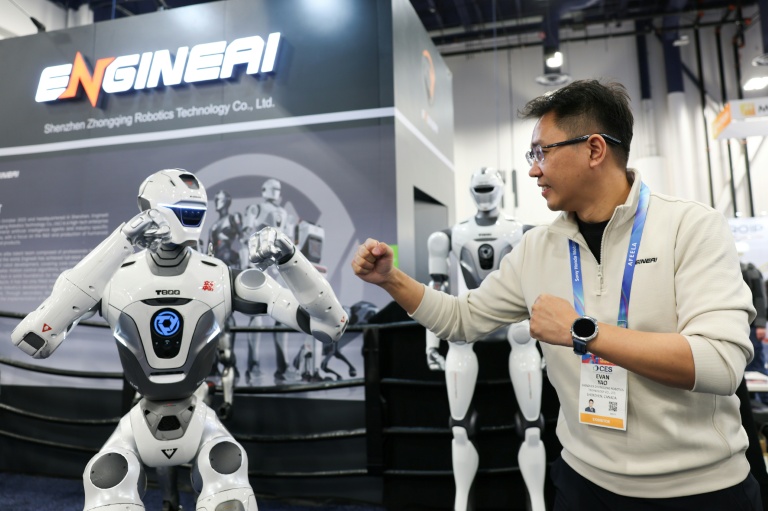
Humanoid robots showcased their capabilities at the recent Consumer Electronics Show (CES) in Las Vegas, performing a range of tasks from dance routines to playing ping-pong. Despite the impressive displays, industry experts emphasize the urgent need for these robots to evolve beyond entertainment to fulfill practical roles in everyday life. Significant advancements in technology are necessary before these machines can operate autonomously in environments such as homes and factories.
As the robotics sector continues to capture attention at CES, insiders like Henny Admoni, an associate professor at the Robotics Institute at Carnegie Mellon University, highlight the challenges ahead. To achieve true autonomy, humanoid robots require advanced artificial intelligence (AI) that can interpret sensory information and translate it into actionable responses. Current large language models, such as those powering tools like ChatGPT, are not equipped for this purpose.
Admoni noted, “If you want robots to learn embodied things, you have to put them inside a body.” This sentiment reflects a broader frustration within the industry regarding the pace of development. Christian Rokseth, founder of Humanoid Guide, likened the current state of robot training to confining a child in a room and expecting them to learn about the world independently. He stressed the need for robots to demonstrate practical productivity rather than merely perform choreographed routines.
In a similar vein, Evan Yao, founder of EngineAI, is collaborating with major tech companies, including Amazon and Meta, to enhance the AI capabilities of their robots. “We are trying to simulate humans, but the robots will never become human,” Yao explained. His comments underline the inherent limitations of robotic technology, emphasizing that while robots can mimic human actions, they lack the emotional depth and adaptability of real people.
Market Growth and Practical Applications
The Consumer Technology Association, which organizes CES, reports that the global robotics market is poised to reach $179 billion by 2030. A significant portion of this growth is expected in sectors like warehouses and manufacturing, where robots are increasingly integrated into operations. However, Artem Sokolov, founder of a London-based humanoid robotics startup, argues that for robots to thrive in these environments, they must closely mimic human capabilities.
At CES, Hyundai unveiled a humanoid robot named Atlas, developed in partnership with Boston Dynamics, which aims to undergo testing in factory settings. While these innovations are promising, experts urge caution regarding claims about fully autonomous humanoid robots. Admoni pointed out that many systems still rely on teleoperation, where a human operator guides the robot’s movements remotely.
To address the challenge of robot training, new startups are exploring innovative approaches. Rokseth mentioned the use of cameras and haptic gloves worn by individuals performing household chores as a means of teaching robots. “To make robots general machines, they need to be let out in the real world,” he stated, advocating for field testing beyond controlled settings like assembly lines.
As the robotics industry progresses, the balance between technological advancement and practical application remains a focal point. The enthusiasm surrounding humanoid robots at CES serves as a reminder of the potential they hold, yet the industry’s leaders recognize that substantial work lies ahead before these machines can fully integrate into society.

iShares Core Dividend Growth ETF Faces Challenges; Alternatives Suggested

Discover 7 Scenic Hikes Near Calgary to Explore This Spring

Scientists Uncover Life’s Building Blocks in Ryugu Asteroid Samples

Windsor-Essex Unveils New Action Plan to Combat Substance Use

Boost Your Business Visibility with These Local SEO Strategies

East Algoma OPP Urges Public to Limit Travel Amid Hazardous Conditions

Universities Must Rethink Failure to Support Student Growth

Canada Invests $6.4 Million to Boost Green Shipping Corridors

Stony Plain Secures 14th Consecutive Award for Financial Reporting Excellence

Rhythm Pharmaceuticals Reports Strong Q4 Growth Ahead of FDA Decision

Brandon University’s Failed $5 Million Project Sparks Oversight Review

Microsoft Confirms U.S. Law Overrules Canadian Data Sovereignty

Discover Aritzia’s Latest Fashion Trends: A Comprehensive Review

Winnipeg Celebrates Culinary Creativity During Le Burger Week 2025

New SĆIȺNEW̱ SṮEȽIṮḴEȽ Elementary Opens in Langford for 2025/2026 Year

EngineAI Unveils T800 Humanoid Robot, Setting New Industry Standards

Montreal’s Groupe Marcelle Leads Canadian Cosmetic Industry Growth

Tech Innovator Amandipp Singh Transforms Hiring for Disabled

Dragon Ball: Sparking! Zero Launching on Switch and Switch 2 This November

Canmore’s Le Fournil Bakery to Close After 14 Successful Years
-
 Education7 months ago
Brandon University’s Failed $5 Million Project Sparks Oversight Review
-
 Science8 months ago
Microsoft Confirms U.S. Law Overrules Canadian Data Sovereignty
-
 Lifestyle4 months ago
Discover Aritzia’s Latest Fashion Trends: A Comprehensive Review
-
 Lifestyle8 months ago
Winnipeg Celebrates Culinary Creativity During Le Burger Week 2025
-
 Education8 months ago
New SĆIȺNEW̱ SṮEȽIṮḴEȽ Elementary Opens in Langford for 2025/2026 Year
-
 Business4 months ago
EngineAI Unveils T800 Humanoid Robot, Setting New Industry Standards
-
 Health8 months ago
Montreal’s Groupe Marcelle Leads Canadian Cosmetic Industry Growth
-
 Science8 months ago
Tech Innovator Amandipp Singh Transforms Hiring for Disabled
-
 Technology8 months ago
Dragon Ball: Sparking! Zero Launching on Switch and Switch 2 This November
-
 Lifestyle1 month ago
Canmore’s Le Fournil Bakery to Close After 14 Successful Years
-

 Technology3 months ago
Digg Relaunches as Founders Kevin Rose and Alexis Ohanian Join Forces
-
 Top Stories4 months ago
Canadiens Eye Elias Pettersson: What It Would Cost to Acquire Him
-

 Health7 months ago
Eganville Leader to Close in 2026 After 123 Years of Reporting
-

 Education8 months ago
Red River College Launches New Programs to Address Industry Needs
-

 Top Stories4 months ago
Nicol Brothers Shine as Wheat Kings Dominate U18 AAA Hockey
-

 Business8 months ago
BNA Brewing to Open New Bowling Alley in Downtown Penticton
-

 Business7 months ago
Rocket Lab Reports Strong Q2 2025 Revenue Growth and Future Plans
-

 Lifestyle5 months ago
Edmonton’s Beloved Evolution Wonderlounge Closes, New Era Begins
-

 Education6 months ago
Alberta Petition Aims to Redirect Funds from Private to Public Schools
-

 Education8 months ago
Alberta Teachers’ Strike: Potential Impacts on Students and Families
-

 Technology6 months ago
Discord Faces Serious Security Breach Affecting Millions
-

 Technology8 months ago
Google Pixel 10 Pro Fold Specs Unveiled Ahead of Launch
-

 Business8 months ago
Iconic Golden Lion Restaurant in South Surrey to Close After 50 Years
-

 Lifestyle6 months ago
Canadian Author Secures Funding to Write Book Without Financial Strain