
Science
Robotics Industry Demands Practical Humanoids Beyond Entertainment

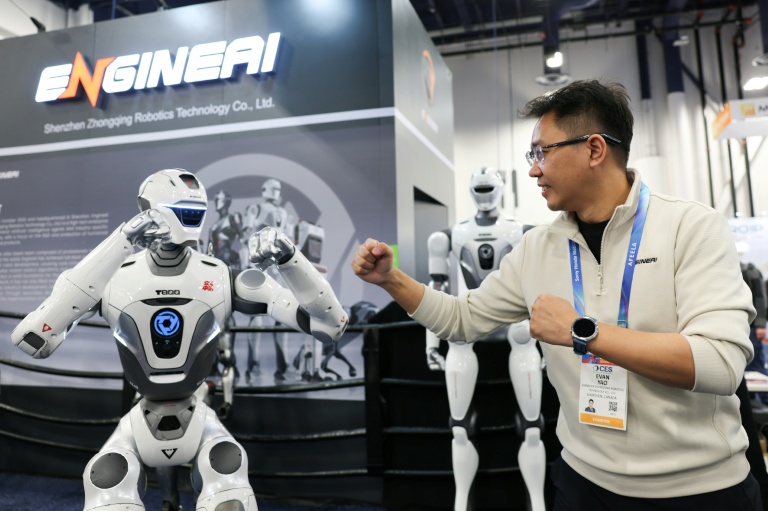
Humanoid robots showcased their capabilities at the Consumer Electronics Show (CES) this week, performing various tasks such as dancing, somersaulting, and even playing ping-pong. Despite the spectacle, industry experts are urging a shift toward creating robots that serve practical purposes rather than simply entertaining audiences.
The CES event highlighted the potential of robotics, but many insiders believe that achieving true human-like functionality will take years of development and extensive training. According to Henny Admoni, an associate professor at Carnegie Mellon University’s robotics institute, making humanoid robots truly autonomous requires advanced artificial intelligence that can interpret sensory data and respond appropriately. Current AI technologies, including large language models like ChatGPT, are insufficient for this task.
Admoni explained, “If you want robots to learn embodied things, you have to put them inside a body.” This sentiment was echoed by Christian Rokseth, founder of Humanoid Guide, who likened the situation to isolating a child and expecting it to learn about the world without interaction. Rokseth expressed impatience for innovation, noting, “They’ve shown robots dancing and doing kung fu; now show us that they can be productive.”
The pursuit of practical humanoid robots is gaining momentum, with companies like EngineAI based in Shenzhen collaborating with tech giants such as Amazon and Meta. Founder Evan Yao stated, “We are trying to simulate humans, but the robots will never become human. Because a human is emotional and much more.”
In an intriguing development, a team led by Yiran Sui is working on a humanoid robot designed to participate in the Beijing marathon later this year. This project exemplifies the growing ambition within the robotics field to create machines that can perform complex tasks in real-world scenarios rather than just controlled environments.
Market Growth and Industry Challenges
The Consumer Technology Association, which organizes CES, reports that the global robotics market is expected to reach $179 billion by 2030. Much of this growth is anticipated in sectors like factories and warehouses, where robots can operate in structured settings. Yet, Artem Sokolov, founder of a humanoid robotics startup in London, believes that robots designed to mimic human forms could thrive in these environments.
Hyundai recently introduced a humanoid robot named Atlas at CES, developed in partnership with Boston Dynamics. The automotive giant intends to trial Atlas in factory settings. Industry experts caution, however, that many claims surrounding fully autonomous humanoid robots may be exaggerated. Admoni noted, “There has been a ton of new companies claiming that they are developing autonomous humanoid robots,” but many of these systems are actually teleoperated, relying on human operators to control their movements.
To address the limitations of current training methods, new startups are exploring innovative approaches. Rokseth described how individuals can wear cameras and haptic gloves while performing household tasks, allowing robots to learn from their actions in real time. “To make robots general machines, they need to be let out in the real world,” he stated, emphasizing the need for practical applications beyond assembly lines and warehouses.
As the robotics industry evolves, the balance between entertainment and utility remains a critical focal point. While advancements in humanoid robots continue to capture the public’s imagination, the push for practical applications underscores the need for ongoing innovation and real-world integration.

iShares Core Dividend Growth ETF Faces Challenges; Alternatives Suggested

Discover 7 Scenic Hikes Near Calgary to Explore This Spring

Scientists Uncover Life’s Building Blocks in Ryugu Asteroid Samples

Windsor-Essex Unveils New Action Plan to Combat Substance Use

Boost Your Business Visibility with These Local SEO Strategies

East Algoma OPP Urges Public to Limit Travel Amid Hazardous Conditions

Universities Must Rethink Failure to Support Student Growth

Canada Invests $6.4 Million to Boost Green Shipping Corridors

Stony Plain Secures 14th Consecutive Award for Financial Reporting Excellence

Rhythm Pharmaceuticals Reports Strong Q4 Growth Ahead of FDA Decision

Brandon University’s Failed $5 Million Project Sparks Oversight Review

Microsoft Confirms U.S. Law Overrules Canadian Data Sovereignty

Discover Aritzia’s Latest Fashion Trends: A Comprehensive Review

Winnipeg Celebrates Culinary Creativity During Le Burger Week 2025

New SĆIȺNEW̱ SṮEȽIṮḴEȽ Elementary Opens in Langford for 2025/2026 Year

EngineAI Unveils T800 Humanoid Robot, Setting New Industry Standards

Montreal’s Groupe Marcelle Leads Canadian Cosmetic Industry Growth

Canmore’s Le Fournil Bakery to Close After 14 Successful Years

Tech Innovator Amandipp Singh Transforms Hiring for Disabled

Dragon Ball: Sparking! Zero Launching on Switch and Switch 2 This November
-
 Education9 months ago
Brandon University’s Failed $5 Million Project Sparks Oversight Review
-
 Science10 months ago
Microsoft Confirms U.S. Law Overrules Canadian Data Sovereignty
-
 Lifestyle5 months ago
Discover Aritzia’s Latest Fashion Trends: A Comprehensive Review
-
 Lifestyle9 months ago
Winnipeg Celebrates Culinary Creativity During Le Burger Week 2025
-
 Education9 months ago
New SĆIȺNEW̱ SṮEȽIṮḴEȽ Elementary Opens in Langford for 2025/2026 Year
-
 Business6 months ago
EngineAI Unveils T800 Humanoid Robot, Setting New Industry Standards
-
 Health10 months ago
Montreal’s Groupe Marcelle Leads Canadian Cosmetic Industry Growth
-
 Lifestyle3 months ago
Canmore’s Le Fournil Bakery to Close After 14 Successful Years
-
 Science10 months ago
Tech Innovator Amandipp Singh Transforms Hiring for Disabled
-
 Technology9 months ago
Dragon Ball: Sparking! Zero Launching on Switch and Switch 2 This November
-

 Technology5 months ago
Digg Relaunches as Founders Kevin Rose and Alexis Ohanian Join Forces
-
 Top Stories6 months ago
Canadiens Eye Elias Pettersson: What It Would Cost to Acquire Him
-

 Lifestyle7 months ago
Edmonton’s Beloved Evolution Wonderlounge Closes, New Era Begins
-

 Health8 months ago
Eganville Leader to Close in 2026 After 123 Years of Reporting
-

 Top Stories6 months ago
Nicol Brothers Shine as Wheat Kings Dominate U18 AAA Hockey
-

 Education9 months ago
Red River College Launches New Programs to Address Industry Needs
-

 Education6 months ago
ʔaq̓am Education Law Enacted, Affirming Self-Governance Rights
-

 Education8 months ago
Durham Schools Urged to Reconsider Prom Cancellation After Student Protest
-

 Business9 months ago
BNA Brewing to Open New Bowling Alley in Downtown Penticton
-

 Education7 months ago
Alberta Petition Aims to Redirect Funds from Private to Public Schools
-

 Business9 months ago
Rocket Lab Reports Strong Q2 2025 Revenue Growth and Future Plans
-

 Technology8 months ago
Discord Faces Serious Security Breach Affecting Millions
-

 Technology5 months ago
Amazon Unveils Kindle Plans for 2026: New Devices and Features
-

 Technology10 months ago
Google Pixel 10 Pro Fold Specs Unveiled Ahead of Launch