
Education
Students Confront Competitive Admissions for University STEM Programs

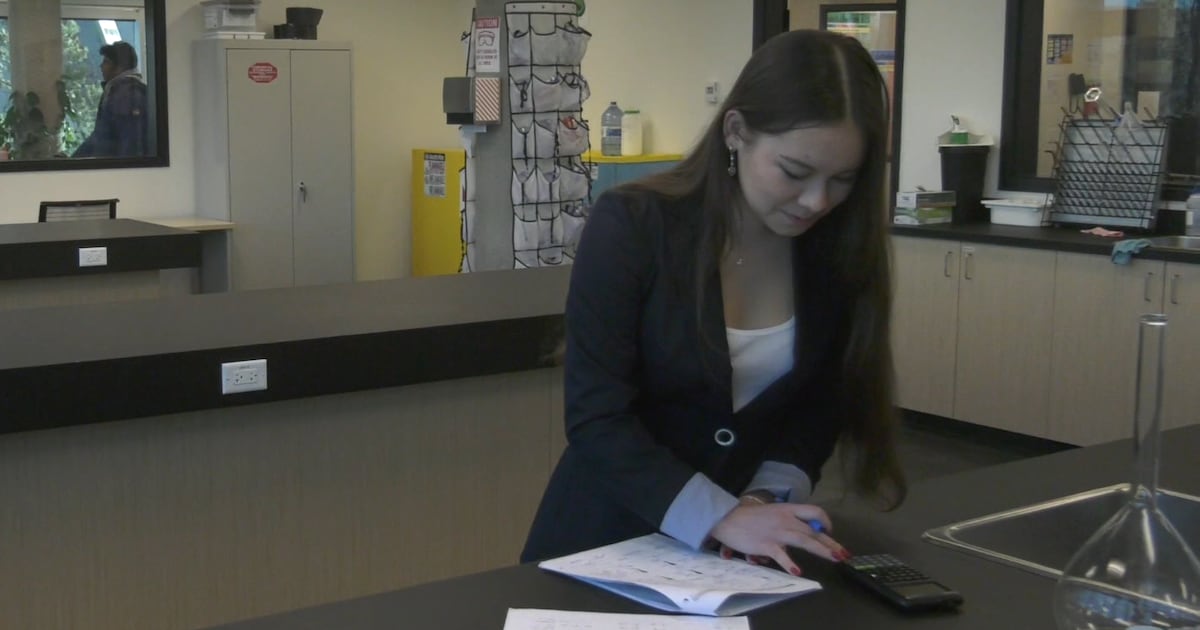
Applications for university STEM programs in Alberta are becoming increasingly competitive, leaving many students anxious about their chances of admission. Asiya Iskander, a Grade 12 student at STEM Innovation Academy with a strong academic record, has been wait-listed for the biological sciences program at the University of Calgary. Despite maintaining a 93 per cent average, she faces uncertainty about her future in a field she hopes to pursue, specifically cardiothoracic surgery.
The growing challenge for students seeking admission to STEM (science, technology, engineering, and mathematics) programs reflects a broader trend in Alberta. According to Jeff Crane, assistant principal at STEM Innovation Academy, the competition level has transformed significantly over the past decade. “When competition gets in the way of good kids getting access to programs, that’s when there is an issue,” he remarked, highlighting the stress faced by students.
The University of Calgary has noted that the estimated competitive average for biological sciences is in the low 90s. This year, applications for fall 2025 surged by nine per cent compared to the previous year, attributed in part to a growing population of university-aged students. The university has responded by expanding enrollment in several high-demand faculties, including engineering and science, with a 12.5 per cent increase in total enrollment since 2021.
Similar trends are evident at the University of Alberta, where admission averages for engineering programs typically range from the mid- to high-80s, while certain science programs require averages in the low 90s. Over the past decade, admission rates for undergraduate STEM programs have remained consistent, dropping slightly from 53 per cent in 2016 to 50 per cent in fall 2025. During this same period, first-year STEM capacity increased by more than 15 per cent, driven primarily by a rise in domestic enrollment. However, applications to STEM programs surged by nearly 52 per cent, indicating robust interest among prospective students.
The pressure on students to maintain high academic averages has intensified. Wayne Bobrosky, co-founder of Upperhand High School & Post-Secondary Counselling, noted that it is increasingly challenging for students to achieve scores in the low 90s. “The academic averages since COVID have been exceedingly high and they’ve remained quite high,” Bobrosky observed.
In light of these challenges, STEM Innovation Academy is advocating for increased provincial funding to expand STEM program capacity. Lisa Davis, the academy’s founder, expressed hope that the upcoming provincial budget would allocate funds for new post-secondary spaces ahead of the September 2026 academic year. “We have this amazing group of students who have big dreams about what their future holds and they’re concerned that they’re not going to be able to get in the programs they need to,” she stated.
In response to these challenges, Myles McDougall, Alberta’s Minister of Advanced Education, announced that the province is investing more than $97 million to expand high-demand STEM programs through targeted enrollment growth in the Budget 2025. This initiative will add 624 seats in computer and software engineering, 609 seats in general engineering, and 2,874 seats in various technology programs across Alberta.
As of the 2024-25 academic year, approximately 65,000 students are enrolled in STEM programs in the province, with around 25,000 women and 40,000 men participating. The increasing pressure on students highlights the urgent need for expanded opportunities in STEM education to meet rising demand and support the aspirations of future generations.

iShares Core Dividend Growth ETF Faces Challenges; Alternatives Suggested

Discover 7 Scenic Hikes Near Calgary to Explore This Spring

Scientists Uncover Life’s Building Blocks in Ryugu Asteroid Samples

Windsor-Essex Unveils New Action Plan to Combat Substance Use

Boost Your Business Visibility with These Local SEO Strategies

East Algoma OPP Urges Public to Limit Travel Amid Hazardous Conditions

Universities Must Rethink Failure to Support Student Growth

Canada Invests $6.4 Million to Boost Green Shipping Corridors

Stony Plain Secures 14th Consecutive Award for Financial Reporting Excellence

Rhythm Pharmaceuticals Reports Strong Q4 Growth Ahead of FDA Decision

Brandon University’s Failed $5 Million Project Sparks Oversight Review

Microsoft Confirms U.S. Law Overrules Canadian Data Sovereignty

Discover Aritzia’s Latest Fashion Trends: A Comprehensive Review

Winnipeg Celebrates Culinary Creativity During Le Burger Week 2025

New SĆIȺNEW̱ SṮEȽIṮḴEȽ Elementary Opens in Langford for 2025/2026 Year

EngineAI Unveils T800 Humanoid Robot, Setting New Industry Standards

Montreal’s Groupe Marcelle Leads Canadian Cosmetic Industry Growth

Tech Innovator Amandipp Singh Transforms Hiring for Disabled

Dragon Ball: Sparking! Zero Launching on Switch and Switch 2 This November

Digg Relaunches as Founders Kevin Rose and Alexis Ohanian Join Forces
-
 Education7 months ago
Brandon University’s Failed $5 Million Project Sparks Oversight Review
-
 Science8 months ago
Microsoft Confirms U.S. Law Overrules Canadian Data Sovereignty
-
 Lifestyle4 months ago
Discover Aritzia’s Latest Fashion Trends: A Comprehensive Review
-
 Lifestyle8 months ago
Winnipeg Celebrates Culinary Creativity During Le Burger Week 2025
-
 Education8 months ago
New SĆIȺNEW̱ SṮEȽIṮḴEȽ Elementary Opens in Langford for 2025/2026 Year
-
 Business4 months ago
EngineAI Unveils T800 Humanoid Robot, Setting New Industry Standards
-
 Health8 months ago
Montreal’s Groupe Marcelle Leads Canadian Cosmetic Industry Growth
-
 Science8 months ago
Tech Innovator Amandipp Singh Transforms Hiring for Disabled
-
 Technology8 months ago
Dragon Ball: Sparking! Zero Launching on Switch and Switch 2 This November
-
 Technology3 months ago
Digg Relaunches as Founders Kevin Rose and Alexis Ohanian Join Forces
-

 Lifestyle4 weeks ago
Canmore’s Le Fournil Bakery to Close After 14 Successful Years
-
 Top Stories4 months ago
Canadiens Eye Elias Pettersson: What It Would Cost to Acquire Him
-

 Health7 months ago
Eganville Leader to Close in 2026 After 123 Years of Reporting
-

 Education8 months ago
Red River College Launches New Programs to Address Industry Needs
-

 Top Stories4 months ago
Nicol Brothers Shine as Wheat Kings Dominate U18 AAA Hockey
-

 Business8 months ago
BNA Brewing to Open New Bowling Alley in Downtown Penticton
-

 Business7 months ago
Rocket Lab Reports Strong Q2 2025 Revenue Growth and Future Plans
-

 Lifestyle5 months ago
Edmonton’s Beloved Evolution Wonderlounge Closes, New Era Begins
-

 Education6 months ago
Alberta Petition Aims to Redirect Funds from Private to Public Schools
-

 Education8 months ago
Alberta Teachers’ Strike: Potential Impacts on Students and Families
-

 Technology8 months ago
Google Pixel 10 Pro Fold Specs Unveiled Ahead of Launch
-

 Technology6 months ago
Discord Faces Serious Security Breach Affecting Millions
-

 Business8 months ago
Iconic Golden Lion Restaurant in South Surrey to Close After 50 Years
-

 Lifestyle6 months ago
Canadian Author Secures Funding to Write Book Without Financial Strain