
Top Stories
Federal Government Faces Office Space Shortage for 4-Day Work Week

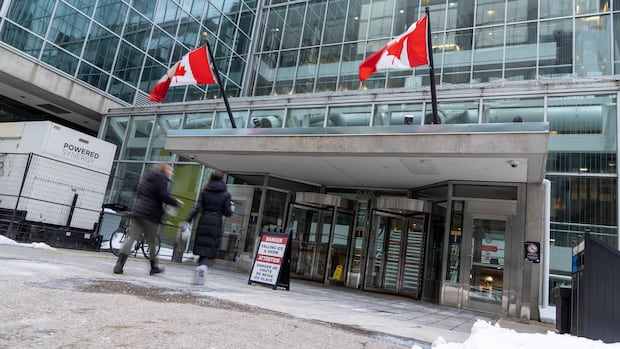
The federal government is grappling with potential office space shortages as it prepares for a return to in-office work four days a week, beginning on July 6, 2024. Currently, civil servants are required to be present in the office only three days per week, a policy implemented in September 2024 as many government employees transitioned to remote work due to the COVID-19 pandemic.
In a recent announcement, the government mandated that employees who have not yet returned to in-office work must do so for a minimum of four days each week. Government executives are expected to be in the office full-time, five days a week. The Treasury Board of Canada indicated that the Public Services and Procurement Canada (PSPC) will collaborate with various organizations to ensure there is “adequate office space” available for staff. However, Martin Potvin, a spokesperson for the Treasury Board, acknowledged in an email to Radio-Canada that “there may not be enough workstations at some locations” to accommodate the increased in-office requirement.
Concerns about workspace availability have prompted discussions among experts from commercial real estate and transportation planning sectors. They are evaluating the logistics of public servants returning to the office in greater numbers. The Public Service Alliance of Canada, which represents federal workers, expressed skepticism regarding the government’s capacity to meet the new requirements. In an emailed statement, the union noted that even under the existing three-day policy, many departments have already seen their shared desks fully booked.
The president of the Professional Institute of the Public Service of Canada, Sean O’Reilly, echoed these concerns, stating that numerous departments struggle to implement the current three-day mandate due to insufficient space across the public service.
Government Consultation and Future Plans
The government has conducted three consultation sessions with unions this week to discuss the implementation timeline for the four-day work week, as well as workspace, health and safety, accommodations, and exemptions. During these discussions, officials reiterated their intention to proceed with the July start date, though O’Reilly pointed out that they also indicated this was not a final decision.
“If this isn’t a final decision and July 6 is not the date, let’s take that off the table and actually have real meaningful discussions to see what a phased approach looks like,” O’Reilly stated.
In response to inquiries about the possibility of reconsidering the July 6 timeline, Potvin emphasized that the Treasury Board would continue mobilization sessions with bargaining agents to ensure proper implementation of the government’s plan for increased on-site employee presence.
As the July deadline approaches, questions remain regarding the adequacy of workspace and the overall readiness of government facilities to handle the transition back to a more traditional work model. The challenges identified by unions and experts underscore the complexities involved in returning to the office after a prolonged period of remote work, raising critical issues about the future of federal employment practices.

iShares Core Dividend Growth ETF Faces Challenges; Alternatives Suggested

Discover 7 Scenic Hikes Near Calgary to Explore This Spring

Scientists Uncover Life’s Building Blocks in Ryugu Asteroid Samples

Windsor-Essex Unveils New Action Plan to Combat Substance Use

Boost Your Business Visibility with These Local SEO Strategies

East Algoma OPP Urges Public to Limit Travel Amid Hazardous Conditions

Universities Must Rethink Failure to Support Student Growth

Canada Invests $6.4 Million to Boost Green Shipping Corridors

Stony Plain Secures 14th Consecutive Award for Financial Reporting Excellence

Rhythm Pharmaceuticals Reports Strong Q4 Growth Ahead of FDA Decision

Brandon University’s Failed $5 Million Project Sparks Oversight Review

Microsoft Confirms U.S. Law Overrules Canadian Data Sovereignty

Winnipeg Celebrates Culinary Creativity During Le Burger Week 2025

Discover Aritzia’s Latest Fashion Trends: A Comprehensive Review

New SĆIȺNEW̱ SṮEȽIṮḴEȽ Elementary Opens in Langford for 2025/2026 Year

EngineAI Unveils T800 Humanoid Robot, Setting New Industry Standards

Montreal’s Groupe Marcelle Leads Canadian Cosmetic Industry Growth

Tech Innovator Amandipp Singh Transforms Hiring for Disabled

Dragon Ball: Sparking! Zero Launching on Switch and Switch 2 This November

Digg Relaunches as Founders Kevin Rose and Alexis Ohanian Join Forces
-
 Education7 months ago
Brandon University’s Failed $5 Million Project Sparks Oversight Review
-
 Science8 months ago
Microsoft Confirms U.S. Law Overrules Canadian Data Sovereignty
-
 Lifestyle7 months ago
Winnipeg Celebrates Culinary Creativity During Le Burger Week 2025
-
 Lifestyle4 months ago
Discover Aritzia’s Latest Fashion Trends: A Comprehensive Review
-
 Education7 months ago
New SĆIȺNEW̱ SṮEȽIṮḴEȽ Elementary Opens in Langford for 2025/2026 Year
-
 Business4 months ago
EngineAI Unveils T800 Humanoid Robot, Setting New Industry Standards
-
 Health8 months ago
Montreal’s Groupe Marcelle Leads Canadian Cosmetic Industry Growth
-
 Science8 months ago
Tech Innovator Amandipp Singh Transforms Hiring for Disabled
-
 Technology8 months ago
Dragon Ball: Sparking! Zero Launching on Switch and Switch 2 This November
-
 Technology3 months ago
Digg Relaunches as Founders Kevin Rose and Alexis Ohanian Join Forces
-
 Top Stories4 months ago
Canadiens Eye Elias Pettersson: What It Would Cost to Acquire Him
-

 Lifestyle4 weeks ago
Canmore’s Le Fournil Bakery to Close After 14 Successful Years
-

 Health7 months ago
Eganville Leader to Close in 2026 After 123 Years of Reporting
-

 Education8 months ago
Red River College Launches New Programs to Address Industry Needs
-

 Top Stories4 months ago
Nicol Brothers Shine as Wheat Kings Dominate U18 AAA Hockey
-

 Business7 months ago
Rocket Lab Reports Strong Q2 2025 Revenue Growth and Future Plans
-

 Business8 months ago
BNA Brewing to Open New Bowling Alley in Downtown Penticton
-

 Education6 months ago
Alberta Petition Aims to Redirect Funds from Private to Public Schools
-

 Lifestyle5 months ago
Edmonton’s Beloved Evolution Wonderlounge Closes, New Era Begins
-

 Education8 months ago
Alberta Teachers’ Strike: Potential Impacts on Students and Families
-

 Technology6 months ago
Discord Faces Serious Security Breach Affecting Millions
-

 Technology8 months ago
Google Pixel 10 Pro Fold Specs Unveiled Ahead of Launch
-

 Business7 months ago
Iconic Golden Lion Restaurant in South Surrey to Close After 50 Years
-

 Science8 months ago
China’s Wukong Spacesuit Sets New Standard for AI in Space