
Top Stories
Conservationists Alarmed as DFO Closes Salmon Gene Banks

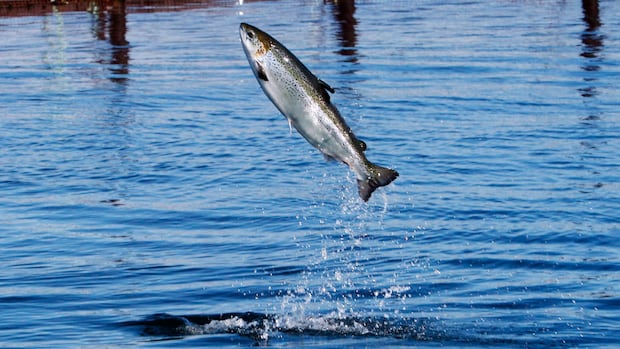
Conservationists and Indigenous leaders are raising serious concerns following the decision by Fisheries and Oceans Canada (DFO) to close its Atlantic Salmon Live Gene Bank program. The closures will affect facilities in Mactaquac, New Brunswick, and Coldbrook, Nova Scotia, potentially jeopardizing the future of the endangered Inner Bay of Fundy Atlantic salmon population.
The DFO confirmed the closures on Friday, stating that the gene banks were instrumental in raising wild juvenile salmon to adulthood and facilitating their release back into their natural habitats. The program has been crucial for the survival of a population that has been listed as endangered under the Species at Risk Act since 2003.
Nikki-Marie Lloyd, an Indigenous water protector from Annapolis Valley First Nation, previously worked at the Coldbrook facility. She emphasized the importance of the program, stating, “Without it, the Inner Bay of Fundy salmon population could disappear.” Lloyd described the situation as “a managed extinction,” pointing fingers at the government responsible for protecting these vulnerable species.
The DFO did not provide specific details regarding the number of employees affected by the closures or their future job prospects. Instead, the department indicated it would adhere to its obligations under the Species at Risk Act by collaborating with partners on the National Atlantic Salmon Strategy, which was announced in March 2025. This strategy was promoted as Canada’s first comprehensive effort to restore and rebuild wild Atlantic salmon populations and their habitats.
In its statement, DFO claimed it would utilize the best available information to support the rebuilding of the salmon stock and mitigate threats to this iconic species. Yet, the lack of a clear timeline for the closures raises further questions about the program’s future and the government’s commitment to salmon conservation.
The closures are part of broader cuts announced in the federal budget last year, casting uncertainty over other vital research initiatives, including one of Canada’s oldest federal research farms in Nappan, Nova Scotia. Amy Weston, managing director of the Nova Scotia Salmon Association, echoed Lloyd’s concerns, asserting that without the gene banks, the Inner Bay of Fundy salmon could face extinction. “The population is extremely low,” she stated. “Without some preservation of the live gene bank, there’s really no hope for recovery.”
Deirdre Green, executive director of regional programs with the Atlantic Salmon Federation, criticized the DFO’s decision, calling it a significant setback for the Inner Bay of Fundy salmon. She highlighted that DFO is tasked with recovering and protecting these fish, yet the cuts undermine their ability to fulfill this responsibility. Green noted that while the federal government announced a budget of $6.1 million for the National Atlantic Salmon Strategy, the additional $1 million allocated is insufficient. “We’ve consistently advocated for $400 million for that strategy, and that one million is just nothing. It’s a drop in the bucket,” she remarked.
The potential repercussions of the gene bank closures are dire. Between 2013 and 2017, a DFO population estimate found that fewer than 105 adult Atlantic salmon returned to their home rivers each year. The report indicated that nearly all returning fish originated from the two biodiversity facilities. It stated, “Under current conditions, it is highly unlikely that adult returns to these rivers can be maintained without the support of the Live Gene Bank program, given the lack of juvenile production from natural spawning.”
Both Lloyd and Green expressed a desire for the gene bank facilities to continue operations. Green hopes that an organization or First Nation may step in to take over the program, while Lloyd envisions a Mi’kmaw group managing the gene banks to ensure the preservation of this critical salmon population.
As the future of the Inner Bay of Fundy salmon hangs in the balance, the voices of conservationists, Indigenous leaders, and concerned citizens grow louder. The need for urgent action is evident, as the implications of these closures could reverberate through ecosystems and communities for years to come.

iShares Core Dividend Growth ETF Faces Challenges; Alternatives Suggested

Discover 7 Scenic Hikes Near Calgary to Explore This Spring

Scientists Uncover Life’s Building Blocks in Ryugu Asteroid Samples

Windsor-Essex Unveils New Action Plan to Combat Substance Use

Boost Your Business Visibility with These Local SEO Strategies

East Algoma OPP Urges Public to Limit Travel Amid Hazardous Conditions

Universities Must Rethink Failure to Support Student Growth

Canada Invests $6.4 Million to Boost Green Shipping Corridors

Stony Plain Secures 14th Consecutive Award for Financial Reporting Excellence

Rhythm Pharmaceuticals Reports Strong Q4 Growth Ahead of FDA Decision

Brandon University’s Failed $5 Million Project Sparks Oversight Review

Microsoft Confirms U.S. Law Overrules Canadian Data Sovereignty

Discover Aritzia’s Latest Fashion Trends: A Comprehensive Review

Winnipeg Celebrates Culinary Creativity During Le Burger Week 2025

New SĆIȺNEW̱ SṮEȽIṮḴEȽ Elementary Opens in Langford for 2025/2026 Year

EngineAI Unveils T800 Humanoid Robot, Setting New Industry Standards

Montreal’s Groupe Marcelle Leads Canadian Cosmetic Industry Growth

Tech Innovator Amandipp Singh Transforms Hiring for Disabled

Canmore’s Le Fournil Bakery to Close After 14 Successful Years

Dragon Ball: Sparking! Zero Launching on Switch and Switch 2 This November
-
 Education8 months ago
Brandon University’s Failed $5 Million Project Sparks Oversight Review
-
 Science9 months ago
Microsoft Confirms U.S. Law Overrules Canadian Data Sovereignty
-
 Lifestyle4 months ago
Discover Aritzia’s Latest Fashion Trends: A Comprehensive Review
-
 Lifestyle8 months ago
Winnipeg Celebrates Culinary Creativity During Le Burger Week 2025
-
 Education8 months ago
New SĆIȺNEW̱ SṮEȽIṮḴEȽ Elementary Opens in Langford for 2025/2026 Year
-
 Business5 months ago
EngineAI Unveils T800 Humanoid Robot, Setting New Industry Standards
-
 Health9 months ago
Montreal’s Groupe Marcelle Leads Canadian Cosmetic Industry Growth
-
 Science9 months ago
Tech Innovator Amandipp Singh Transforms Hiring for Disabled
-
 Lifestyle2 months ago
Canmore’s Le Fournil Bakery to Close After 14 Successful Years
-
 Technology9 months ago
Dragon Ball: Sparking! Zero Launching on Switch and Switch 2 This November
-

 Technology4 months ago
Digg Relaunches as Founders Kevin Rose and Alexis Ohanian Join Forces
-
 Top Stories5 months ago
Canadiens Eye Elias Pettersson: What It Would Cost to Acquire Him
-

 Lifestyle6 months ago
Edmonton’s Beloved Evolution Wonderlounge Closes, New Era Begins
-

 Health7 months ago
Eganville Leader to Close in 2026 After 123 Years of Reporting
-

 Top Stories5 months ago
Nicol Brothers Shine as Wheat Kings Dominate U18 AAA Hockey
-

 Education9 months ago
Red River College Launches New Programs to Address Industry Needs
-

 Business9 months ago
BNA Brewing to Open New Bowling Alley in Downtown Penticton
-

 Business8 months ago
Rocket Lab Reports Strong Q2 2025 Revenue Growth and Future Plans
-

 Education7 months ago
Alberta Petition Aims to Redirect Funds from Private to Public Schools
-
 Education7 months ago
Durham Schools Urged to Reconsider Prom Cancellation After Student Protest
-

 Education9 months ago
Alberta Teachers’ Strike: Potential Impacts on Students and Families
-

 Technology7 months ago
Discord Faces Serious Security Breach Affecting Millions
-

 Technology9 months ago
Google Pixel 10 Pro Fold Specs Unveiled Ahead of Launch
-
 Education5 months ago
ʔaq̓am Education Law Enacted, Affirming Self-Governance Rights