
Top Stories
China Faces Sharp Decline in Consumer Spending to Start 2026

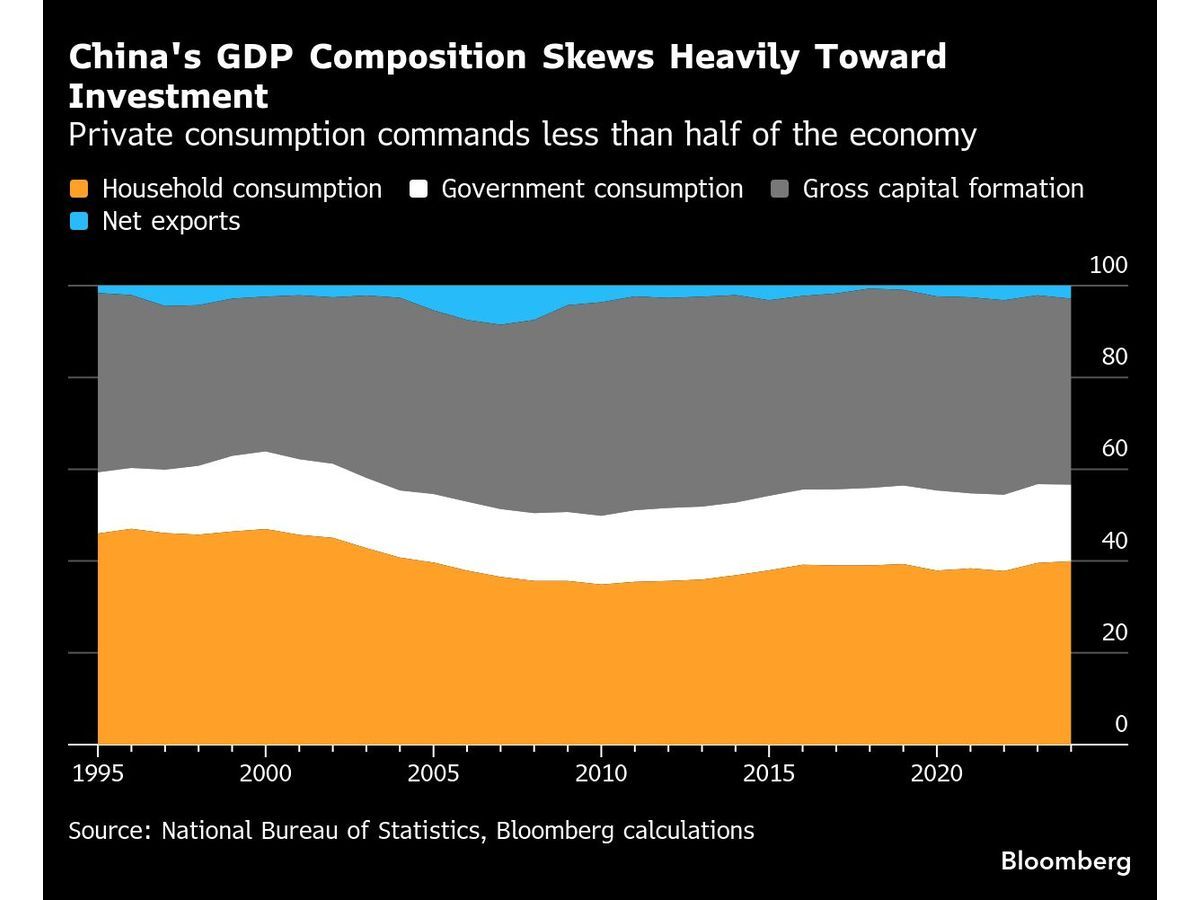
China’s consumer spending has recorded one of its weakest starts to a year outside the pandemic, underscoring the challenges for a government aiming to boost domestic demand. Retail sales for January and February 2026 are projected to increase by just 2.1% compared to the same period in 2025, based on the median forecast from economists surveyed by Bloomberg. This figure marks the lowest reading since the data series began in 2000, excluding the dramatic decline observed in early 2020 due to COVID-19.
Industrial production has shown some resilience, expanding by 5% during the same period. This growth, however, represents a slowdown from the 5.9% pace recorded at the beginning of 2025, indicating a mixed economic landscape where foreign demand remains strong but domestic consumption falters.
Investment and Economic Outlook
Another critical indicator, fixed asset investment, is expected to continue its downward trend. Forecasts suggest a decrease of 4.2% compared to the previous year, with property investment alone likely contracting by 19.3%. Should these predictions hold, the preliminary data for 2026 would reflect a further decline in domestic demand, contrary to government pledges to prioritize its recovery.
Economists from ING Bank NV, led by Deepali Bhargava, noted, “Policymakers have signaled the importance of domestic demand this year. But it will likely take time for data to show the economy starting to recover.” As the international geopolitical environment shifts, the Chinese government has yet to indicate a change in its economic strategy, despite recent global upheavals.
Challenges Ahead for Policymakers
China’s authorities recently adjusted their fiscal stimulus plans for 2026, lowering the annual growth target to between 4.5% and 5%—the least ambitious goal since 1991. This cautious approach aims to manage an already substantial debt load while exploring new avenues to stimulate consumption.
Economists from Nomura Holdings Inc., led by Ting Lu, highlighted the pressing need for export growth to counterbalance the struggles of the property market. They cautioned that the current trade imbalance is unlikely to be sustainable, posing a dilemma for Chinese authorities.
Despite the urgent need for renewed consumer spending, no significant new measures have been introduced. The increase in minimum benefits for a major public pension program remained unchanged from last year, contrary to some economists’ expectations for a substantial hike to encourage spending. Additionally, subsidies for a key consumer trade-in program were reduced from 300 billion yuan (approximately $36.3 billion) to 250 billion yuan this year, further complicating recovery efforts.
In February, the China Association of Automobile Manufacturers reported a 15% drop in car sales, reflecting the impact of reduced trade-in subsidies and tax breaks for new energy vehicles. Analysts warn that without “new, meaningful policy support,” retail sales growth in China could plummet to as low as 1.7% this year—the lowest level since the pandemic.
The general consensus among economists is a more optimistic 4% annual rise in retail sales. However, the strong export performance in the early months of 2026 may lessen the immediate pressure on policymakers to invigorate domestic demand.
As China navigates these economic challenges, the government’s ability to stimulate consumption and manage external pressures will be critical to the nation’s economic health and stability in the coming year.

iShares Core Dividend Growth ETF Faces Challenges; Alternatives Suggested

Discover 7 Scenic Hikes Near Calgary to Explore This Spring

Scientists Uncover Life’s Building Blocks in Ryugu Asteroid Samples

Windsor-Essex Unveils New Action Plan to Combat Substance Use

Boost Your Business Visibility with These Local SEO Strategies

East Algoma OPP Urges Public to Limit Travel Amid Hazardous Conditions

Universities Must Rethink Failure to Support Student Growth

Canada Invests $6.4 Million to Boost Green Shipping Corridors

Stony Plain Secures 14th Consecutive Award for Financial Reporting Excellence

Rhythm Pharmaceuticals Reports Strong Q4 Growth Ahead of FDA Decision

Brandon University’s Failed $5 Million Project Sparks Oversight Review

Microsoft Confirms U.S. Law Overrules Canadian Data Sovereignty

Discover Aritzia’s Latest Fashion Trends: A Comprehensive Review

Winnipeg Celebrates Culinary Creativity During Le Burger Week 2025

New SĆIȺNEW̱ SṮEȽIṮḴEȽ Elementary Opens in Langford for 2025/2026 Year

EngineAI Unveils T800 Humanoid Robot, Setting New Industry Standards

Montreal’s Groupe Marcelle Leads Canadian Cosmetic Industry Growth

Tech Innovator Amandipp Singh Transforms Hiring for Disabled

Canmore’s Le Fournil Bakery to Close After 14 Successful Years

Dragon Ball: Sparking! Zero Launching on Switch and Switch 2 This November
-
 Education8 months ago
Brandon University’s Failed $5 Million Project Sparks Oversight Review
-
 Science9 months ago
Microsoft Confirms U.S. Law Overrules Canadian Data Sovereignty
-
 Lifestyle4 months ago
Discover Aritzia’s Latest Fashion Trends: A Comprehensive Review
-
 Lifestyle8 months ago
Winnipeg Celebrates Culinary Creativity During Le Burger Week 2025
-
 Education8 months ago
New SĆIȺNEW̱ SṮEȽIṮḴEȽ Elementary Opens in Langford for 2025/2026 Year
-
 Business5 months ago
EngineAI Unveils T800 Humanoid Robot, Setting New Industry Standards
-
 Health9 months ago
Montreal’s Groupe Marcelle Leads Canadian Cosmetic Industry Growth
-
 Science9 months ago
Tech Innovator Amandipp Singh Transforms Hiring for Disabled
-
 Lifestyle2 months ago
Canmore’s Le Fournil Bakery to Close After 14 Successful Years
-
 Technology9 months ago
Dragon Ball: Sparking! Zero Launching on Switch and Switch 2 This November
-

 Technology4 months ago
Digg Relaunches as Founders Kevin Rose and Alexis Ohanian Join Forces
-
 Top Stories5 months ago
Canadiens Eye Elias Pettersson: What It Would Cost to Acquire Him
-

 Health7 months ago
Eganville Leader to Close in 2026 After 123 Years of Reporting
-

 Lifestyle6 months ago
Edmonton’s Beloved Evolution Wonderlounge Closes, New Era Begins
-

 Education8 months ago
Red River College Launches New Programs to Address Industry Needs
-

 Top Stories5 months ago
Nicol Brothers Shine as Wheat Kings Dominate U18 AAA Hockey
-

 Business9 months ago
BNA Brewing to Open New Bowling Alley in Downtown Penticton
-

 Business8 months ago
Rocket Lab Reports Strong Q2 2025 Revenue Growth and Future Plans
-

 Education6 months ago
Alberta Petition Aims to Redirect Funds from Private to Public Schools
-

 Education9 months ago
Alberta Teachers’ Strike: Potential Impacts on Students and Families
-

 Technology7 months ago
Discord Faces Serious Security Breach Affecting Millions
-

 Technology9 months ago
Google Pixel 10 Pro Fold Specs Unveiled Ahead of Launch
-

 Education5 months ago
ʔaq̓am Education Law Enacted, Affirming Self-Governance Rights
-

 Business8 months ago
Iconic Golden Lion Restaurant in South Surrey to Close After 50 Years