
Technology
Innovative MagSafe Breadboard Transforms iPhone into Prototyping Tool

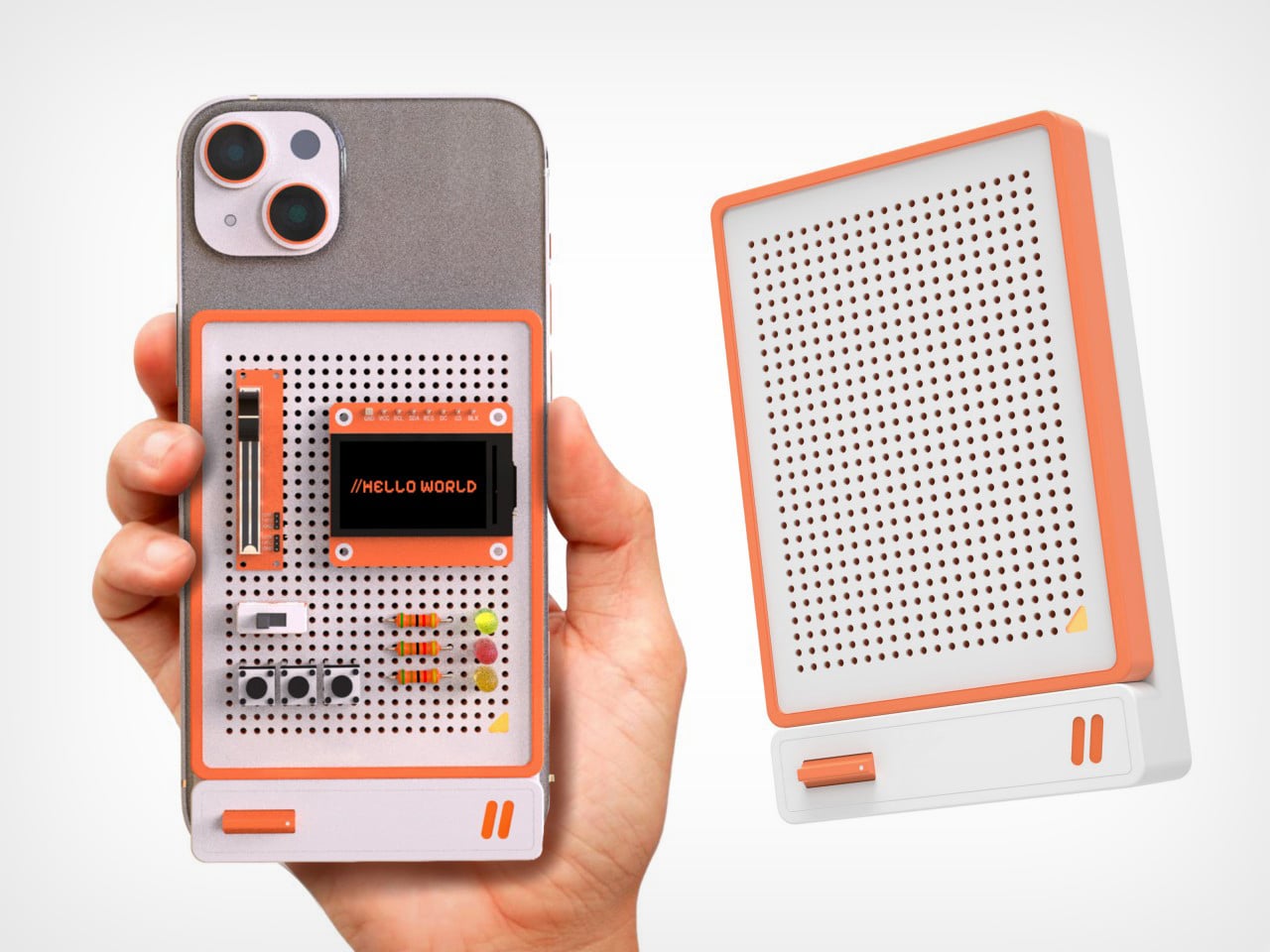
A new device called the Commi Board is set to redefine how users approach circuit prototyping by leveraging an existing smartphone, specifically the iPhone. Designed by Kevin Yang, this MagSafe-compatible breadboard provides a unique interface for electronic experimentation without the need for a separate microcontroller or battery. By utilizing General Purpose Input/Output (GPIO) communication, the Commi Board enables smartphones to manage processing tasks, capitalizing on their superior power and connectivity.
The dimensions of the Commi Board are compact, measuring 62mm by 98mm when mounted and 62mm by 82mm when detached. It boasts a striking color scheme reminiscent of the Flipper Zero, yet it serves a distinct purpose. Unlike the multifunctional Flipper device, which targets various security applications, the Commi Board focuses solely on circuit prototyping and code validation. Its modular design separates the breadboard surface from the MagSafe mounting frame, which is engineered with a circular cutout to accommodate the iPhone’s camera.
Connection options include USB-C 3.2, Bluetooth, and Bluetooth Low Energy (BLE). Yang has incorporated cloud storage functionality, allowing users to initiate projects on their phones and return to them later without the hassle of local file management. Although the project commenced in June 2024, Yang has already developed a working prototype with tested connectivity, indicating significant progress for a student project.
The Commi Board addresses a common challenge in Internet of Things (IoT) hardware design: the tendency to be overly complex. Many devices attempt to integrate numerous features, often resulting in subpar performance. Yang’s innovative approach is to use the smartphone’s existing capabilities, such as its processing power and display, to facilitate a more efficient prototyping experience. This strategy not only reduces weight and manufacturing costs but also eliminates concerns regarding battery degradation over time.
One notable feature of the Commi Board is its modular design, which allows users to attach or detach the board as needed. This flexibility is essential for various testing scenarios, ensuring that users can work comfortably without obstructing the camera or requiring additional space for their circuits.
The device offers four distinct programming methods, catering to a wide range of experience levels. Beginners can benefit from an AI-assisted code generation feature, allowing them to input simple commands like “make an LED blink every second.” More experienced users can utilize a full Integrated Development Environment (IDE) for advanced programming tasks. The transition between these methods is seamless, enabling users to retain their projects regardless of their level of expertise.
Yang asserts that GPIO communication can effectively simulate most microcontrollers, particularly for applications comparable to the Arduino Mega. Despite this, challenges may arise under demanding conditions due to the nature of smartphone operating systems, which can introduce latency. The device’s specifications indicate that while USB-C can handle more intensive tasks, Bluetooth is suitable for casual control.
Cloud storage enhances the user experience by allowing for secure project management. This feature is crucial for maintaining momentum in prototyping, as it prevents the loss of ideas and progress due to forgotten details or time constraints. The potential for community collaboration is also on the horizon, with Yang hinting at the possibility of opening an API for third-party development. This could transform the Commi Board from a standalone product into a broader platform, unlocking new opportunities for innovation.
With a working prototype already demonstrating core functionality, the future looks promising for the Commi Board. Should Yang choose to pursue crowdfunding or startup avenues, the device may well find its place in the growing landscape of electronic prototyping tools. The combination of practicality, innovation, and user-centric design positions the Commi Board as a significant advancement for both beginners and seasoned engineers alike.

iShares Core Dividend Growth ETF Faces Challenges; Alternatives Suggested

Discover 7 Scenic Hikes Near Calgary to Explore This Spring

Scientists Uncover Life’s Building Blocks in Ryugu Asteroid Samples

Windsor-Essex Unveils New Action Plan to Combat Substance Use

Boost Your Business Visibility with These Local SEO Strategies

East Algoma OPP Urges Public to Limit Travel Amid Hazardous Conditions

Universities Must Rethink Failure to Support Student Growth

Canada Invests $6.4 Million to Boost Green Shipping Corridors

Stony Plain Secures 14th Consecutive Award for Financial Reporting Excellence

Rhythm Pharmaceuticals Reports Strong Q4 Growth Ahead of FDA Decision

Brandon University’s Failed $5 Million Project Sparks Oversight Review

Microsoft Confirms U.S. Law Overrules Canadian Data Sovereignty

Winnipeg Celebrates Culinary Creativity During Le Burger Week 2025

Discover Aritzia’s Latest Fashion Trends: A Comprehensive Review

New SĆIȺNEW̱ SṮEȽIṮḴEȽ Elementary Opens in Langford for 2025/2026 Year

EngineAI Unveils T800 Humanoid Robot, Setting New Industry Standards

Montreal’s Groupe Marcelle Leads Canadian Cosmetic Industry Growth

Tech Innovator Amandipp Singh Transforms Hiring for Disabled

Dragon Ball: Sparking! Zero Launching on Switch and Switch 2 This November

Digg Relaunches as Founders Kevin Rose and Alexis Ohanian Join Forces
-
 Education7 months ago
Brandon University’s Failed $5 Million Project Sparks Oversight Review
-
 Science8 months ago
Microsoft Confirms U.S. Law Overrules Canadian Data Sovereignty
-
 Lifestyle7 months ago
Winnipeg Celebrates Culinary Creativity During Le Burger Week 2025
-
 Lifestyle4 months ago
Discover Aritzia’s Latest Fashion Trends: A Comprehensive Review
-
 Education7 months ago
New SĆIȺNEW̱ SṮEȽIṮḴEȽ Elementary Opens in Langford for 2025/2026 Year
-
 Business4 months ago
EngineAI Unveils T800 Humanoid Robot, Setting New Industry Standards
-
 Health8 months ago
Montreal’s Groupe Marcelle Leads Canadian Cosmetic Industry Growth
-
 Science8 months ago
Tech Innovator Amandipp Singh Transforms Hiring for Disabled
-
 Technology8 months ago
Dragon Ball: Sparking! Zero Launching on Switch and Switch 2 This November
-
 Technology3 months ago
Digg Relaunches as Founders Kevin Rose and Alexis Ohanian Join Forces
-
 Top Stories4 months ago
Canadiens Eye Elias Pettersson: What It Would Cost to Acquire Him
-

 Lifestyle4 weeks ago
Canmore’s Le Fournil Bakery to Close After 14 Successful Years
-

 Health7 months ago
Eganville Leader to Close in 2026 After 123 Years of Reporting
-

 Education8 months ago
Red River College Launches New Programs to Address Industry Needs
-

 Top Stories4 months ago
Nicol Brothers Shine as Wheat Kings Dominate U18 AAA Hockey
-

 Business7 months ago
Rocket Lab Reports Strong Q2 2025 Revenue Growth and Future Plans
-

 Business8 months ago
BNA Brewing to Open New Bowling Alley in Downtown Penticton
-

 Education6 months ago
Alberta Petition Aims to Redirect Funds from Private to Public Schools
-

 Education8 months ago
Alberta Teachers’ Strike: Potential Impacts on Students and Families
-

 Technology6 months ago
Discord Faces Serious Security Breach Affecting Millions
-

 Technology8 months ago
Google Pixel 10 Pro Fold Specs Unveiled Ahead of Launch
-

 Lifestyle5 months ago
Edmonton’s Beloved Evolution Wonderlounge Closes, New Era Begins
-

 Business7 months ago
Iconic Golden Lion Restaurant in South Surrey to Close After 50 Years
-

 Science8 months ago
China’s Wukong Spacesuit Sets New Standard for AI in Space