
Technology
Experts Urge Action as Drivers Struggle with Bright Headlights

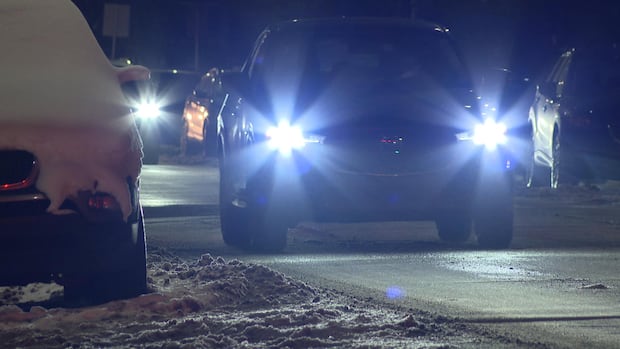
Rising concerns about nighttime driving discomfort are prompting calls for regulatory changes regarding vehicle headlights. Optometrist Rachael Berger has reported an increasing number of patients experiencing difficulties seeing at night, attributing these issues to the bright, often blinding LED headlights now common on many vehicles.
Berger, who practices in Saskatoon, explained to The Current host Peter Armstrong that the phenomenon is particularly troubling among young and healthy individuals. “I’m seeing an alarming number of perfectly young, healthy individuals coming in and saying, ‘I’m having a hard time seeing at night, what’s going on?’” she stated. The problem arises when the rods in our eyes, which assist with night vision, are suddenly bombarded by bright light. “When you’re driving at night and your rods are activated, and all of a sudden this blast of light comes, it can be very jarring,” she noted.
Advocates, including Berger, are urging the federal government and automotive manufacturers to revise regulations and industry standards concerning headlight brightness. The aim is to strike a better balance between enhancing visibility for drivers and ensuring the safety of all road users.
Understanding Discomfort Glare
LED headlights can emit light that is up to four times brighter than traditional halogen bulbs. This intense brightness can lead to a condition known as discomfort glare, characterized by visual fatigue and discomfort. Berger referred to the sudden brightness as “glare monsters,” which can overwhelm drivers, especially after prolonged exposure to other bright lights on the road.
Vehicle lighting consultant Daniel Stern echoed these concerns, stating that discomfort glare can detract from safe driving. He warned that when drivers are forced to divert their attention to manage glare, they may not focus adequately on the road ahead. “If you’re having to devote attention to dealing with glare by gritting your teeth or looking away, you’re not looking where you need to be,” Stern explained.
Stern also highlighted the decline in routine headlight adjustments during vehicle inspections, which could have previously mitigated some of the brightness issues. “That is largely a thing of the past, which is really unfortunate,” he remarked. He advocates for stricter regulations on headlight brightness for both new and existing vehicles.
Regulatory Gaps and Industry Response
Transport Canada last updated its headlight regulations in 2018, addressing advancements in lighting technologies and setting standards for height and automated leveling. However, these regulations do not account for modifications made by vehicle owners or dealers, leading to increased brightness without proper oversight.
According to Stern, many drivers mistakenly believe that replacing their vehicle’s original bulbs with brighter LED options is harmless. “A lot of people think, ‘Well, I had a great result putting LED bulbs in my dining room or garage. I’ll put them in my headlights too.’ The problem is that’s like putting on somebody else’s eyeglasses; the optics are mismatched,” he explained.
The president of Global Automakers of Canada, David Adams, expressed concern over the lack of accountability for aftermarket modifications. He believes that consumers should bear responsibility if modifications lead to non-compliance with safety regulations. “If you have an aftermarket provider or somebody doing DIY stuff to their vehicles and taking that vehicle out of the regulatory compliance that the manufacturer has to adhere to, they should then bear the responsibility,” he stated.
Adams explained that Canada’s proximity to U.S. regulations complicates the issue. The prevailing philosophy in North America has been that more light is better, with insufficient focus on glare control. “The philosophy in North America, driven primarily by the United States, has been that more light is always better. There’s really no emphasis on glare control,” he said.
Transport Canada is currently conducting a nationwide survey to explore how glare from modern headlights impacts driver safety and comfort. The findings are expected to be released in May 2024. Additionally, the agency is collaborating with the United Nations Economic Commission for Europe’s task force aimed at reducing glare.
In light of these concerns, city councils in Vancouver and Victoria have recently passed motions urging the federal government to take action. Vancouver Councillor Sean Orr, who submitted the motion, has researched how other regions manage headlight brightness and is advocating for updates to national vehicle safety standards. He noted that some features used in Europe and Asia, such as auto-dimming headlights and adaptive lighting that adjusts when turning, could significantly improve safety.
Vancouver Mayor Ken Sim plans to write to Transport Canada, emphasizing the need for regulatory changes to address excessive headlight brightness. This letter will be discussed at the Federation of Canadian Municipalities conference in June.
As these discussions unfold, the momentum for addressing the bright headlight issue continues to grow, reflecting a broader commitment to enhancing road safety for all drivers. With the potential for regulatory changes on the horizon, the hope is that drivers will soon experience greater comfort and safety while navigating the roads at night.

iShares Core Dividend Growth ETF Faces Challenges; Alternatives Suggested

Discover 7 Scenic Hikes Near Calgary to Explore This Spring

Scientists Uncover Life’s Building Blocks in Ryugu Asteroid Samples

Windsor-Essex Unveils New Action Plan to Combat Substance Use

Boost Your Business Visibility with These Local SEO Strategies

East Algoma OPP Urges Public to Limit Travel Amid Hazardous Conditions

Universities Must Rethink Failure to Support Student Growth

Canada Invests $6.4 Million to Boost Green Shipping Corridors

Stony Plain Secures 14th Consecutive Award for Financial Reporting Excellence

Rhythm Pharmaceuticals Reports Strong Q4 Growth Ahead of FDA Decision

Brandon University’s Failed $5 Million Project Sparks Oversight Review

Microsoft Confirms U.S. Law Overrules Canadian Data Sovereignty

Discover Aritzia’s Latest Fashion Trends: A Comprehensive Review

Winnipeg Celebrates Culinary Creativity During Le Burger Week 2025

New SĆIȺNEW̱ SṮEȽIṮḴEȽ Elementary Opens in Langford for 2025/2026 Year

EngineAI Unveils T800 Humanoid Robot, Setting New Industry Standards

Montreal’s Groupe Marcelle Leads Canadian Cosmetic Industry Growth

Tech Innovator Amandipp Singh Transforms Hiring for Disabled

Canmore’s Le Fournil Bakery to Close After 14 Successful Years

Dragon Ball: Sparking! Zero Launching on Switch and Switch 2 This November
-
 Education8 months ago
Brandon University’s Failed $5 Million Project Sparks Oversight Review
-
 Science9 months ago
Microsoft Confirms U.S. Law Overrules Canadian Data Sovereignty
-
 Lifestyle4 months ago
Discover Aritzia’s Latest Fashion Trends: A Comprehensive Review
-
 Lifestyle8 months ago
Winnipeg Celebrates Culinary Creativity During Le Burger Week 2025
-
 Education8 months ago
New SĆIȺNEW̱ SṮEȽIṮḴEȽ Elementary Opens in Langford for 2025/2026 Year
-
 Business5 months ago
EngineAI Unveils T800 Humanoid Robot, Setting New Industry Standards
-
 Health9 months ago
Montreal’s Groupe Marcelle Leads Canadian Cosmetic Industry Growth
-
 Science9 months ago
Tech Innovator Amandipp Singh Transforms Hiring for Disabled
-
 Lifestyle2 months ago
Canmore’s Le Fournil Bakery to Close After 14 Successful Years
-
 Technology9 months ago
Dragon Ball: Sparking! Zero Launching on Switch and Switch 2 This November
-

 Technology4 months ago
Digg Relaunches as Founders Kevin Rose and Alexis Ohanian Join Forces
-
 Top Stories5 months ago
Canadiens Eye Elias Pettersson: What It Would Cost to Acquire Him
-

 Health7 months ago
Eganville Leader to Close in 2026 After 123 Years of Reporting
-

 Lifestyle6 months ago
Edmonton’s Beloved Evolution Wonderlounge Closes, New Era Begins
-

 Education9 months ago
Red River College Launches New Programs to Address Industry Needs
-

 Top Stories5 months ago
Nicol Brothers Shine as Wheat Kings Dominate U18 AAA Hockey
-

 Business9 months ago
BNA Brewing to Open New Bowling Alley in Downtown Penticton
-

 Business8 months ago
Rocket Lab Reports Strong Q2 2025 Revenue Growth and Future Plans
-

 Education6 months ago
Alberta Petition Aims to Redirect Funds from Private to Public Schools
-

 Education9 months ago
Alberta Teachers’ Strike: Potential Impacts on Students and Families
-

 Technology7 months ago
Discord Faces Serious Security Breach Affecting Millions
-

 Technology9 months ago
Google Pixel 10 Pro Fold Specs Unveiled Ahead of Launch
-

 Education5 months ago
ʔaq̓am Education Law Enacted, Affirming Self-Governance Rights
-

 Business8 months ago
Iconic Golden Lion Restaurant in South Surrey to Close After 50 Years