
Science
USask Advances Critical Mineral Research and Training Initiatives

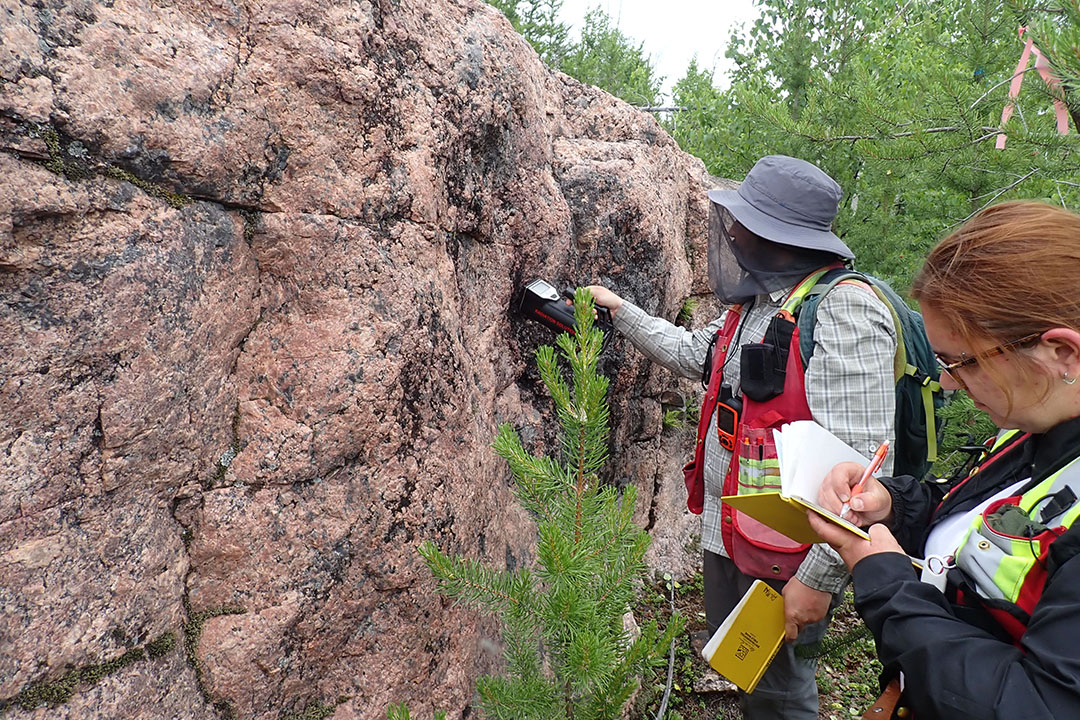
The University of Saskatchewan (USask) is intensifying its research and training efforts in critical minerals, which are essential for modern technology and strategic for energy and national security. The Government of Canada has identified **34 critical minerals**, with **27 of them located in Saskatchewan**, highlighting the province’s significant potential in this sector.
USask researchers, including **Dr. Matt Lindsay**, a professor in the Department of Geological Sciences, and **Dr. Camille Partin**, the inaugural Shklanka Chair in Precambrian Critical Mineral Systems, are at the forefront of this initiative. Dr. Lindsay emphasized the university’s unique position to foster sustainable production of critical minerals in Saskatchewan. “Saskatchewan is a very exciting place for researchers to study various aspects of critical minerals, from mineral exploration to mine remediation,” he stated.
Saskatchewan is currently producing only a few critical minerals, such as potash, uranium, and helium. However, upcoming projects aim to enhance the variety and quantity of minerals produced, including copper and zinc within the year. Dr. Lindsay’s research focuses on mitigating the environmental impacts of mining waste. He utilizes the **Canadian Light Source (CLS)** synchrotron on the USask campus to analyze potentially harmful materials in mining waste.
An innovative aspect of Dr. Lindsay’s work involves exploring the recovery of critical minerals from legacy mine waste. He noted that past mining practices often left behind valuable materials, which could now be identified and potentially recovered. “Metals present in legacy mine wastes are often viewed as environmental contaminants,” he explained. “Increasingly, however, we are considering how this same understanding could be used to develop ways to recover metals that are also considered critical minerals.”
Significant funding supports these research efforts. Four projects at USask received over **$4.3 million** from the **Natural Sciences and Engineering Research Council of Canada (NSERC)** through Alliance Missions grants for critical minerals research.
Dr. Partin leads a project funded by the NSERC Alliance Missions grant, focusing on rare earth elements (REEs) in pegmatite intrusions in northern Saskatchewan. These geological formations are rich in the mineral monazite, which contains REEs such as neodymium. REEs are crucial for electronics and sustainable energy technologies, including wind turbines. Dr. Partin’s project also received support from the U.K.-Canada Sustainable Critical Minerals Research Partnerships program, underscoring the international significance of this research.
“This speaks to the international importance of some of these critical minerals,” Dr. Partin remarked. “Some countries don’t have domestic sources and so they need to go abroad to friendly countries where they think they might be able to advance these projects.”
Dr. Partin’s expertise lies in Precambrian geology, which spans a four-billion-year history. Her research contributes valuable geological mapping data that assists both researchers and exploration companies in identifying critical minerals, particularly in the remote areas of northern Canada and Greenland.
USask’s initiatives align with Saskatchewan’s Critical Mineral Strategy, which aims to establish the province as a hub for rare earth elements. Collaboration with the **Saskatchewan Research Council** is key, as their upcoming Rare Earth Processing Facility will play a significant role in this strategy.
As the demand for critical minerals grows, USask is committed to training the next generation of geoscientists and engineers. Both Dr. Lindsay and Dr. Partin noted the increasing interest from provincial and federal governments as well as local and international mining companies in critical minerals. They emphasized the necessity of developing skilled professionals to support this vital sector.
The establishment of the **Global Institute for Energy, Minerals and Society (GIEMS)**, a joint initiative between USask, the University of Regina, and Saskatchewan Polytechnic, is a promising development in enhancing research and training in this field. “We’re hopeful that it will allow us to come together and really strengthen our training programs,” Dr. Partin said.
USask’s commitment to critical minerals research encompasses a broad spectrum of disciplines beyond geology, including environmental engineering, ecology, public policy, and economics. As Saskatchewan solidifies its role in Canada’s critical mineral sector, the university is positioning itself as a key hub for preparing future scientists and engineers to address the challenges associated with critical minerals.
“Geoscience is a key piece of the puzzle, but it is not separated from the policy, from the finance, from the engineering, or from other sciences,” Dr. Lindsay concluded. “These are complex challenges, and there is a need for people with advanced training.”

iShares Core Dividend Growth ETF Faces Challenges; Alternatives Suggested

Discover 7 Scenic Hikes Near Calgary to Explore This Spring

Scientists Uncover Life’s Building Blocks in Ryugu Asteroid Samples

Windsor-Essex Unveils New Action Plan to Combat Substance Use

Boost Your Business Visibility with These Local SEO Strategies

East Algoma OPP Urges Public to Limit Travel Amid Hazardous Conditions

Universities Must Rethink Failure to Support Student Growth

Canada Invests $6.4 Million to Boost Green Shipping Corridors

Stony Plain Secures 14th Consecutive Award for Financial Reporting Excellence

Rhythm Pharmaceuticals Reports Strong Q4 Growth Ahead of FDA Decision

Brandon University’s Failed $5 Million Project Sparks Oversight Review

Microsoft Confirms U.S. Law Overrules Canadian Data Sovereignty

Winnipeg Celebrates Culinary Creativity During Le Burger Week 2025

Discover Aritzia’s Latest Fashion Trends: A Comprehensive Review

New SĆIȺNEW̱ SṮEȽIṮḴEȽ Elementary Opens in Langford for 2025/2026 Year

EngineAI Unveils T800 Humanoid Robot, Setting New Industry Standards

Montreal’s Groupe Marcelle Leads Canadian Cosmetic Industry Growth

Tech Innovator Amandipp Singh Transforms Hiring for Disabled

Dragon Ball: Sparking! Zero Launching on Switch and Switch 2 This November

Digg Relaunches as Founders Kevin Rose and Alexis Ohanian Join Forces
-
 Education7 months ago
Brandon University’s Failed $5 Million Project Sparks Oversight Review
-
 Science8 months ago
Microsoft Confirms U.S. Law Overrules Canadian Data Sovereignty
-
 Lifestyle7 months ago
Winnipeg Celebrates Culinary Creativity During Le Burger Week 2025
-
 Lifestyle4 months ago
Discover Aritzia’s Latest Fashion Trends: A Comprehensive Review
-
 Education7 months ago
New SĆIȺNEW̱ SṮEȽIṮḴEȽ Elementary Opens in Langford for 2025/2026 Year
-
 Business4 months ago
EngineAI Unveils T800 Humanoid Robot, Setting New Industry Standards
-
 Health8 months ago
Montreal’s Groupe Marcelle Leads Canadian Cosmetic Industry Growth
-
 Science8 months ago
Tech Innovator Amandipp Singh Transforms Hiring for Disabled
-
 Technology8 months ago
Dragon Ball: Sparking! Zero Launching on Switch and Switch 2 This November
-
 Technology3 months ago
Digg Relaunches as Founders Kevin Rose and Alexis Ohanian Join Forces
-
 Top Stories4 months ago
Canadiens Eye Elias Pettersson: What It Would Cost to Acquire Him
-

 Lifestyle4 weeks ago
Canmore’s Le Fournil Bakery to Close After 14 Successful Years
-
 Health7 months ago
Eganville Leader to Close in 2026 After 123 Years of Reporting
-

 Education8 months ago
Red River College Launches New Programs to Address Industry Needs
-

 Top Stories4 months ago
Nicol Brothers Shine as Wheat Kings Dominate U18 AAA Hockey
-

 Business7 months ago
Rocket Lab Reports Strong Q2 2025 Revenue Growth and Future Plans
-

 Business8 months ago
BNA Brewing to Open New Bowling Alley in Downtown Penticton
-

 Education6 months ago
Alberta Petition Aims to Redirect Funds from Private to Public Schools
-

 Lifestyle5 months ago
Edmonton’s Beloved Evolution Wonderlounge Closes, New Era Begins
-

 Education8 months ago
Alberta Teachers’ Strike: Potential Impacts on Students and Families
-

 Technology6 months ago
Discord Faces Serious Security Breach Affecting Millions
-

 Technology8 months ago
Google Pixel 10 Pro Fold Specs Unveiled Ahead of Launch
-

 Business7 months ago
Iconic Golden Lion Restaurant in South Surrey to Close After 50 Years
-

 Science8 months ago
China’s Wukong Spacesuit Sets New Standard for AI in Space