
Science
SpaceX Removes Crew Access Arm to Support Starship Launches

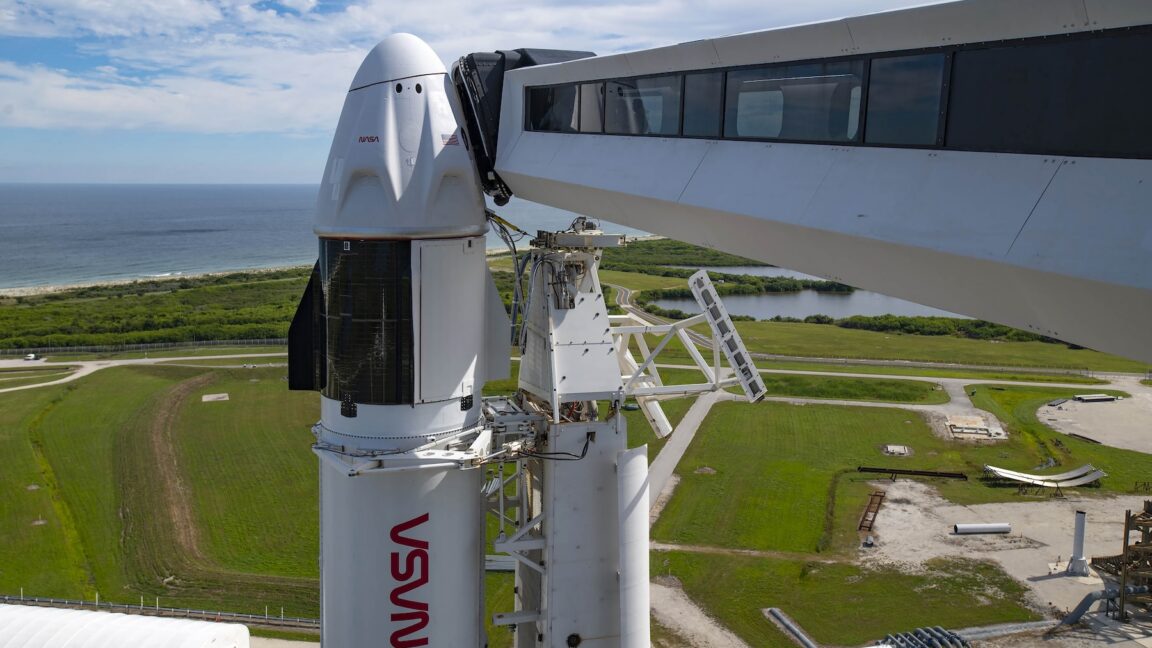
SpaceX has removed the Crew Access Arm at Launch Complex 39A, located at NASA’s Kennedy Space Center in Florida, to facilitate preparations for the upcoming launches of its Starship rocket. This significant modification marks another chapter in the evolution of a site that has seen decades of advancements, from launching the historic Saturn V rockets to supporting the Space Shuttle program and now the modern era of commercial spaceflight.
The removal of the Crew Access Arm, which enabled astronauts to board the Crew Dragon spacecraft, took place on Wednesday, following a series of modifications over the years. Initially constructed more than 60 years ago, Pad 39A was the launch site for numerous historic missions. SpaceX began its operations there in 2017, making it a key hub for Falcon 9 and Falcon Heavy launches.
In 2019, the new Crew Access Arm was installed to accommodate the Crew Dragon spacecraft, which completed its first crewed flight in 2020. Now, as SpaceX pivots to focus on the more powerful Starship, the existing launch infrastructure is being updated. A new launch tower for Starship is under construction approximately 1,000 feet east of the current structure at Pad 39A, with an aim to conduct Starship flights later this year.
As part of this transition, Falcon 9 launches from Pad 39A will be temporarily suspended. Instead, SpaceX will utilize nearby Pad 40, situated a few miles south at Cape Canaveral Space Force Station, which is operated on property leased from the US Space Force. According to Kiko Dontchev, SpaceX’s Vice President of Launch, the shift will allow teams to focus on Falcon Heavy and Starship operations.
Falcon Heavy will continue to launch from Pad 39A, as it is currently the only facility equipped to handle the triple-core rocket. The next Falcon Heavy launch is scheduled for no earlier than April, with a limited number of flights planned through the remainder of the decade. Ground teams have already begun installing a new Crew Access Arm at Pad 40 in preparation for its first crewed mission in 2024.
Lee Echerd, a senior mission manager for human spaceflight at SpaceX, commented, “Having two launch pads off the Florida coast is advantageous. Our future plans entail launching most Falcon 9 missions from Space Launch Complex 40, including all Crew Dragon missions.”
The operational dynamics at SpaceX are shifting, as the company aims to ramp up its Starship program. While Falcon 9 missions reached a peak of 165 launches last year, the focus now appears to be transitioning towards Starship. SpaceX has successfully reduced the turnaround time at Pad 40 to under 48 hours, allowing for increased launch frequency.
Another factor in the decision to remove the Crew Access Arm is the need for repairs to the bearings connecting the arm to the launch tower. Bill Gerstenmaier, SpaceX’s Vice President of Build and Flight Reliability, explained, “In order to access those bearings, the arm needs to be removed. We will complete this work at the Kennedy Space Center, ensuring that we can reinstall the arm when necessary.”
Despite the ongoing construction and removal of the Crew Access Arm, SpaceX has maintained its launch schedule for Falcon 9 and Falcon Heavy from Pad 39A. Gerstenmaier noted, “Current operations are not impacted by the modifications,” although future Starship tests may necessitate temporary closures of the pad.
As SpaceX continues to innovate and expand its capabilities, the evolution of Launch Complex 39A reflects the dynamic nature of modern space exploration. The company’s commitment to advancing its technology and mission objectives remains strong, paving the way for a new era in space travel.

iShares Core Dividend Growth ETF Faces Challenges; Alternatives Suggested

Discover 7 Scenic Hikes Near Calgary to Explore This Spring

Scientists Uncover Life’s Building Blocks in Ryugu Asteroid Samples

Windsor-Essex Unveils New Action Plan to Combat Substance Use

Boost Your Business Visibility with These Local SEO Strategies

East Algoma OPP Urges Public to Limit Travel Amid Hazardous Conditions

Universities Must Rethink Failure to Support Student Growth

Canada Invests $6.4 Million to Boost Green Shipping Corridors

Stony Plain Secures 14th Consecutive Award for Financial Reporting Excellence

Rhythm Pharmaceuticals Reports Strong Q4 Growth Ahead of FDA Decision

Brandon University’s Failed $5 Million Project Sparks Oversight Review

Microsoft Confirms U.S. Law Overrules Canadian Data Sovereignty

Winnipeg Celebrates Culinary Creativity During Le Burger Week 2025

Discover Aritzia’s Latest Fashion Trends: A Comprehensive Review

New SĆIȺNEW̱ SṮEȽIṮḴEȽ Elementary Opens in Langford for 2025/2026 Year

EngineAI Unveils T800 Humanoid Robot, Setting New Industry Standards

Montreal’s Groupe Marcelle Leads Canadian Cosmetic Industry Growth

Tech Innovator Amandipp Singh Transforms Hiring for Disabled

Dragon Ball: Sparking! Zero Launching on Switch and Switch 2 This November

Digg Relaunches as Founders Kevin Rose and Alexis Ohanian Join Forces
-
 Education7 months ago
Brandon University’s Failed $5 Million Project Sparks Oversight Review
-
 Science8 months ago
Microsoft Confirms U.S. Law Overrules Canadian Data Sovereignty
-
 Lifestyle7 months ago
Winnipeg Celebrates Culinary Creativity During Le Burger Week 2025
-
 Lifestyle4 months ago
Discover Aritzia’s Latest Fashion Trends: A Comprehensive Review
-
 Education7 months ago
New SĆIȺNEW̱ SṮEȽIṮḴEȽ Elementary Opens in Langford for 2025/2026 Year
-
 Business4 months ago
EngineAI Unveils T800 Humanoid Robot, Setting New Industry Standards
-
 Health8 months ago
Montreal’s Groupe Marcelle Leads Canadian Cosmetic Industry Growth
-
 Science8 months ago
Tech Innovator Amandipp Singh Transforms Hiring for Disabled
-
 Technology8 months ago
Dragon Ball: Sparking! Zero Launching on Switch and Switch 2 This November
-
 Technology3 months ago
Digg Relaunches as Founders Kevin Rose and Alexis Ohanian Join Forces
-
 Top Stories4 months ago
Canadiens Eye Elias Pettersson: What It Would Cost to Acquire Him
-

 Lifestyle3 weeks ago
Canmore’s Le Fournil Bakery to Close After 14 Successful Years
-

 Health6 months ago
Eganville Leader to Close in 2026 After 123 Years of Reporting
-

 Education8 months ago
Red River College Launches New Programs to Address Industry Needs
-

 Top Stories4 months ago
Nicol Brothers Shine as Wheat Kings Dominate U18 AAA Hockey
-

 Business7 months ago
Rocket Lab Reports Strong Q2 2025 Revenue Growth and Future Plans
-

 Business8 months ago
BNA Brewing to Open New Bowling Alley in Downtown Penticton
-

 Education6 months ago
Alberta Petition Aims to Redirect Funds from Private to Public Schools
-

 Education8 months ago
Alberta Teachers’ Strike: Potential Impacts on Students and Families
-

 Technology6 months ago
Discord Faces Serious Security Breach Affecting Millions
-

 Technology8 months ago
Google Pixel 10 Pro Fold Specs Unveiled Ahead of Launch
-

 Lifestyle5 months ago
Edmonton’s Beloved Evolution Wonderlounge Closes, New Era Begins
-

 Business7 months ago
Iconic Golden Lion Restaurant in South Surrey to Close After 50 Years
-

 Science8 months ago
China’s Wukong Spacesuit Sets New Standard for AI in Space