
Science
North Vancouver Student Develops Solar Device for Remote Clinics

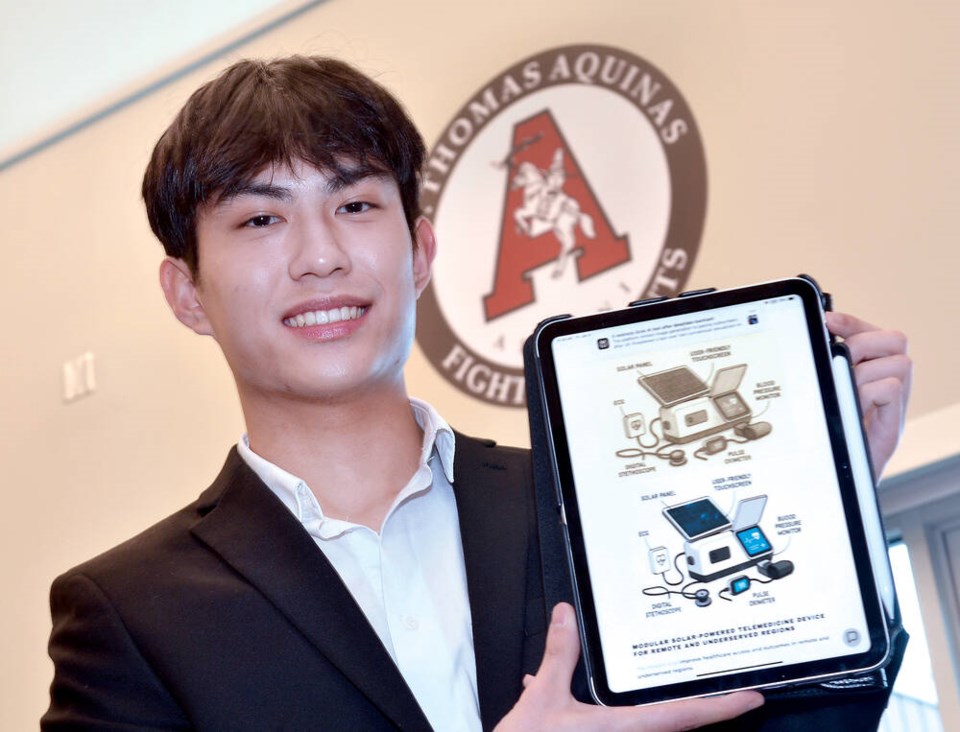
A student from North Vancouver has designed an innovative solar-powered medical device aimed at supporting health-care workers in remote clinics often affected by power outages. Jonathan Weng, a student at St. Thomas Aquinas School, has developed this device to address a critical need in areas where consistent electricity is not guaranteed.
The inspiration behind Weng’s invention stemmed from the challenges faced by medical professionals who operate in remote locations. Many clinics lack reliable access to power, which can severely hinder their ability to provide essential health services. Weng’s device is designed to operate independently of conventional power sources, utilizing solar energy to ensure that medical equipment remains functional even during outages.
Weng’s project, which took several months to develop, incorporates various medical instruments that are commonly used in clinics. The device not only functions as a power source but also integrates features that can assist health-care workers with diagnostics and treatment. This innovative solution promises to enhance the efficiency of health services in underserved areas, potentially saving lives.
In a statement, Weng expressed his desire to make a positive impact on communities that struggle with healthcare access. “I wanted to create something that could really help people in need,” he explained. The solar-powered device has garnered attention from local health organizations, who see its potential in improving healthcare delivery.
The project is currently in the prototype phase, with plans for further testing and refinement. Weng aims to collaborate with health-care professionals to ensure the device meets their needs effectively. By focusing on practical applications, he hopes to create a product that is both reliable and user-friendly.
As Weng continues to develop his device, he is also looking for support and funding to bring the project to fruition. He has approached local businesses and organizations for partnerships, emphasizing the importance of community involvement in addressing healthcare challenges.
Weng’s initiative highlights the growing trend of young innovators leveraging technology to solve pressing global issues. His commitment to improving health outcomes for those in remote areas is a testament to the power of creative thinking and determination.
Looking ahead, Weng envisions a future where his solar-powered medical device can be deployed in clinics across various regions, enhancing healthcare access for countless individuals. With continued support and development, this project could become a significant asset in the ongoing efforts to improve healthcare delivery in challenging environments.
In conclusion, Jonathan Weng’s ambition to create a solar-powered medical device represents a promising step forward in addressing the healthcare needs of remote communities. As he moves through the development stages, the potential for positive impact remains high, reflecting the critical intersection of innovation and humanitarian efforts in today’s world.

iShares Core Dividend Growth ETF Faces Challenges; Alternatives Suggested

Discover 7 Scenic Hikes Near Calgary to Explore This Spring

Scientists Uncover Life’s Building Blocks in Ryugu Asteroid Samples

Windsor-Essex Unveils New Action Plan to Combat Substance Use

Boost Your Business Visibility with These Local SEO Strategies

East Algoma OPP Urges Public to Limit Travel Amid Hazardous Conditions

Universities Must Rethink Failure to Support Student Growth

Canada Invests $6.4 Million to Boost Green Shipping Corridors

Stony Plain Secures 14th Consecutive Award for Financial Reporting Excellence

Rhythm Pharmaceuticals Reports Strong Q4 Growth Ahead of FDA Decision

Brandon University’s Failed $5 Million Project Sparks Oversight Review

Microsoft Confirms U.S. Law Overrules Canadian Data Sovereignty

Winnipeg Celebrates Culinary Creativity During Le Burger Week 2025

Discover Aritzia’s Latest Fashion Trends: A Comprehensive Review

New SĆIȺNEW̱ SṮEȽIṮḴEȽ Elementary Opens in Langford for 2025/2026 Year

EngineAI Unveils T800 Humanoid Robot, Setting New Industry Standards

Montreal’s Groupe Marcelle Leads Canadian Cosmetic Industry Growth

Tech Innovator Amandipp Singh Transforms Hiring for Disabled

Dragon Ball: Sparking! Zero Launching on Switch and Switch 2 This November

Digg Relaunches as Founders Kevin Rose and Alexis Ohanian Join Forces
-
 Education7 months ago
Brandon University’s Failed $5 Million Project Sparks Oversight Review
-
 Science8 months ago
Microsoft Confirms U.S. Law Overrules Canadian Data Sovereignty
-
 Lifestyle7 months ago
Winnipeg Celebrates Culinary Creativity During Le Burger Week 2025
-
 Lifestyle3 months ago
Discover Aritzia’s Latest Fashion Trends: A Comprehensive Review
-
 Education7 months ago
New SĆIȺNEW̱ SṮEȽIṮḴEȽ Elementary Opens in Langford for 2025/2026 Year
-
 Business4 months ago
EngineAI Unveils T800 Humanoid Robot, Setting New Industry Standards
-
 Health8 months ago
Montreal’s Groupe Marcelle Leads Canadian Cosmetic Industry Growth
-
 Science8 months ago
Tech Innovator Amandipp Singh Transforms Hiring for Disabled
-
 Technology8 months ago
Dragon Ball: Sparking! Zero Launching on Switch and Switch 2 This November
-
 Technology3 months ago
Digg Relaunches as Founders Kevin Rose and Alexis Ohanian Join Forces
-
 Top Stories4 months ago
Canadiens Eye Elias Pettersson: What It Would Cost to Acquire Him
-

 Lifestyle3 weeks ago
Canmore’s Le Fournil Bakery to Close After 14 Successful Years
-

 Health6 months ago
Eganville Leader to Close in 2026 After 123 Years of Reporting
-

 Education8 months ago
Red River College Launches New Programs to Address Industry Needs
-

 Top Stories4 months ago
Nicol Brothers Shine as Wheat Kings Dominate U18 AAA Hockey
-

 Business7 months ago
Rocket Lab Reports Strong Q2 2025 Revenue Growth and Future Plans
-

 Business8 months ago
BNA Brewing to Open New Bowling Alley in Downtown Penticton
-

 Education6 months ago
Alberta Petition Aims to Redirect Funds from Private to Public Schools
-

 Education8 months ago
Alberta Teachers’ Strike: Potential Impacts on Students and Families
-

 Technology6 months ago
Discord Faces Serious Security Breach Affecting Millions
-

 Technology8 months ago
Google Pixel 10 Pro Fold Specs Unveiled Ahead of Launch
-

 Lifestyle5 months ago
Edmonton’s Beloved Evolution Wonderlounge Closes, New Era Begins
-

 Business7 months ago
Iconic Golden Lion Restaurant in South Surrey to Close After 50 Years
-

 Science8 months ago
China’s Wukong Spacesuit Sets New Standard for AI in Space