
Science
NASA Delays Artemis II Launch to March Due to Hydrogen Leaks

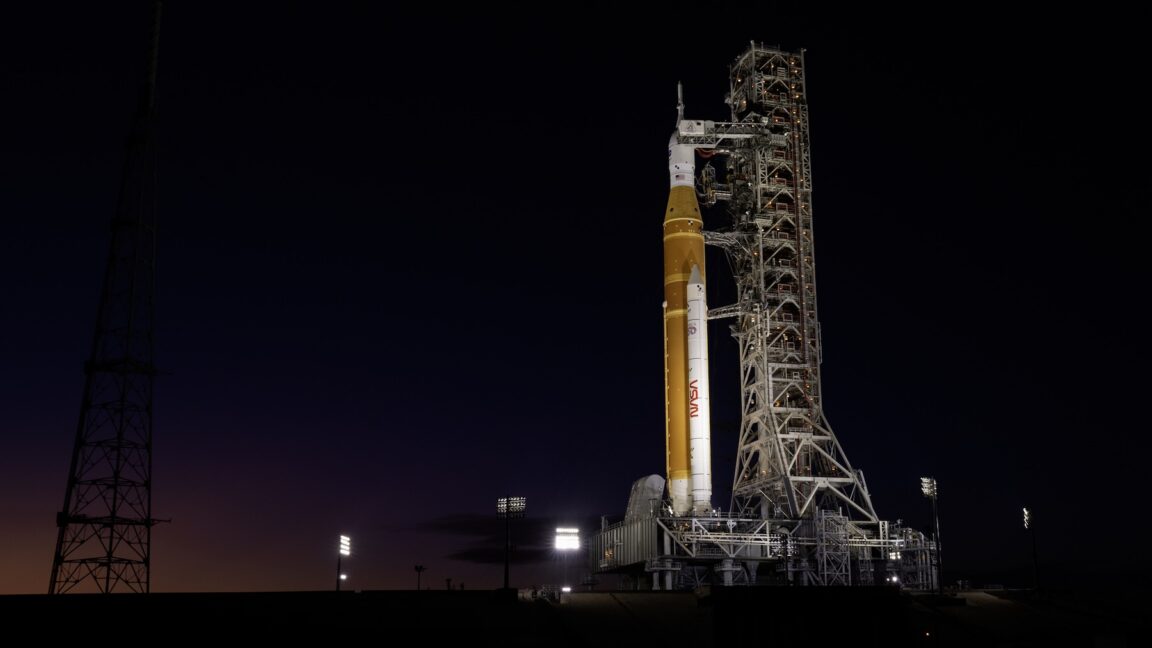
The launch of NASA’s **Artemis II** mission, marking the first crewed flight to the Moon in over 53 years, has been postponed until March 2024 due to persistent hydrogen leaks detected during a fueling test on February 5. The test was part of a crucial Wet Dress Rehearsal (WDR) at the **Kennedy Space Center** in Florida, aimed at identifying and resolving issues before the mission. Following the test, NASA officials announced that the next possible launch window would now be **March 6, 2024**, with a two-hour launch window opening at 20:29 EST (01:26 UTC on March 7).
Engineers encountered several challenges during the two-day countdown rehearsal, but they managed to meet many of the planned objectives. NASA stated, “To allow teams to review data and conduct a second Wet Dress Rehearsal, NASA now will target March as the earliest possible launch opportunity for the flight test.”
The practice countdown was critical for ensuring that all systems were functioning properly prior to the mission. Unfortunately, the test highlighted ongoing issues with hydrogen leaks, similar to those experienced during the Artemis I uncrewed test flight, which faced delays in 2022. Engineers had previously adjusted hydrogen loading procedures to mitigate these leaks, but the latest test revealed that the problem persists.
Hydrogen Leak Issues and Their Impact
The Artemis II mission is set to carry four astronauts aboard the **Orion spacecraft** on a trajectory around the far side of the Moon, the first crewed lunar flight since 1972. The crew includes **Reid Wiseman**, **Victor Glover**, **Christina Koch**, and **Jeremy Hansen**. They have been in medical quarantine since January 21, a preparatory measure for space travel, but will now return to their training base in Houston until a new launch date is confirmed.
The countdown rehearsal, which began around midday on February 5, faced delays due to cold temperatures in Florida. Hydrogen leaks were detected shortly after the team began fueling the rocket with super-cooled liquid hydrogen, specifically at the connection points known as Tail Service Mast Umbilicals (TSMUs). These TSMUs are critical for transferring propellant from ground storage to the SLS core stage.
NASA accepts that some hydrogen will escape from the seals during fueling; however, during this recent rehearsal, the concentration of hydrogen gas exceeded safe limits multiple times. NASA officials previously established a threshold of 4 percent hydrogen concentration near the fueling connector.
In an attempt to resolve the issue, the team stopped the flow of liquid hydrogen, allowing the seals to re-seat. Despite these efforts, the countdown was ultimately halted due to a significant increase in the hydrogen leak rate, stopping just five minutes and fifteen seconds before the scheduled launch.
Next Steps and Future Preparations
Following the incomplete test, NASA administrators decided to delay the Artemis II launch. The agency expressed its commitment to safety, with NASA Administrator **Jared Isaacman** emphasizing, “As always, safety remains our top priority, for our astronauts, our workforce, our systems, and the public. We will only launch when we believe we are as ready to undertake this historic mission.”
The Artemis II team will conduct a thorough review of the data collected during the test to address the hydrogen leak issues. It remains unclear whether the rocket will be rolled back to the assembly building for repairs or if further testing will occur on-site.
NASA plans to hold a press briefing to provide more insight into the results of the test and outline the next steps for the Artemis II mission. As the agency gears up for this historic mission, the focus remains on ensuring all systems are fully operational before launching the first crewed lunar mission in over five decades.

iShares Core Dividend Growth ETF Faces Challenges; Alternatives Suggested

Discover 7 Scenic Hikes Near Calgary to Explore This Spring

Scientists Uncover Life’s Building Blocks in Ryugu Asteroid Samples

Windsor-Essex Unveils New Action Plan to Combat Substance Use

Boost Your Business Visibility with These Local SEO Strategies

East Algoma OPP Urges Public to Limit Travel Amid Hazardous Conditions

Universities Must Rethink Failure to Support Student Growth

Canada Invests $6.4 Million to Boost Green Shipping Corridors

Stony Plain Secures 14th Consecutive Award for Financial Reporting Excellence

Rhythm Pharmaceuticals Reports Strong Q4 Growth Ahead of FDA Decision

Brandon University’s Failed $5 Million Project Sparks Oversight Review

Microsoft Confirms U.S. Law Overrules Canadian Data Sovereignty

Winnipeg Celebrates Culinary Creativity During Le Burger Week 2025

Discover Aritzia’s Latest Fashion Trends: A Comprehensive Review

New SĆIȺNEW̱ SṮEȽIṮḴEȽ Elementary Opens in Langford for 2025/2026 Year

EngineAI Unveils T800 Humanoid Robot, Setting New Industry Standards

Montreal’s Groupe Marcelle Leads Canadian Cosmetic Industry Growth

Tech Innovator Amandipp Singh Transforms Hiring for Disabled

Dragon Ball: Sparking! Zero Launching on Switch and Switch 2 This November

Digg Relaunches as Founders Kevin Rose and Alexis Ohanian Join Forces
-
 Education7 months ago
Brandon University’s Failed $5 Million Project Sparks Oversight Review
-
 Science8 months ago
Microsoft Confirms U.S. Law Overrules Canadian Data Sovereignty
-
 Lifestyle7 months ago
Winnipeg Celebrates Culinary Creativity During Le Burger Week 2025
-
 Lifestyle4 months ago
Discover Aritzia’s Latest Fashion Trends: A Comprehensive Review
-
 Education8 months ago
New SĆIȺNEW̱ SṮEȽIṮḴEȽ Elementary Opens in Langford for 2025/2026 Year
-
 Business4 months ago
EngineAI Unveils T800 Humanoid Robot, Setting New Industry Standards
-
 Health8 months ago
Montreal’s Groupe Marcelle Leads Canadian Cosmetic Industry Growth
-
 Science8 months ago
Tech Innovator Amandipp Singh Transforms Hiring for Disabled
-
 Technology8 months ago
Dragon Ball: Sparking! Zero Launching on Switch and Switch 2 This November
-
 Technology3 months ago
Digg Relaunches as Founders Kevin Rose and Alexis Ohanian Join Forces
-

 Lifestyle4 weeks ago
Canmore’s Le Fournil Bakery to Close After 14 Successful Years
-
 Top Stories4 months ago
Canadiens Eye Elias Pettersson: What It Would Cost to Acquire Him
-

 Health7 months ago
Eganville Leader to Close in 2026 After 123 Years of Reporting
-

 Education8 months ago
Red River College Launches New Programs to Address Industry Needs
-

 Business8 months ago
BNA Brewing to Open New Bowling Alley in Downtown Penticton
-

 Top Stories4 months ago
Nicol Brothers Shine as Wheat Kings Dominate U18 AAA Hockey
-

 Business7 months ago
Rocket Lab Reports Strong Q2 2025 Revenue Growth and Future Plans
-

 Lifestyle5 months ago
Edmonton’s Beloved Evolution Wonderlounge Closes, New Era Begins
-

 Education6 months ago
Alberta Petition Aims to Redirect Funds from Private to Public Schools
-

 Education8 months ago
Alberta Teachers’ Strike: Potential Impacts on Students and Families
-

 Technology6 months ago
Discord Faces Serious Security Breach Affecting Millions
-

 Technology8 months ago
Google Pixel 10 Pro Fold Specs Unveiled Ahead of Launch
-

 Business8 months ago
Iconic Golden Lion Restaurant in South Surrey to Close After 50 Years
-

 Lifestyle6 months ago
Canadian Author Secures Funding to Write Book Without Financial Strain