
Science
Chinese Families Turn to Homeschooling Amid Education Reform

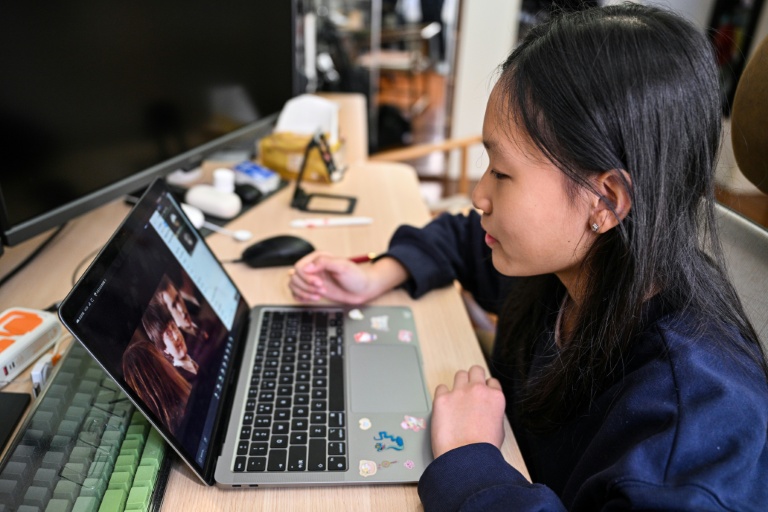
The trend of homeschooling is gaining traction in China as families seek alternatives to the country’s demanding public education system. Fourteen-year-old Estella, who resides in Shanghai, exemplifies this shift. After her parents withdrew her from a public school three years ago, she now engages in a diverse range of subjects, including Spanish, rock climbing, and acupuncture, all from the comfort of her home. Her parents, concerned about the challenges posed by a rigorous curriculum and the influence of artificial intelligence, decided to embrace a more flexible educational approach.
Homeschooling remains technically illegal in China, yet individual cases are often overlooked by authorities. As of 2017, only approximately 6,000 children were registered as homeschooled, in stark contrast to the 145 million primary and middle school students in the country. Despite this, the number of homeschooled children has reportedly grown annually by around 30 percent since 2013, according to the 21st Century Education Research Institute.
Estella’s mother, Xu Zoe, expressed her concerns about the future of education in a rapidly changing job market. “In the future, education models and jobs will face huge changes due to AI,” she said. This sentiment resonates with many parents who find the conventional schooling system increasingly inadequate.
The Chinese education landscape is facing significant challenges, especially for young adults entering the workforce. In 2023, less than one in five undergraduates from Fudan University, one of China’s most prestigious institutions, secured employment immediately upon graduation. Additionally, the youth unemployment rate reached a two-year high of 18.9 percent in August, according to the National Bureau of Statistics.
Experts, including education author Yong Zhao, highlight the oversaturation of graduates in the job market. “(China) has out-produced. Too many PhDs, too many Masters, too many undergraduates. The jobs they are trying to get are disappearing,” he remarked.
In an effort to temper the competitive nature of education, Chinese authorities have cracked down on tutoring services. Still, demand persists, particularly for informal and private tutoring. Families often navigate the legal gray areas surrounding homeschooling. One mother from Zhejiang, who requested anonymity, leveraged AI technology to create lesson plans for her son, illustrating the innovative methods parents are adopting to facilitate learning outside traditional classrooms.
The benefits of a personalized education approach are evident for many families. Estella’s schedule includes not just academic subjects but also personal interests that foster creativity and confidence. “Instead of just doing a stressful exam in school, I will do the things I was interested in,” she shared.
Time spent with peers has been a notable sacrifice for some homeschooled children. For Gong Yimei, who was withdrawn from school at eight, the lack of social interaction with age-mates was a significant loss. Yet, she acknowledges that the freedom to explore her interests has been invaluable. “You ask yourself, ‘What do I like? What do I want?’” Gong said, reflecting on her unique educational journey.
Estella’s family is contemplating international travel to enhance her language skills, indicating a willingness to explore diverse educational opportunities. Xu is optimistic about the future of homeschooling in China and encourages other parents to consider this path. “You don’t need to be afraid,” she stated, underscoring a growing movement towards alternative education models in the face of conventional constraints.
As societal attitudes continue to evolve, the rise of homeschooling in China may signal a broader reevaluation of educational priorities. Families are increasingly prioritizing individualized learning experiences that align with their children’s personal needs and the realities of a changing job market.

iShares Core Dividend Growth ETF Faces Challenges; Alternatives Suggested

Discover 7 Scenic Hikes Near Calgary to Explore This Spring

Scientists Uncover Life’s Building Blocks in Ryugu Asteroid Samples

Windsor-Essex Unveils New Action Plan to Combat Substance Use

Boost Your Business Visibility with These Local SEO Strategies

East Algoma OPP Urges Public to Limit Travel Amid Hazardous Conditions

Universities Must Rethink Failure to Support Student Growth

Canada Invests $6.4 Million to Boost Green Shipping Corridors

Stony Plain Secures 14th Consecutive Award for Financial Reporting Excellence

Rhythm Pharmaceuticals Reports Strong Q4 Growth Ahead of FDA Decision

Brandon University’s Failed $5 Million Project Sparks Oversight Review

Microsoft Confirms U.S. Law Overrules Canadian Data Sovereignty

Winnipeg Celebrates Culinary Creativity During Le Burger Week 2025

Discover Aritzia’s Latest Fashion Trends: A Comprehensive Review

New SĆIȺNEW̱ SṮEȽIṮḴEȽ Elementary Opens in Langford for 2025/2026 Year

EngineAI Unveils T800 Humanoid Robot, Setting New Industry Standards

Montreal’s Groupe Marcelle Leads Canadian Cosmetic Industry Growth

Tech Innovator Amandipp Singh Transforms Hiring for Disabled

Dragon Ball: Sparking! Zero Launching on Switch and Switch 2 This November

Digg Relaunches as Founders Kevin Rose and Alexis Ohanian Join Forces
-
 Education7 months ago
Brandon University’s Failed $5 Million Project Sparks Oversight Review
-
 Science8 months ago
Microsoft Confirms U.S. Law Overrules Canadian Data Sovereignty
-
 Lifestyle7 months ago
Winnipeg Celebrates Culinary Creativity During Le Burger Week 2025
-
 Lifestyle4 months ago
Discover Aritzia’s Latest Fashion Trends: A Comprehensive Review
-
 Education8 months ago
New SĆIȺNEW̱ SṮEȽIṮḴEȽ Elementary Opens in Langford for 2025/2026 Year
-
 Business4 months ago
EngineAI Unveils T800 Humanoid Robot, Setting New Industry Standards
-
 Health8 months ago
Montreal’s Groupe Marcelle Leads Canadian Cosmetic Industry Growth
-
 Science8 months ago
Tech Innovator Amandipp Singh Transforms Hiring for Disabled
-
 Technology8 months ago
Dragon Ball: Sparking! Zero Launching on Switch and Switch 2 This November
-
 Technology3 months ago
Digg Relaunches as Founders Kevin Rose and Alexis Ohanian Join Forces
-

 Lifestyle4 weeks ago
Canmore’s Le Fournil Bakery to Close After 14 Successful Years
-
 Top Stories4 months ago
Canadiens Eye Elias Pettersson: What It Would Cost to Acquire Him
-

 Health7 months ago
Eganville Leader to Close in 2026 After 123 Years of Reporting
-

 Education8 months ago
Red River College Launches New Programs to Address Industry Needs
-

 Business8 months ago
BNA Brewing to Open New Bowling Alley in Downtown Penticton
-

 Top Stories4 months ago
Nicol Brothers Shine as Wheat Kings Dominate U18 AAA Hockey
-

 Business7 months ago
Rocket Lab Reports Strong Q2 2025 Revenue Growth and Future Plans
-

 Lifestyle5 months ago
Edmonton’s Beloved Evolution Wonderlounge Closes, New Era Begins
-

 Education6 months ago
Alberta Petition Aims to Redirect Funds from Private to Public Schools
-

 Education8 months ago
Alberta Teachers’ Strike: Potential Impacts on Students and Families
-

 Technology6 months ago
Discord Faces Serious Security Breach Affecting Millions
-

 Technology8 months ago
Google Pixel 10 Pro Fold Specs Unveiled Ahead of Launch
-

 Business8 months ago
Iconic Golden Lion Restaurant in South Surrey to Close After 50 Years
-

 Lifestyle6 months ago
Canadian Author Secures Funding to Write Book Without Financial Strain