
Science
Canadian Astronaut to Explore Moon’s Hidden Side on Artemis II

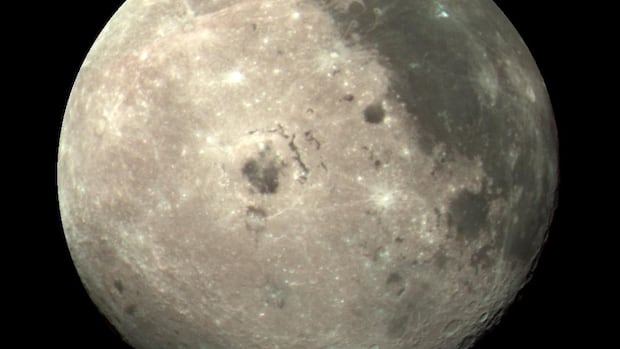
Canadian astronaut Jeremy Hansen is set to embark on a groundbreaking mission as part of the Artemis II crew, which will include a rare opportunity to observe the far side of the moon. This region, invisible from Earth, has long fascinated scientists and astronomers due to its unique characteristics and potential for future exploration.
The far side of the moon, often misunderstood as the “dark side,” receives just as much sunlight as the side facing Earth. Its rugged, crater-filled landscape differs significantly from the smoother plains known as “Maria” on the near side. During the Artemis II mission, Hansen and his fellow astronauts will not only experience the thrill of lunar flyby but will also conduct detailed observations of this unexplored territory. Their mission will take them approximately 7,500 kilometers beyond the moon, allowing them to view the entire lunar globe and the Earth simultaneously, a perspective never before witnessed by humans.
A New Era of Lunar Exploration
As Hansen gazes out at the lunar surface, he will have the chance to observe subtle details that cameras might miss, such as variations in color and shades of grey. These visual clues provide insight into the ground conditions, which are crucial for future landing missions. The Artemis II flyby will significantly contribute to understanding the moon’s terrain, aiding in the planning of subsequent lunar landings.
While Hansen’s crew focuses on their observations, scientists back on Earth are preparing for ambitious projects aimed at exploring the far side of the moon. One notable initiative is the Japanese TSUKUYOMI, or Lunar Meter Wave Telescope, designed to deploy an array of radio dishes on the moon’s far side. This mission aims to detect faint radio signals from the universe’s “dark ages,” a period shortly after the Big Bang when the universe was primarily composed of neutral hydrogen gas. By studying these signals, researchers hope to gain insights into the formation of stars, galaxies, and the role of dark matter in shaping the cosmos.
Building a Network of Lunar Observatories
The first prototype of the TSUKUYOMI is scheduled to land near the moon’s south pole between 2027 and 2028. In the following decade, additional antennas will be deployed to enhance the network of observatories on the far side. Joining TSUKUYOMI is the University of Colorado Boulder’s LuSEE Night, a robotic radio observatory set to launch this year, alongside NASA’s Farside Seismic Suite, which is slated for a 2027 launch. Together, these missions will create a comprehensive system for studying the universe’s earliest epochs.
While human missions, such as those planned under the Artemis program, will focus on establishing a lunar base and searching for water ice at the south pole, the far side will host a variety of robotic missions. These robots will operate in silence, gathering data to unravel the mysteries of the universe’s origin while remaining out of sight from Earth.
As Hansen prepares for Artemis II, his journey signifies a leap forward in lunar exploration. The mission not only offers a glimpse into the moon’s hidden side but also lays the groundwork for future scientific advancements aimed at understanding our universe’s beginnings.

iShares Core Dividend Growth ETF Faces Challenges; Alternatives Suggested

Discover 7 Scenic Hikes Near Calgary to Explore This Spring

Scientists Uncover Life’s Building Blocks in Ryugu Asteroid Samples

Windsor-Essex Unveils New Action Plan to Combat Substance Use

Boost Your Business Visibility with These Local SEO Strategies

East Algoma OPP Urges Public to Limit Travel Amid Hazardous Conditions

Universities Must Rethink Failure to Support Student Growth

Canada Invests $6.4 Million to Boost Green Shipping Corridors

Stony Plain Secures 14th Consecutive Award for Financial Reporting Excellence

Rhythm Pharmaceuticals Reports Strong Q4 Growth Ahead of FDA Decision

Brandon University’s Failed $5 Million Project Sparks Oversight Review

Microsoft Confirms U.S. Law Overrules Canadian Data Sovereignty

Winnipeg Celebrates Culinary Creativity During Le Burger Week 2025

New SĆIȺNEW̱ SṮEȽIṮḴEȽ Elementary Opens in Langford for 2025/2026 Year

EngineAI Unveils T800 Humanoid Robot, Setting New Industry Standards

Montreal’s Groupe Marcelle Leads Canadian Cosmetic Industry Growth

Tech Innovator Amandipp Singh Transforms Hiring for Disabled

Discover Aritzia’s Latest Fashion Trends: A Comprehensive Review

Dragon Ball: Sparking! Zero Launching on Switch and Switch 2 This November

Digg Relaunches as Founders Kevin Rose and Alexis Ohanian Join Forces
-
 Education7 months ago
Brandon University’s Failed $5 Million Project Sparks Oversight Review
-
 Science7 months ago
Microsoft Confirms U.S. Law Overrules Canadian Data Sovereignty
-
 Lifestyle7 months ago
Winnipeg Celebrates Culinary Creativity During Le Burger Week 2025
-
 Education7 months ago
New SĆIȺNEW̱ SṮEȽIṮḴEȽ Elementary Opens in Langford for 2025/2026 Year
-
 Business4 months ago
EngineAI Unveils T800 Humanoid Robot, Setting New Industry Standards
-
 Health7 months ago
Montreal’s Groupe Marcelle Leads Canadian Cosmetic Industry Growth
-
 Science7 months ago
Tech Innovator Amandipp Singh Transforms Hiring for Disabled
-
 Lifestyle3 months ago
Discover Aritzia’s Latest Fashion Trends: A Comprehensive Review
-
 Technology7 months ago
Dragon Ball: Sparking! Zero Launching on Switch and Switch 2 This November
-
 Technology2 months ago
Digg Relaunches as Founders Kevin Rose and Alexis Ohanian Join Forces
-
 Top Stories3 months ago
Canadiens Eye Elias Pettersson: What It Would Cost to Acquire Him
-

 Health6 months ago
Eganville Leader to Close in 2026 After 123 Years of Reporting
-

 Education7 months ago
Red River College Launches New Programs to Address Industry Needs
-

 Business6 months ago
Rocket Lab Reports Strong Q2 2025 Revenue Growth and Future Plans
-

 Top Stories3 months ago
Nicol Brothers Shine as Wheat Kings Dominate U18 AAA Hockey
-

 Education5 months ago
Alberta Petition Aims to Redirect Funds from Private to Public Schools
-

 Business7 months ago
BNA Brewing to Open New Bowling Alley in Downtown Penticton
-

 Technology7 months ago
Google Pixel 10 Pro Fold Specs Unveiled Ahead of Launch
-

 Technology6 months ago
Discord Faces Serious Security Breach Affecting Millions
-

 Education7 months ago
Alberta Teachers’ Strike: Potential Impacts on Students and Families
-

 Lifestyle2 weeks ago
Canmore’s Le Fournil Bakery to Close After 14 Successful Years
-

 Business7 months ago
Iconic Golden Lion Restaurant in South Surrey to Close After 50 Years
-

 Science7 months ago
China’s Wukong Spacesuit Sets New Standard for AI in Space
-

 Lifestyle5 months ago
Edmonton’s Beloved Evolution Wonderlounge Closes, New Era Begins