
Science
Ancient Hand Stencil Discovered in Indonesia Dating Back 67,800 Years

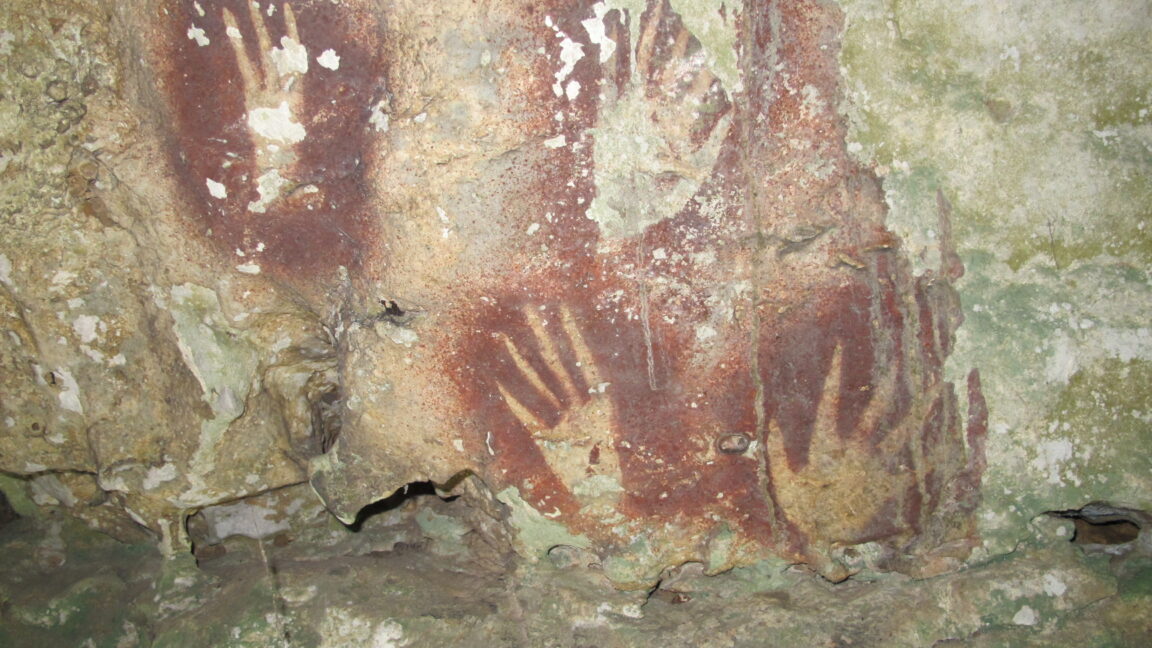
The discovery of a hand stencil in a cave on the Indonesian island of Sulawesi has been confirmed as the world’s oldest known human-made art, dating back an astonishing 67,800 years. This finding, detailed in a recent study led by Adhi Agus Oktaviana from Indonesia’s National Research and Innovation Agency, sheds light on the early artistic expression of our species and the rich history of human presence in the region.
Significance of the Discovery
The hand stencil, found at a site known as Liang Metanduno, represents a significant archaeological milestone. It is not only the oldest artwork currently known but also the earliest evidence of human existence on the islands spanning between continental Asia and Australia. Previously, the title of the oldest artwork was held by a Neanderthal hand stencil located in Spain, which is estimated to be around 1,100 years younger.
Oktaviana and his team spent six years exploring 44 rock art sites primarily on Sulawesi’s southeastern peninsula. Their efforts led to the identification of 14 previously undocumented sites and the dating of 11 individual pieces of rock art across eight caves. The meticulous dating was achieved by analyzing the rock formations and the calcite layers over the stencil. The calcite, which contains traces of uranium and thorium, indicates it formed at least 71,000 years ago, placing the stencil’s creation around 67,800 years ago.
A Glimpse into the Past
The process of creating the stencil involved an individual placing their hand against the limestone wall and then blowing a mixture of pigment and water around it. The result is a vivid negative image that offers a tangible connection to the past. While the stencil has faded over time, it still presents a striking outline of a hand, evoking the presence of the artist who once stood there.
The cave’s history extends beyond this stencil. The walls of Liang Metanduno also feature more recent artworks, including a drawing of a chicken believed to have been added around 5,000 years ago. This layering of art illustrates a long-standing tradition of human expression, with generations returning to the cave to leave their marks.
The findings from Sulawesi contribute to the growing understanding of the region as a hub of early human culture. The artistic heritage includes not only hand stencils but also depictions of animals and human-like figures, suggesting a rich tapestry of life in the late Pleistocene epoch.
Oktaviana and his colleagues observed, “These findings support the growing view that Sulawesi was host to a vibrant and longstanding artistic culture during the late Pleistocene epoch.” This assertion is further bolstered by discoveries in the nearby Maros-Pangkep region, which contains a wealth of ancient rock art.
The implications of this discovery extend to our understanding of human migration patterns. The hand stencil on Sulawesi is now recognized as the oldest evidence of human presence in the Wallacea region, a collection of islands that played a crucial role in early human dispersal across the globe.
Research indicates that the first people might have ventured to these islands through planned sea crossings, requiring knowledge of boat construction and navigation. The presence of the hand stencil pushes back the timeline of these migrations by nearly 10,000 years, supporting theories that humans reached Australia earlier than previously thought.
Archaeological evidence from the Madjedbebe site in northern Australia suggests human habitation as far back as 65,000 years ago. However, this date remains a topic of debate among researchers. The recent findings from Sulawesi lend credence to the notion that the first human settlers in Australia may have arrived earlier than previously estimated.
As archaeologists continue to investigate the art of Sulawesi and its surrounding islands, there is potential for further groundbreaking discoveries. Many areas remain underexplored, and the possibility of uncovering additional ancient artworks or artifacts looms large.
The hand stencil serves as a poignant reminder of the human connection through time and space. It encapsulates a moment when someone reached out to communicate, leaving behind a legacy that resonates even after tens of millennia. As researchers delve deeper into the history of these islands, they hope to uncover more about the stories and lives of the people who once inhabited them.

iShares Core Dividend Growth ETF Faces Challenges; Alternatives Suggested

Discover 7 Scenic Hikes Near Calgary to Explore This Spring

Scientists Uncover Life’s Building Blocks in Ryugu Asteroid Samples

Windsor-Essex Unveils New Action Plan to Combat Substance Use

Boost Your Business Visibility with These Local SEO Strategies

East Algoma OPP Urges Public to Limit Travel Amid Hazardous Conditions

Universities Must Rethink Failure to Support Student Growth

Canada Invests $6.4 Million to Boost Green Shipping Corridors

Stony Plain Secures 14th Consecutive Award for Financial Reporting Excellence

Rhythm Pharmaceuticals Reports Strong Q4 Growth Ahead of FDA Decision

Brandon University’s Failed $5 Million Project Sparks Oversight Review

Microsoft Confirms U.S. Law Overrules Canadian Data Sovereignty

Winnipeg Celebrates Culinary Creativity During Le Burger Week 2025

Discover Aritzia’s Latest Fashion Trends: A Comprehensive Review

New SĆIȺNEW̱ SṮEȽIṮḴEȽ Elementary Opens in Langford for 2025/2026 Year

EngineAI Unveils T800 Humanoid Robot, Setting New Industry Standards

Montreal’s Groupe Marcelle Leads Canadian Cosmetic Industry Growth

Tech Innovator Amandipp Singh Transforms Hiring for Disabled

Dragon Ball: Sparking! Zero Launching on Switch and Switch 2 This November

Digg Relaunches as Founders Kevin Rose and Alexis Ohanian Join Forces
-
 Education7 months ago
Brandon University’s Failed $5 Million Project Sparks Oversight Review
-
 Science8 months ago
Microsoft Confirms U.S. Law Overrules Canadian Data Sovereignty
-
 Lifestyle7 months ago
Winnipeg Celebrates Culinary Creativity During Le Burger Week 2025
-
 Lifestyle3 months ago
Discover Aritzia’s Latest Fashion Trends: A Comprehensive Review
-
 Education7 months ago
New SĆIȺNEW̱ SṮEȽIṮḴEȽ Elementary Opens in Langford for 2025/2026 Year
-
 Business4 months ago
EngineAI Unveils T800 Humanoid Robot, Setting New Industry Standards
-
 Health8 months ago
Montreal’s Groupe Marcelle Leads Canadian Cosmetic Industry Growth
-
 Science8 months ago
Tech Innovator Amandipp Singh Transforms Hiring for Disabled
-
 Technology8 months ago
Dragon Ball: Sparking! Zero Launching on Switch and Switch 2 This November
-
 Technology3 months ago
Digg Relaunches as Founders Kevin Rose and Alexis Ohanian Join Forces
-
 Top Stories4 months ago
Canadiens Eye Elias Pettersson: What It Would Cost to Acquire Him
-

 Lifestyle3 weeks ago
Canmore’s Le Fournil Bakery to Close After 14 Successful Years
-

 Health6 months ago
Eganville Leader to Close in 2026 After 123 Years of Reporting
-

 Education8 months ago
Red River College Launches New Programs to Address Industry Needs
-

 Top Stories4 months ago
Nicol Brothers Shine as Wheat Kings Dominate U18 AAA Hockey
-

 Business7 months ago
Rocket Lab Reports Strong Q2 2025 Revenue Growth and Future Plans
-

 Business8 months ago
BNA Brewing to Open New Bowling Alley in Downtown Penticton
-

 Education5 months ago
Alberta Petition Aims to Redirect Funds from Private to Public Schools
-

 Education8 months ago
Alberta Teachers’ Strike: Potential Impacts on Students and Families
-

 Technology6 months ago
Discord Faces Serious Security Breach Affecting Millions
-

 Technology8 months ago
Google Pixel 10 Pro Fold Specs Unveiled Ahead of Launch
-

 Lifestyle5 months ago
Edmonton’s Beloved Evolution Wonderlounge Closes, New Era Begins
-

 Business7 months ago
Iconic Golden Lion Restaurant in South Surrey to Close After 50 Years
-

 Science8 months ago
China’s Wukong Spacesuit Sets New Standard for AI in Space