
Science
Alberta Enacts New Wild Boar Restrictions to Combat Invasive Threat

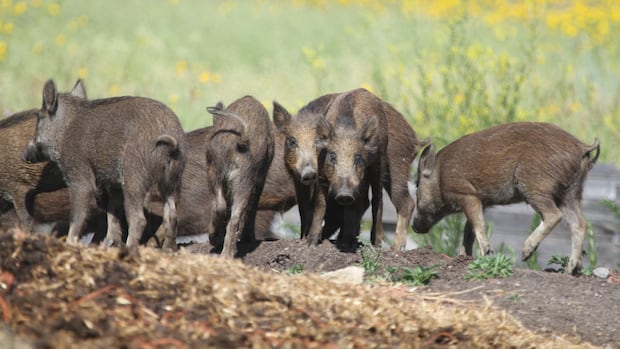
The Alberta government has officially classified wild boars as “a pest in all circumstances,” leading to significant new restrictions on their management effective December 1, 2023. This designation prohibits the keeping, buying, selling, obtaining, or transporting of wild boars within the province without a permit. Consequently, no new wild boar farms will be established, and hunting and trapping of these animals will be largely banned, with exceptions only for landowners who may kill wild boars on their own property.
Those who kill wild boars are now required to report details including the date, location, and number of animals killed to provincial authorities as soon as possible. The measures reflect growing concerns about the ecological and agricultural impacts of wild boar populations, which have been spreading rapidly across Canada.
According to Hannah McKenzie, Alberta’s wild boar specialist, the regulations are necessary due to the dual threats posed by existing wild boar populations and the potential for more to escape from captivity. “In addition to damaging agriculture and the environment, wild boar pose a serious risk for the introduction and spread of foreign animal diseases, including African swine fever and foot and mouth disease,” McKenzie stated. The financial implications for the pork industry and broader livestock sector could be substantial if these diseases spread.
Historically, wild boars, which include the Eurasian wild pig and its hybrids with domestic swine, were introduced to the Prairies in the late 20th century for livestock farming. As some of these animals established feral populations, they became a growing concern, particularly in the Prairie provinces. McKenzie noted that other jurisdictions have already implemented stricter wild boar management policies to mitigate disease risks.
In Ontario, similar measures are underway, with a provincial ban on a type of wild boar set to take effect on January 1, 2024. This has left producers like Hans Lindenmann, who relies on wild boars for half of his business, uncertain about the future.
The Alberta government is currently collaborating with 12 existing wild boar farms, which must either comply with stricter regulations or accept a compensation package to exit the industry. The province is offering $590 per boar, in addition to compensation for fencing, with the program estimated to cost around $2.6 million. This funding comes from a broader budget allocation of $3 million for wild boar management this year.
The new regulations present a complex challenge for the Alberta Pork industry. Charlotte Shipp, manager of industry programs at Alberta Pork, described the situation as “a challenging issue.” She emphasized the importance of balancing the risks associated with wild boar while supporting producers who are vital to rural communities. Shipp acknowledged the difficulty of navigating these new restrictions, particularly in light of the need to prevent escapes and potential disease outbreaks.
African swine fever, while harmless to humans, poses a grave threat to pig populations. Recent reports indicated an outbreak in Spain, one of the European Union’s largest pork producers, underscoring the urgency of Alberta’s measures.
Tracking wild boar populations in Alberta is complicated. McKenzie pointed out that traditional survey methods, such as aerial surveys, are often ineffective due to the nocturnal habits of wild boars and their preference for dense forested areas. Ryan Brook, a professor at the University of Saskatchewan who specializes in invasive species, highlighted the destructive nature of wild boars. “They destroy the environment because, unlike a lot of our native wildlife, wild boar actually rip up the ground, called rooting,” Brook noted.
Despite the ban on sport hunting, which some may find counterintuitive given the province’s aim to manage wild boar populations, Brook argued that hunting has not effectively reduced their numbers. He explained that hunting often disrupts groups of animals, inadvertently spreading them across the landscape rather than eliminating them.
As the Alberta government implements these new restrictions, the challenges of managing wild boar populations remain significant. The impact of these measures on agriculture, the environment, and the pork industry will unfold in the coming months as stakeholders navigate this complex situation.

iShares Core Dividend Growth ETF Faces Challenges; Alternatives Suggested

Discover 7 Scenic Hikes Near Calgary to Explore This Spring

Scientists Uncover Life’s Building Blocks in Ryugu Asteroid Samples

Windsor-Essex Unveils New Action Plan to Combat Substance Use

Boost Your Business Visibility with These Local SEO Strategies

East Algoma OPP Urges Public to Limit Travel Amid Hazardous Conditions

Universities Must Rethink Failure to Support Student Growth

Canada Invests $6.4 Million to Boost Green Shipping Corridors

Stony Plain Secures 14th Consecutive Award for Financial Reporting Excellence

Rhythm Pharmaceuticals Reports Strong Q4 Growth Ahead of FDA Decision

Brandon University’s Failed $5 Million Project Sparks Oversight Review

Microsoft Confirms U.S. Law Overrules Canadian Data Sovereignty

Discover Aritzia’s Latest Fashion Trends: A Comprehensive Review

Winnipeg Celebrates Culinary Creativity During Le Burger Week 2025

New SĆIȺNEW̱ SṮEȽIṮḴEȽ Elementary Opens in Langford for 2025/2026 Year

EngineAI Unveils T800 Humanoid Robot, Setting New Industry Standards

Montreal’s Groupe Marcelle Leads Canadian Cosmetic Industry Growth

Tech Innovator Amandipp Singh Transforms Hiring for Disabled

Dragon Ball: Sparking! Zero Launching on Switch and Switch 2 This November

Digg Relaunches as Founders Kevin Rose and Alexis Ohanian Join Forces
-
 Education7 months ago
Brandon University’s Failed $5 Million Project Sparks Oversight Review
-
 Science8 months ago
Microsoft Confirms U.S. Law Overrules Canadian Data Sovereignty
-
 Lifestyle4 months ago
Discover Aritzia’s Latest Fashion Trends: A Comprehensive Review
-
 Lifestyle8 months ago
Winnipeg Celebrates Culinary Creativity During Le Burger Week 2025
-
 Education8 months ago
New SĆIȺNEW̱ SṮEȽIṮḴEȽ Elementary Opens in Langford for 2025/2026 Year
-
 Business4 months ago
EngineAI Unveils T800 Humanoid Robot, Setting New Industry Standards
-
 Health8 months ago
Montreal’s Groupe Marcelle Leads Canadian Cosmetic Industry Growth
-
 Science8 months ago
Tech Innovator Amandipp Singh Transforms Hiring for Disabled
-
 Technology8 months ago
Dragon Ball: Sparking! Zero Launching on Switch and Switch 2 This November
-
 Technology3 months ago
Digg Relaunches as Founders Kevin Rose and Alexis Ohanian Join Forces
-

 Lifestyle1 month ago
Canmore’s Le Fournil Bakery to Close After 14 Successful Years
-
 Top Stories4 months ago
Canadiens Eye Elias Pettersson: What It Would Cost to Acquire Him
-

 Health7 months ago
Eganville Leader to Close in 2026 After 123 Years of Reporting
-

 Education8 months ago
Red River College Launches New Programs to Address Industry Needs
-

 Top Stories4 months ago
Nicol Brothers Shine as Wheat Kings Dominate U18 AAA Hockey
-

 Business8 months ago
BNA Brewing to Open New Bowling Alley in Downtown Penticton
-

 Business7 months ago
Rocket Lab Reports Strong Q2 2025 Revenue Growth and Future Plans
-

 Lifestyle5 months ago
Edmonton’s Beloved Evolution Wonderlounge Closes, New Era Begins
-

 Education6 months ago
Alberta Petition Aims to Redirect Funds from Private to Public Schools
-

 Education8 months ago
Alberta Teachers’ Strike: Potential Impacts on Students and Families
-

 Technology8 months ago
Google Pixel 10 Pro Fold Specs Unveiled Ahead of Launch
-

 Technology6 months ago
Discord Faces Serious Security Breach Affecting Millions
-

 Business8 months ago
Iconic Golden Lion Restaurant in South Surrey to Close After 50 Years
-

 Lifestyle6 months ago
Canadian Author Secures Funding to Write Book Without Financial Strain