
Lifestyle
Archaeology Field School to Explore Ancient Cave in B.C.

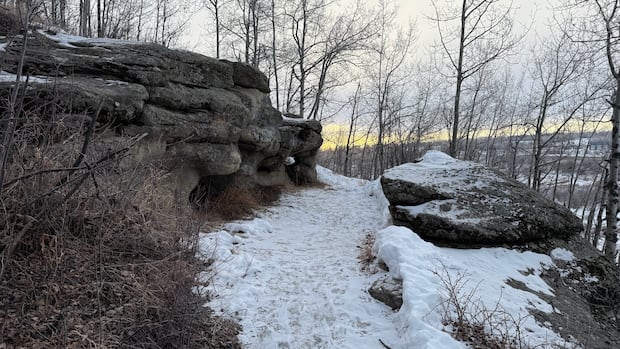
A third archaeological field school will take place this spring and summer at the Tse’k’wa National Historic Site, located approximately 12 kilometers northwest of Fort St. John, B.C.. This site is one of over 57,000 recognized archaeological locations in the province and documents an impressive 12,500 years of human settlement and environmental change dating back to the last ice age. For the Doig River, Prophet River, and West Moberly First Nations, the site holds sacred significance, as their Dane-zaa ancestors inhabited the area for generations.
“It has all kinds of incredible archaeological findings that support the Dane-zaa oral histories that their people have been here since time immemorial,” said Alyssa Currie, executive director of the Tse’k’wa Heritage Society. “We are dedicated to educating and celebrating the Dane-zaa history of the site, the culture that has been preserved there and continues to thrive.”
The Tse’k’wa cave, significant for its size and potential historical uses, is believed to have served multiple purposes, including food storage and spiritual importance for the Dane-zaa people. In 2012, the three nations established the society to create an interpretive centre focused on cultural teachings and community gatherings, acquiring the land in the process. Previous field schools were conducted in 2022 and 2024, reviving archaeological and anthropological efforts that began decades ago. Members of the Doig River, Prophet River, and West Moberly First Nations participate in the field schools alongside students, fostering a connection to their ancestral history.
2026 will mark the last scheduled field school under the current permit, which is set to expire thereafter.
Significant Archaeological Discoveries
A public lecture on Tse’k’wa was held on **January 22** and co-hosted by Farid Rahemtulla, a professor in the department of anthropology at the University of Northern British Columbia, and veteran archaeologist Richard Gilbert. Gilbert was among the first to study the site during excavations in the 1980s and 1990s, which were conducted by Simon Fraser University alongside colleagues Jon Driver and Knut Fladmark.
“The story of Tse’k’wa, the people there, belongs to the First Nations; it’s their story,” Gilbert stated. “Anything that I can do, or others can do, to help tell that story, I’m happy to do that. It’s a once-in-a-lifetime opportunity to be involved in a long, outstanding research project.” Gilbert was first made aware of the cave in 1974 while conducting archaeological surveys for the Peace Canyon Dam and noted that the region contains thousands of sites indicating early human occupation.
Excavations at the site have revealed extensive evidence, including stone tools, animal bones from ancient grasslands, and even obsidian fragments. The Dane-zaa people would have witnessed species like the long-extinct giant bison roaming the Peace Valley, as the area transformed from grassland to boreal forest after the receding of a glacial lake. Gilbert noted that the obsidian likely traveled to the Peace from the Chilcotin region through established trade networks.
Among the remarkable finds is a stone bead estimated to be 10,500 years old, making it the oldest example of human adornment discovered north of the Yucatán Peninsula. “That doesn’t sound like much, and it won’t look like much, but you just don’t find non-utilitarian artifacts,” Gilbert explained. “It really opened up people’s eyes to what was there.”
Cultural and Spiritual Significance
The site is theorized to have also served as a ritual space. Two ravens were buried at the same location more than a thousand years apart, indicating the site’s spiritual importance to Indigenous Peoples who visited Tse’k’wa. Ravens hold significant spiritual value across various Indigenous cultures, and Gilbert emphasized that these birds were buried with care and intention.
“This just adds another layer to the site,” he remarked. “This was not just a casual place; it probably was a very important spiritual place as well.” A sign at the site commemorates the two raven skeletons buried at different times, highlighting the area’s deep cultural and historical roots.
As the archaeological field school prepares for another season, the insights gathered from Tse’k’wa continue to enrich our understanding of the rich tapestry of human history in British Columbia, demonstrating the enduring connection between the land and the Indigenous peoples who have inhabited it for millennia.

iShares Core Dividend Growth ETF Faces Challenges; Alternatives Suggested

Discover 7 Scenic Hikes Near Calgary to Explore This Spring

Scientists Uncover Life’s Building Blocks in Ryugu Asteroid Samples

Windsor-Essex Unveils New Action Plan to Combat Substance Use

Boost Your Business Visibility with These Local SEO Strategies

East Algoma OPP Urges Public to Limit Travel Amid Hazardous Conditions

Universities Must Rethink Failure to Support Student Growth

Canada Invests $6.4 Million to Boost Green Shipping Corridors

Stony Plain Secures 14th Consecutive Award for Financial Reporting Excellence

Rhythm Pharmaceuticals Reports Strong Q4 Growth Ahead of FDA Decision

Brandon University’s Failed $5 Million Project Sparks Oversight Review

Microsoft Confirms U.S. Law Overrules Canadian Data Sovereignty

Winnipeg Celebrates Culinary Creativity During Le Burger Week 2025

Discover Aritzia’s Latest Fashion Trends: A Comprehensive Review

New SĆIȺNEW̱ SṮEȽIṮḴEȽ Elementary Opens in Langford for 2025/2026 Year

EngineAI Unveils T800 Humanoid Robot, Setting New Industry Standards

Montreal’s Groupe Marcelle Leads Canadian Cosmetic Industry Growth

Tech Innovator Amandipp Singh Transforms Hiring for Disabled

Dragon Ball: Sparking! Zero Launching on Switch and Switch 2 This November

Digg Relaunches as Founders Kevin Rose and Alexis Ohanian Join Forces
-
 Education7 months ago
Brandon University’s Failed $5 Million Project Sparks Oversight Review
-
 Science8 months ago
Microsoft Confirms U.S. Law Overrules Canadian Data Sovereignty
-
 Lifestyle7 months ago
Winnipeg Celebrates Culinary Creativity During Le Burger Week 2025
-
 Lifestyle4 months ago
Discover Aritzia’s Latest Fashion Trends: A Comprehensive Review
-
 Education8 months ago
New SĆIȺNEW̱ SṮEȽIṮḴEȽ Elementary Opens in Langford for 2025/2026 Year
-
 Business4 months ago
EngineAI Unveils T800 Humanoid Robot, Setting New Industry Standards
-
 Health8 months ago
Montreal’s Groupe Marcelle Leads Canadian Cosmetic Industry Growth
-
 Science8 months ago
Tech Innovator Amandipp Singh Transforms Hiring for Disabled
-
 Technology8 months ago
Dragon Ball: Sparking! Zero Launching on Switch and Switch 2 This November
-
 Technology3 months ago
Digg Relaunches as Founders Kevin Rose and Alexis Ohanian Join Forces
-

 Lifestyle4 weeks ago
Canmore’s Le Fournil Bakery to Close After 14 Successful Years
-
 Top Stories4 months ago
Canadiens Eye Elias Pettersson: What It Would Cost to Acquire Him
-

 Health7 months ago
Eganville Leader to Close in 2026 After 123 Years of Reporting
-

 Education8 months ago
Red River College Launches New Programs to Address Industry Needs
-

 Top Stories4 months ago
Nicol Brothers Shine as Wheat Kings Dominate U18 AAA Hockey
-

 Business8 months ago
BNA Brewing to Open New Bowling Alley in Downtown Penticton
-

 Business7 months ago
Rocket Lab Reports Strong Q2 2025 Revenue Growth and Future Plans
-

 Education6 months ago
Alberta Petition Aims to Redirect Funds from Private to Public Schools
-

 Lifestyle5 months ago
Edmonton’s Beloved Evolution Wonderlounge Closes, New Era Begins
-

 Education8 months ago
Alberta Teachers’ Strike: Potential Impacts on Students and Families
-

 Technology8 months ago
Google Pixel 10 Pro Fold Specs Unveiled Ahead of Launch
-

 Technology6 months ago
Discord Faces Serious Security Breach Affecting Millions
-

 Business8 months ago
Iconic Golden Lion Restaurant in South Surrey to Close After 50 Years
-

 Lifestyle6 months ago
Canadian Author Secures Funding to Write Book Without Financial Strain