
Education
St. F.X. Professor Develops Portable Brain Health Testing Device

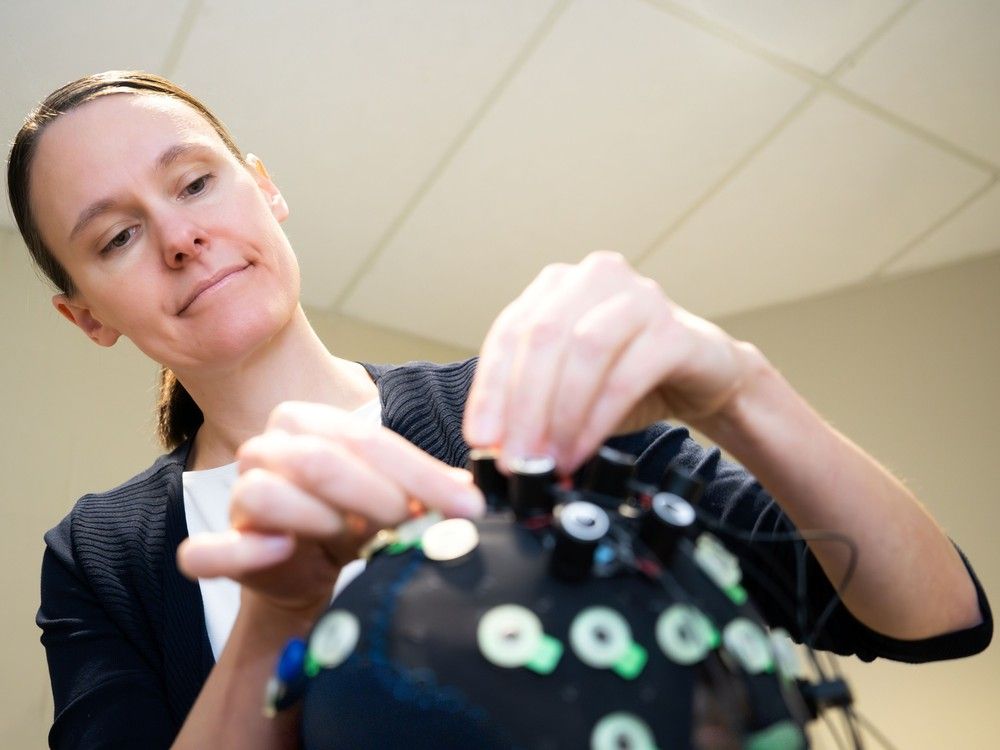
A professor at St. Francis Xavier University is developing a more affordable and accessible alternative to magnetic resonance imaging (MRI) for brain health assessments, particularly aimed at rural residents of Nova Scotia. Dr. Erin Mazerolle, who joined the university in 2020, has observed firsthand the challenges patients face in securing timely access to MRI services, especially those living outside urban areas.
The current system in Nova Scotia often results in lengthy wait times for MRI scans, sometimes extending beyond a month. These delays can significantly impact patient care, pushing many individuals to seek private clinics where costs can exceed $1,000 per visit. This financial burden is a major concern for those without the means to afford such expenses.
Dr. Mazerolle’s research focuses on a technology known as functional near-infrared spectroscopy (fNIRS), a portable device that measures brain function through sensors placed on the scalp. This technology offers a promising alternative to traditional MRI scans by allowing for brain health tracking in a more accessible manner.
Innovative Approach to Brain Health
Dr. Mazerolle highlights the potential of fNIRS to provide critical insights into brain function. “This device fits in a backpack and could be used in various settings, making it a viable option for people who cannot easily access MRI facilities,” she explained. The technology operates by monitoring changes in blood oxygenation in the brain, a method that can reveal neurological functions without the need for the large, stationary MRI machines that typically cost between $1 million and $2 million.
The research involves initial evaluations to determine the reliability of fNIRS results in healthy individuals. If successful, the next phase will investigate its application in diagnosing conditions such as sports-related concussions and migraines. Dr. Mazerolle aims to ascertain whether the device can detect significant changes in brain function, similar to what can be identified through MRI scans.
“The unique aspect of fNIRS is that it emphasizes data collection over imaging,” Dr. Mazerolle noted. This shift allows healthcare providers to gather valuable information on brain health that could help guide diagnosis and treatment decisions.
Reducing Barriers to Access
One of the primary goals of Dr. Mazerolle’s research is to enhance access to brain health assessments for those who face barriers to MRI testing. This includes individuals who may have contraindications for MRIs, such as those with pacemakers, or those living in rural areas with limited transportation options.
The development of fNIRS could serve as a preliminary screening tool, potentially reducing wait times for MRI appointments by providing basic neurological data upfront. “This technology won’t replace MRI, but it could significantly alleviate the pressure on our current healthcare system,” Dr. Mazerolle stated.
By raising awareness about the importance of brain health and the impact of early interventions, Dr. Mazerolle hopes to empower individuals to take charge of their neurological well-being. She emphasizes the necessity of educating the public about the risks associated with multiple concussions and the significance of managing factors like blood pressure for overall brain health.
“More accessible technology means that we can reach more people and provide them with the information they need to make informed health decisions,” she added.
Dr. Mazerolle’s work at St. Francis Xavier University exemplifies a proactive approach to addressing healthcare disparities in Nova Scotia and beyond. As the research evolves, it may pave the way for innovative solutions that enhance brain health accessibility for all.

iShares Core Dividend Growth ETF Faces Challenges; Alternatives Suggested

Discover 7 Scenic Hikes Near Calgary to Explore This Spring

Scientists Uncover Life’s Building Blocks in Ryugu Asteroid Samples

Windsor-Essex Unveils New Action Plan to Combat Substance Use

Boost Your Business Visibility with These Local SEO Strategies

East Algoma OPP Urges Public to Limit Travel Amid Hazardous Conditions

Universities Must Rethink Failure to Support Student Growth

Canada Invests $6.4 Million to Boost Green Shipping Corridors

Stony Plain Secures 14th Consecutive Award for Financial Reporting Excellence

Rhythm Pharmaceuticals Reports Strong Q4 Growth Ahead of FDA Decision

Brandon University’s Failed $5 Million Project Sparks Oversight Review

Microsoft Confirms U.S. Law Overrules Canadian Data Sovereignty

Discover Aritzia’s Latest Fashion Trends: A Comprehensive Review

Winnipeg Celebrates Culinary Creativity During Le Burger Week 2025

New SĆIȺNEW̱ SṮEȽIṮḴEȽ Elementary Opens in Langford for 2025/2026 Year

EngineAI Unveils T800 Humanoid Robot, Setting New Industry Standards

Montreal’s Groupe Marcelle Leads Canadian Cosmetic Industry Growth

Canmore’s Le Fournil Bakery to Close After 14 Successful Years

Tech Innovator Amandipp Singh Transforms Hiring for Disabled

Dragon Ball: Sparking! Zero Launching on Switch and Switch 2 This November
-
 Education9 months ago
Brandon University’s Failed $5 Million Project Sparks Oversight Review
-
 Science10 months ago
Microsoft Confirms U.S. Law Overrules Canadian Data Sovereignty
-
 Lifestyle6 months ago
Discover Aritzia’s Latest Fashion Trends: A Comprehensive Review
-
 Lifestyle9 months ago
Winnipeg Celebrates Culinary Creativity During Le Burger Week 2025
-
 Education10 months ago
New SĆIȺNEW̱ SṮEȽIṮḴEȽ Elementary Opens in Langford for 2025/2026 Year
-
 Business6 months ago
EngineAI Unveils T800 Humanoid Robot, Setting New Industry Standards
-
 Health10 months ago
Montreal’s Groupe Marcelle Leads Canadian Cosmetic Industry Growth
-
 Lifestyle3 months ago
Canmore’s Le Fournil Bakery to Close After 14 Successful Years
-
 Science10 months ago
Tech Innovator Amandipp Singh Transforms Hiring for Disabled
-
 Technology10 months ago
Dragon Ball: Sparking! Zero Launching on Switch and Switch 2 This November
-
 Top Stories6 months ago
Canadiens Eye Elias Pettersson: What It Would Cost to Acquire Him
-

 Technology5 months ago
Digg Relaunches as Founders Kevin Rose and Alexis Ohanian Join Forces
-

 Education7 months ago
ʔaq̓am Education Law Enacted, Affirming Self-Governance Rights
-

 Lifestyle7 months ago
Edmonton’s Beloved Evolution Wonderlounge Closes, New Era Begins
-

 Health9 months ago
Eganville Leader to Close in 2026 After 123 Years of Reporting
-

 Top Stories6 months ago
Nicol Brothers Shine as Wheat Kings Dominate U18 AAA Hockey
-

 Education8 months ago
Durham Schools Urged to Reconsider Prom Cancellation After Student Protest
-

 Education10 months ago
Red River College Launches New Programs to Address Industry Needs
-

 Business10 months ago
BNA Brewing to Open New Bowling Alley in Downtown Penticton
-

 Technology5 months ago
Amazon Unveils Kindle Plans for 2026: New Devices and Features
-

 Business9 months ago
Rocket Lab Reports Strong Q2 2025 Revenue Growth and Future Plans
-

 Education8 months ago
Alberta Petition Aims to Redirect Funds from Private to Public Schools
-

 Technology8 months ago
Discord Faces Serious Security Breach Affecting Millions
-

 Technology10 months ago
Google Pixel 10 Pro Fold Specs Unveiled Ahead of Launch