
Education
Lakehead University Launches Two-Eyed Seeing Walk to Highlight 9,000 Years of History

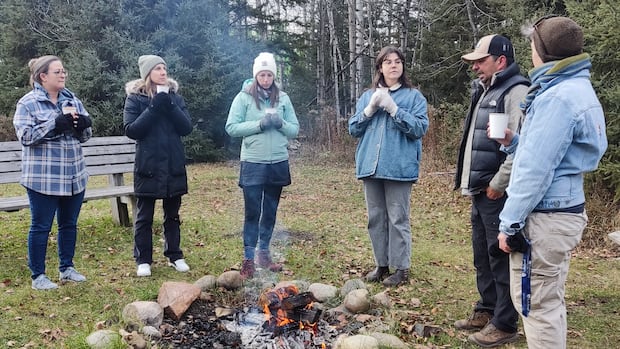
Lakehead University in Thunder Bay, Ontario, has introduced a new educational initiative aimed at connecting individuals with the land’s rich cultural and historical significance. The **Etuaptmumk bimoseng**, or **Two-Eyed Seeing Walk**, is a guided experience that merges Indigenous and Western knowledge systems, inviting participants to explore the campus and learn about a history spanning over **9,000 years**.
Led by **Joe Duncan**, Indigenous content curriculum specialist, and **Rachel Portinga**, acting sustainability coordinator, this **90-minute** walk begins at Lake Tamblyn, follows the McIntyre River, and concludes at the campus sweat lodge. So far, more than **60 participants**, including faculty, staff, and students, have engaged in this immersive experience.
Duncan emphasizes that the walk is a practical application of Lakehead’s land acknowledgment. “We are sharing about the deep cultural and historical significance of this land, including the presence and activities of Indigenous peoples dating back over **9,000 years**,” he stated. Participants gain insight into how Indigenous peoples thrived in the area and the impacts of colonization on their heritage.
Exploring Historical Connections
During the walk, attendees visit several of the **14 archaeological sites** located on the university’s land, which include quarry sites for Jasper taconite and areas rich in copper. Participants have the opportunity to examine artifacts such as **Jasper taconite arrowheads**, copper nuggets, antler tools, and a copper knife. This hands-on approach enriches the learning experience, allowing individuals to engage directly with the history of the land.
Duncan describes the importance of the Two-Eyed Seeing perspective, which integrates Indigenous and Western ways of knowing. “When you’re on the tour, we talk about traditional medicines and how Indigenous people use them, while also discussing the scientific research that supports their benefits,” he explained. For example, participants learn to identify local medicinal plants like **giizhik** (cedar) and understand its detoxification and anti-inflammatory properties.
Portinga highlights the contrast between the flourishing Indigenous presence over millennia and the disruptions caused by colonial policies. “We know all of this history, and how we can continue to engage in reconciliation,” she said. The walk also addresses significant historical events, including the **1849 commissioners’ report** that influenced the **Robinson-Superior Treaty** and the introduction of the **Indian Act** in **1873**.
Future Developments and Community Engagement
The initiative builds on work initiated six years ago within the Office of Sustainability. Throughout this period, Duncan, Portinga, and sustainability intern **Carolina Camacho** have incorporated extensive research and archaeological insights into the curriculum. Duncan also consulted with retired anthropology professor **Scott Hamilton**, whose expertise helped refine the historical narrative.
Feedback from the initial walks has been overwhelmingly positive, with Duncan noting, “The amount of feedback we’re getting has been remarkable. This is part of decolonization, reconciliation, and education.” Currently, there are **170 students** registered to participate in the upcoming walks scheduled for **March 2024**.
Looking ahead, Camacho noted plans to expand the walk beyond its pilot phase. “We want to enrich it, compile feedback, and establish a fixed ongoing process,” she said. Future efforts will include creating digital and printed resources for participants, enhancing accessibility, and developing a “train-the-trainer” program to empower more Indigenous students to lead future walks.
Duncan encapsulates the essence of the project succinctly: “Not all classrooms have four walls. When we connect to the land and engage sincerely, that’s where true learning happens.” The Two-Eyed Seeing Walk is designed not just as an educational experience but as a step towards fostering understanding and reconciliation within the community.

iShares Core Dividend Growth ETF Faces Challenges; Alternatives Suggested

Discover 7 Scenic Hikes Near Calgary to Explore This Spring

Scientists Uncover Life’s Building Blocks in Ryugu Asteroid Samples

Windsor-Essex Unveils New Action Plan to Combat Substance Use

Boost Your Business Visibility with These Local SEO Strategies

East Algoma OPP Urges Public to Limit Travel Amid Hazardous Conditions

Universities Must Rethink Failure to Support Student Growth

Canada Invests $6.4 Million to Boost Green Shipping Corridors

Stony Plain Secures 14th Consecutive Award for Financial Reporting Excellence

Rhythm Pharmaceuticals Reports Strong Q4 Growth Ahead of FDA Decision

Brandon University’s Failed $5 Million Project Sparks Oversight Review

Microsoft Confirms U.S. Law Overrules Canadian Data Sovereignty

Discover Aritzia’s Latest Fashion Trends: A Comprehensive Review

Winnipeg Celebrates Culinary Creativity During Le Burger Week 2025

New SĆIȺNEW̱ SṮEȽIṮḴEȽ Elementary Opens in Langford for 2025/2026 Year

EngineAI Unveils T800 Humanoid Robot, Setting New Industry Standards

Montreal’s Groupe Marcelle Leads Canadian Cosmetic Industry Growth

Tech Innovator Amandipp Singh Transforms Hiring for Disabled

Dragon Ball: Sparking! Zero Launching on Switch and Switch 2 This November

Canmore’s Le Fournil Bakery to Close After 14 Successful Years
-
 Education7 months ago
Brandon University’s Failed $5 Million Project Sparks Oversight Review
-
 Science8 months ago
Microsoft Confirms U.S. Law Overrules Canadian Data Sovereignty
-
 Lifestyle4 months ago
Discover Aritzia’s Latest Fashion Trends: A Comprehensive Review
-
 Lifestyle8 months ago
Winnipeg Celebrates Culinary Creativity During Le Burger Week 2025
-
 Education8 months ago
New SĆIȺNEW̱ SṮEȽIṮḴEȽ Elementary Opens in Langford for 2025/2026 Year
-
 Business4 months ago
EngineAI Unveils T800 Humanoid Robot, Setting New Industry Standards
-
 Health8 months ago
Montreal’s Groupe Marcelle Leads Canadian Cosmetic Industry Growth
-
 Science8 months ago
Tech Innovator Amandipp Singh Transforms Hiring for Disabled
-
 Technology8 months ago
Dragon Ball: Sparking! Zero Launching on Switch and Switch 2 This November
-
 Lifestyle1 month ago
Canmore’s Le Fournil Bakery to Close After 14 Successful Years
-

 Technology3 months ago
Digg Relaunches as Founders Kevin Rose and Alexis Ohanian Join Forces
-
 Top Stories4 months ago
Canadiens Eye Elias Pettersson: What It Would Cost to Acquire Him
-

 Health7 months ago
Eganville Leader to Close in 2026 After 123 Years of Reporting
-

 Education8 months ago
Red River College Launches New Programs to Address Industry Needs
-

 Top Stories4 months ago
Nicol Brothers Shine as Wheat Kings Dominate U18 AAA Hockey
-

 Business8 months ago
BNA Brewing to Open New Bowling Alley in Downtown Penticton
-

 Lifestyle5 months ago
Edmonton’s Beloved Evolution Wonderlounge Closes, New Era Begins
-

 Business7 months ago
Rocket Lab Reports Strong Q2 2025 Revenue Growth and Future Plans
-
 Education6 months ago
Alberta Petition Aims to Redirect Funds from Private to Public Schools
-

 Education8 months ago
Alberta Teachers’ Strike: Potential Impacts on Students and Families
-

 Technology6 months ago
Discord Faces Serious Security Breach Affecting Millions
-

 Technology8 months ago
Google Pixel 10 Pro Fold Specs Unveiled Ahead of Launch
-

 Business8 months ago
Iconic Golden Lion Restaurant in South Surrey to Close After 50 Years
-

 Lifestyle6 months ago
Canadian Author Secures Funding to Write Book Without Financial Strain