
Education
Kamloops Residential School Investigation Identifies Key Areas

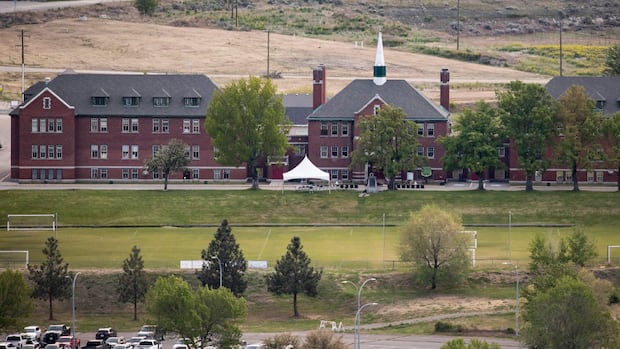
The Tk̓emlúps te Secwépemc First Nation has released new findings regarding the search for unmarked graves at the former Kamloops Indian Residential School. The investigation has ruled out certain areas as potential sites for graves while identifying others that should become the primary focus of ongoing searches. This update follows a significant announcement made nearly five years ago, when preliminary findings from a ground-penetrating radar survey indicated approximately 200 potential unmarked graves on the institution’s grounds.
The Kamloops Indian Residential School, operated by the Catholic Church from 1890 to 1969 and later managed by the federal government until its closure in 1978, has been the center of national attention. The Tk̓emlúps te Secwépemc First Nation noted that the search efforts are more complex than previously anticipated. “We are making progress and will continue adapting our methodologies and information as it advances,” the First Nation stated in a press release dated February 17, 2024.
Advanced Techniques Aid Investigation
To facilitate the search, Tk̓emlúps te Secwépemc has employed not only ground-penetrating radar but also a LiDAR (Light Detection and Ranging) scanner. This technology uses rapid laser pulses to create three-dimensional representations of the terrain. Additionally, specialized dog teams trained to detect historical human remains have been deployed to enhance the investigation.
According to the First Nation, findings from all three methods have shown overlaps in certain areas, which will now be prioritized. Specific details regarding these areas have not been disclosed. The ongoing surveys have also identified “signatures that resemble burials” in several locations, while enabling investigators to rule out various other spots on the grounds.
The First Nation is working with historical records from both the Catholic Church and government entities that managed the institution. However, they have faced challenges accessing these documents, citing government restrictions and slow responses as significant obstacles.
Community Reactions and Next Steps
The question of whether to exhumate remains has sparked controversy within the community. Some survivors advocate for leaving human remains undisturbed, while others believe that exhumation could provide an opportunity for proper burial and closure. The Tk̓emlúps te Secwépemc has stated that if any ancestral remains are discovered, they will seek consensus with the numerous First Nations whose ancestors attended the school. Each of these nations has its own cultural and spiritual protocols regarding ancestral remains.
The search efforts have added to a broader movement across Canada, where various First Nations are conducting similar investigations into residential school sites. The Truth and Reconciliation Commission has highlighted the tragic legacy of these institutions, estimating that approximately 4,100 children died while attending residential schools, though the actual number is likely much higher.
Support services are available for individuals affected by the trauma of residential schools. A national Indian Residential School Crisis Line provides emotional and crisis referral services, accessible 24 hours a day at 1-866-925-4419.
As the investigation continues, the Tk̓emlúps te Secwépemc First Nation remains committed to uncovering the truth about the past, fostering healing, and ensuring that the voices of survivors and their families are heard.

iShares Core Dividend Growth ETF Faces Challenges; Alternatives Suggested

Discover 7 Scenic Hikes Near Calgary to Explore This Spring

Scientists Uncover Life’s Building Blocks in Ryugu Asteroid Samples

Windsor-Essex Unveils New Action Plan to Combat Substance Use

Boost Your Business Visibility with These Local SEO Strategies

East Algoma OPP Urges Public to Limit Travel Amid Hazardous Conditions

Universities Must Rethink Failure to Support Student Growth

Canada Invests $6.4 Million to Boost Green Shipping Corridors

Stony Plain Secures 14th Consecutive Award for Financial Reporting Excellence

Rhythm Pharmaceuticals Reports Strong Q4 Growth Ahead of FDA Decision

Brandon University’s Failed $5 Million Project Sparks Oversight Review

Microsoft Confirms U.S. Law Overrules Canadian Data Sovereignty

Winnipeg Celebrates Culinary Creativity During Le Burger Week 2025

Discover Aritzia’s Latest Fashion Trends: A Comprehensive Review

New SĆIȺNEW̱ SṮEȽIṮḴEȽ Elementary Opens in Langford for 2025/2026 Year

EngineAI Unveils T800 Humanoid Robot, Setting New Industry Standards

Montreal’s Groupe Marcelle Leads Canadian Cosmetic Industry Growth

Tech Innovator Amandipp Singh Transforms Hiring for Disabled

Dragon Ball: Sparking! Zero Launching on Switch and Switch 2 This November

Digg Relaunches as Founders Kevin Rose and Alexis Ohanian Join Forces
-
 Education7 months ago
Brandon University’s Failed $5 Million Project Sparks Oversight Review
-
 Science8 months ago
Microsoft Confirms U.S. Law Overrules Canadian Data Sovereignty
-
 Lifestyle7 months ago
Winnipeg Celebrates Culinary Creativity During Le Burger Week 2025
-
 Lifestyle4 months ago
Discover Aritzia’s Latest Fashion Trends: A Comprehensive Review
-
 Education8 months ago
New SĆIȺNEW̱ SṮEȽIṮḴEȽ Elementary Opens in Langford for 2025/2026 Year
-
 Business4 months ago
EngineAI Unveils T800 Humanoid Robot, Setting New Industry Standards
-
 Health8 months ago
Montreal’s Groupe Marcelle Leads Canadian Cosmetic Industry Growth
-
 Science8 months ago
Tech Innovator Amandipp Singh Transforms Hiring for Disabled
-
 Technology8 months ago
Dragon Ball: Sparking! Zero Launching on Switch and Switch 2 This November
-
 Technology3 months ago
Digg Relaunches as Founders Kevin Rose and Alexis Ohanian Join Forces
-

 Lifestyle4 weeks ago
Canmore’s Le Fournil Bakery to Close After 14 Successful Years
-
 Top Stories4 months ago
Canadiens Eye Elias Pettersson: What It Would Cost to Acquire Him
-

 Health7 months ago
Eganville Leader to Close in 2026 After 123 Years of Reporting
-

 Education8 months ago
Red River College Launches New Programs to Address Industry Needs
-

 Top Stories4 months ago
Nicol Brothers Shine as Wheat Kings Dominate U18 AAA Hockey
-

 Business8 months ago
BNA Brewing to Open New Bowling Alley in Downtown Penticton
-

 Business7 months ago
Rocket Lab Reports Strong Q2 2025 Revenue Growth and Future Plans
-

 Education6 months ago
Alberta Petition Aims to Redirect Funds from Private to Public Schools
-

 Lifestyle5 months ago
Edmonton’s Beloved Evolution Wonderlounge Closes, New Era Begins
-

 Education8 months ago
Alberta Teachers’ Strike: Potential Impacts on Students and Families
-

 Technology6 months ago
Discord Faces Serious Security Breach Affecting Millions
-

 Technology8 months ago
Google Pixel 10 Pro Fold Specs Unveiled Ahead of Launch
-

 Business7 months ago
Iconic Golden Lion Restaurant in South Surrey to Close After 50 Years
-

 Lifestyle6 months ago
Canadian Author Secures Funding to Write Book Without Financial Strain