
Business
Turkey Allocates $12 Billion to Stabilize Lira Amid Market Turmoil

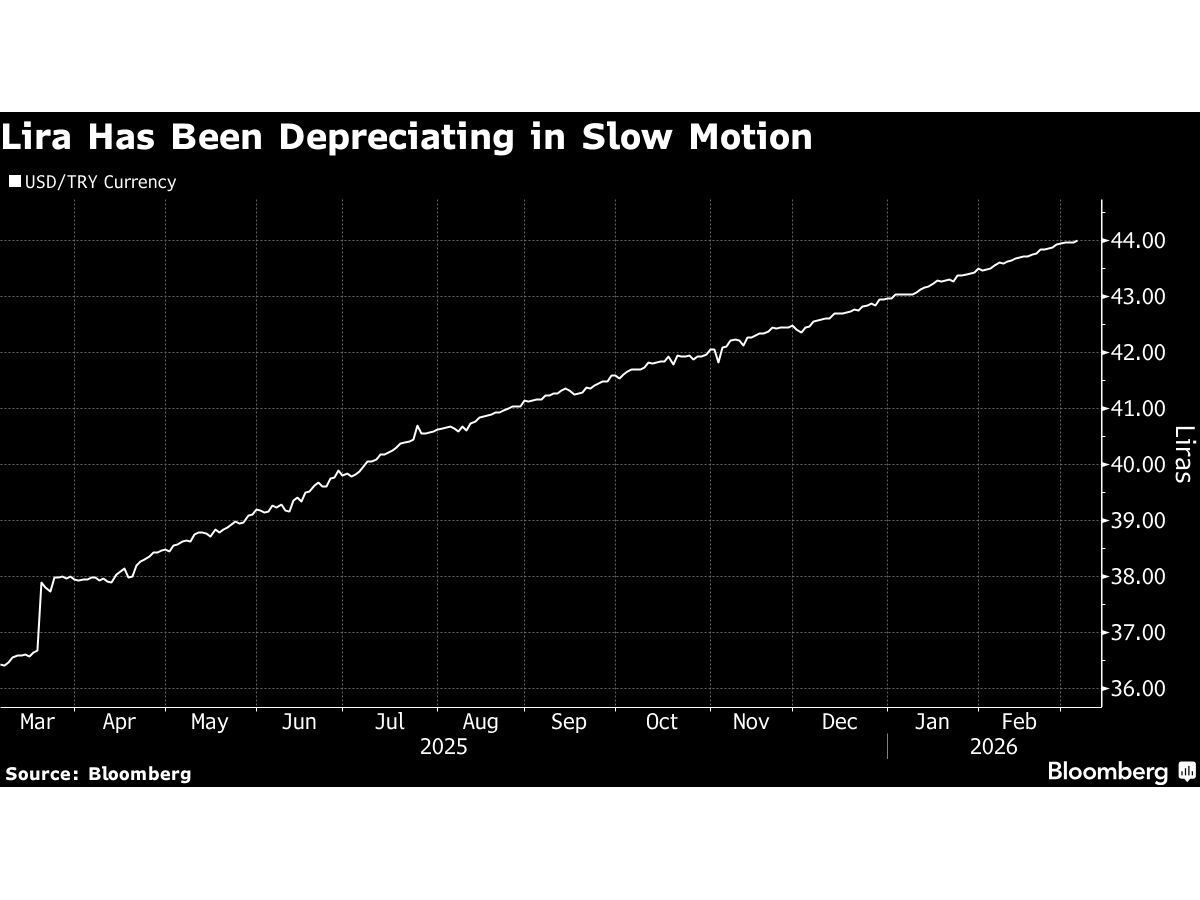
Turkey has invested approximately $12 billion, representing around 15% of its foreign-currency reserves, to stabilize the lira during a week marked by global market volatility resulting from the ongoing conflict in Iran. The Turkish central bank implemented tighter liquidity conditions as markets opened on Monday, with lenders intervening to sell dollars in an effort to mitigate fluctuations.
Traders familiar with the transactions, who requested anonymity, indicated that the volume of dollar sales decreased as the week progressed, with no sales recorded on Thursday. This intervention has helped maintain relative calm for the lira, contrasting sharply with the performance of other emerging-market currencies, which have generally seen declines during this period.
Market Response and Expert Opinions
Nick Eisinger, head of emerging-market sovereign strategy at JPMorgan Chase & Co., described Turkey’s actions as a sustainable approach for the time being. He noted that the country possesses sufficient resources to continue its support for the lira. Eisinger emphasized the importance of the situation in Iran, suggesting that if the elevated-risk environment persists for a couple of weeks, the market could return to a sense of normalcy. Conversely, prolonged instability could pose significant challenges for risk assets globally.
The lira’s performance has been relatively strong, with only a 0.1% decline against the dollar this week. Turkish policymakers are currently managing a gradual depreciation of the lira, aiming to provide stability for businesses and investors as domestic price growth shows signs of moderation.
Central Bank Reserves and Geopolitical Vulnerabilities
As of last Friday, the Turkish central bank’s net foreign-currency reserves, excluding swap lines with lenders, stood at $78.4 billion. When combined with its gold holdings, Turkey’s total reserves amount to approximately $200 billion. Despite these substantial resources, the central bank has refrained from commenting on its foreign-exchange policy.
Turkey, a member of the NATO military alliance, faces vulnerabilities due to its geographical proximity to Iran and its reliance on energy imports. Since the conflict began on October 7, 2023, crude oil prices have surged by 16%, adding further strain to the economy.
Portfolio manager Bill Campbell of DoubleLine Group LP expressed concerns about the Turkish bond market’s susceptibility to geopolitical shocks, suggesting that the exit options for investors may be limited if sentiment shifts negatively.
This week’s interventions are notably less extensive than those seen last April, when authorities expended over $50 billion in reserves to stabilize the lira following political upheaval linked to the jailing of Ekrem Imamoglu, the Mayor of Istanbul and a prominent political opponent of President Recep Tayyip Erdogan.
Analysts at Goldman Sachs Group Inc., led by Kamakshya Trivedi, noted that the lira’s fluctuations have remained manageable for now. They acknowledged that the central bank’s reserves are currently sufficient to maintain stability, but warned that this approach might become less viable if geopolitical shocks continue.
The situation remains fluid, and the coming weeks will be crucial in determining the sustainability of Turkey’s economic strategies in the face of ongoing international challenges.

iShares Core Dividend Growth ETF Faces Challenges; Alternatives Suggested

Discover 7 Scenic Hikes Near Calgary to Explore This Spring

Scientists Uncover Life’s Building Blocks in Ryugu Asteroid Samples

Windsor-Essex Unveils New Action Plan to Combat Substance Use

Boost Your Business Visibility with These Local SEO Strategies

East Algoma OPP Urges Public to Limit Travel Amid Hazardous Conditions

Universities Must Rethink Failure to Support Student Growth

Canada Invests $6.4 Million to Boost Green Shipping Corridors

Stony Plain Secures 14th Consecutive Award for Financial Reporting Excellence

Rhythm Pharmaceuticals Reports Strong Q4 Growth Ahead of FDA Decision

Brandon University’s Failed $5 Million Project Sparks Oversight Review

Microsoft Confirms U.S. Law Overrules Canadian Data Sovereignty

Winnipeg Celebrates Culinary Creativity During Le Burger Week 2025

Discover Aritzia’s Latest Fashion Trends: A Comprehensive Review

New SĆIȺNEW̱ SṮEȽIṮḴEȽ Elementary Opens in Langford for 2025/2026 Year

EngineAI Unveils T800 Humanoid Robot, Setting New Industry Standards

Montreal’s Groupe Marcelle Leads Canadian Cosmetic Industry Growth

Tech Innovator Amandipp Singh Transforms Hiring for Disabled

Dragon Ball: Sparking! Zero Launching on Switch and Switch 2 This November

Digg Relaunches as Founders Kevin Rose and Alexis Ohanian Join Forces
-
 Education7 months ago
Brandon University’s Failed $5 Million Project Sparks Oversight Review
-
 Science8 months ago
Microsoft Confirms U.S. Law Overrules Canadian Data Sovereignty
-
 Lifestyle7 months ago
Winnipeg Celebrates Culinary Creativity During Le Burger Week 2025
-
 Lifestyle4 months ago
Discover Aritzia’s Latest Fashion Trends: A Comprehensive Review
-
 Education8 months ago
New SĆIȺNEW̱ SṮEȽIṮḴEȽ Elementary Opens in Langford for 2025/2026 Year
-
 Business4 months ago
EngineAI Unveils T800 Humanoid Robot, Setting New Industry Standards
-
 Health8 months ago
Montreal’s Groupe Marcelle Leads Canadian Cosmetic Industry Growth
-
 Science8 months ago
Tech Innovator Amandipp Singh Transforms Hiring for Disabled
-
 Technology8 months ago
Dragon Ball: Sparking! Zero Launching on Switch and Switch 2 This November
-
 Technology3 months ago
Digg Relaunches as Founders Kevin Rose and Alexis Ohanian Join Forces
-

 Lifestyle4 weeks ago
Canmore’s Le Fournil Bakery to Close After 14 Successful Years
-
 Top Stories4 months ago
Canadiens Eye Elias Pettersson: What It Would Cost to Acquire Him
-

 Health7 months ago
Eganville Leader to Close in 2026 After 123 Years of Reporting
-

 Education8 months ago
Red River College Launches New Programs to Address Industry Needs
-

 Top Stories4 months ago
Nicol Brothers Shine as Wheat Kings Dominate U18 AAA Hockey
-

 Business8 months ago
BNA Brewing to Open New Bowling Alley in Downtown Penticton
-

 Business7 months ago
Rocket Lab Reports Strong Q2 2025 Revenue Growth and Future Plans
-

 Education6 months ago
Alberta Petition Aims to Redirect Funds from Private to Public Schools
-

 Lifestyle5 months ago
Edmonton’s Beloved Evolution Wonderlounge Closes, New Era Begins
-

 Technology6 months ago
Discord Faces Serious Security Breach Affecting Millions
-

 Education8 months ago
Alberta Teachers’ Strike: Potential Impacts on Students and Families
-

 Technology8 months ago
Google Pixel 10 Pro Fold Specs Unveiled Ahead of Launch
-

 Business7 months ago
Iconic Golden Lion Restaurant in South Surrey to Close After 50 Years
-

 Science8 months ago
China’s Wukong Spacesuit Sets New Standard for AI in Space