
Business
Silver Surges Past 45-Year Resistance: What Investors Should Know

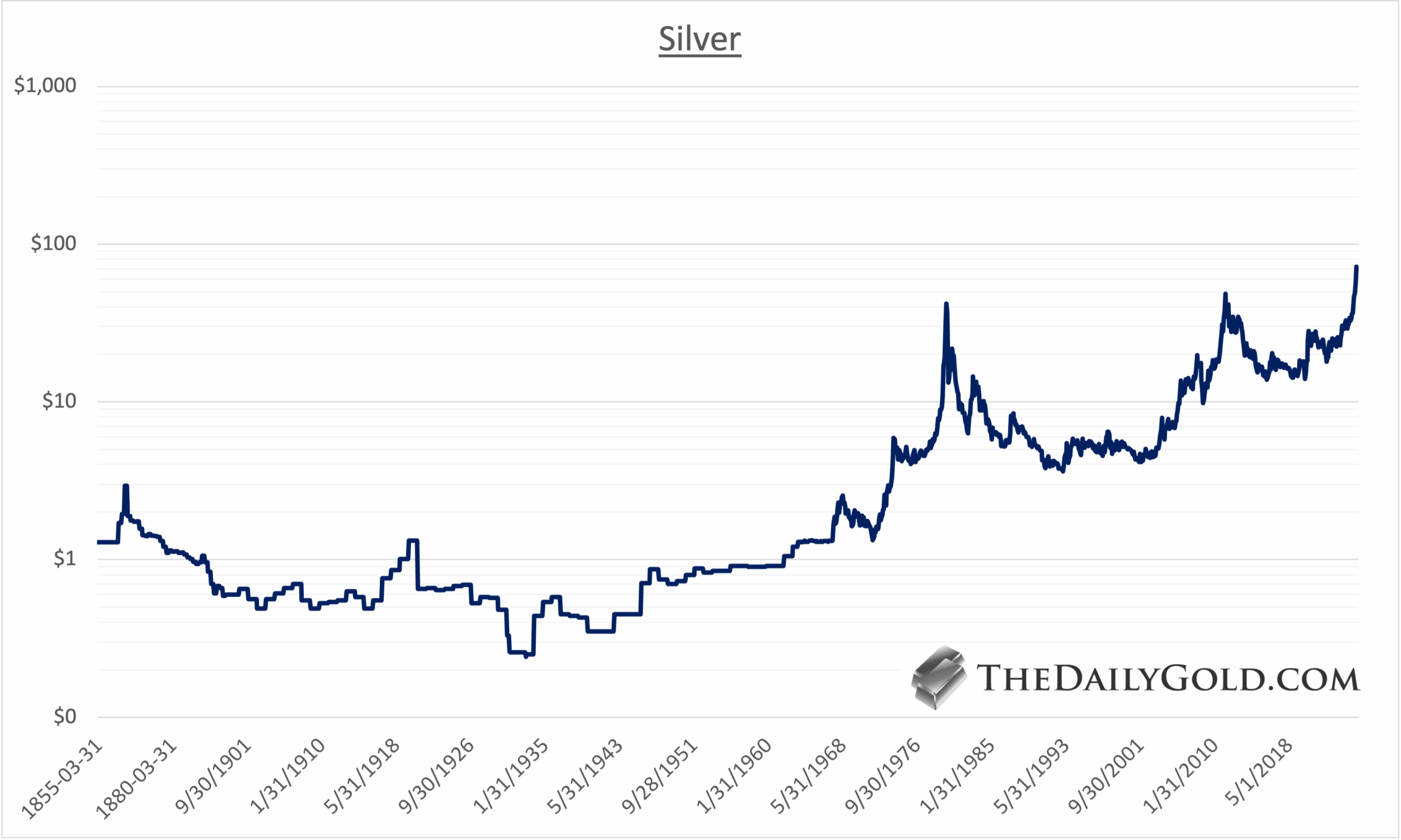
Silver has achieved a significant milestone in the capital markets, breaking out of a consolidation phase that has lasted for over 45 years. This surge marks one of the largest breakouts in market history, with the price recently closing at approximately $72. Analysts are now eyeing potential upside targets of $88 and $96, while also assessing the risks of possible corrections.
The Historic Breakthrough
The current breakout is notable not just for its length but also for its implications. Silver has formed a robust support level around $55, which is expected to play a critical role in maintaining upward momentum. Breakouts of this scale typically do not result in significant corrections during their early phases, suggesting that a new trading environment is being established. This shift restructures the traditional parameters of overbought and oversold conditions.
While silver’s short-term dynamics may appear stretched, they align with a broader, more powerful long-term trend. The price is nearing a key Fibonacci objective at $73 per ounce, which could prompt some traders to take profits. Yet, historical precedents suggest that significant price increases often occur after such breakouts.
Learning from the Past: The 2005 Copper Breakout
A relevant historical analogy can be drawn from the copper market in 2005, when copper broke free from a 33-year consolidation phase. Following this breakout, copper prices surged by 200% over the next year, with minimal corrections during that period. The behavior observed in copper presents a compelling case for silver; similar sustained appreciation with only minor pauses for profit-taking may be on the horizon.
Analysis of silver’s rate of change over 6, 20, and 50 weeks reveals that current performance is consistent with historical trends, excluding the extreme outlier of 1974. Given the length of the consolidation period, it is reasonable to anticipate that silver’s performance metrics will surpass those of 1974 as the market adjusts to the new conditions.
The gold-to-silver ratio serves as another vital indicator. This ratio has recently dipped below a critical support level of 65, closing at 62. To align with historical extremes observed during previous peaks in 1968, 1974, 1980, and 2011, the ratio may need to decline further into the 45–50 range in the coming months.
As capital rotates from traditional assets, silver’s breakout against the 60/40 portfolio (a standard allocation of 60% stocks and 40% bonds) is particularly noteworthy. This shift indicates a significant change in asset allocation, as silver has recently emerged from an 11-year consolidation relative to this benchmark. The technical setup suggests that capital is beginning to flow into silver, reinforcing its potential as an attractive investment.
In summary, silver’s breakout from a 45-year consolidation marks a pivotal moment in capital markets. This move redefines technical parameters and signals the possibility of further appreciation. Observing historical trends, it is plausible that silver could reach targets of $88 and $96, with minor corrections of $8–$10 per ounce anticipated. A more substantial correction might only become relevant after silver surpasses the $100 mark.
The current market dynamics, combined with the potential for the gold-to-silver ratio to reach historical extremes, suggest that silver is in the early stages of a significant bull market cycle. Investors should remain vigilant as this precious metal continues to gain traction in the capital markets.

iShares Core Dividend Growth ETF Faces Challenges; Alternatives Suggested

Discover 7 Scenic Hikes Near Calgary to Explore This Spring

Scientists Uncover Life’s Building Blocks in Ryugu Asteroid Samples

Windsor-Essex Unveils New Action Plan to Combat Substance Use

Boost Your Business Visibility with These Local SEO Strategies

East Algoma OPP Urges Public to Limit Travel Amid Hazardous Conditions

Universities Must Rethink Failure to Support Student Growth

Canada Invests $6.4 Million to Boost Green Shipping Corridors

Stony Plain Secures 14th Consecutive Award for Financial Reporting Excellence

Rhythm Pharmaceuticals Reports Strong Q4 Growth Ahead of FDA Decision

Brandon University’s Failed $5 Million Project Sparks Oversight Review

Microsoft Confirms U.S. Law Overrules Canadian Data Sovereignty

Winnipeg Celebrates Culinary Creativity During Le Burger Week 2025

Discover Aritzia’s Latest Fashion Trends: A Comprehensive Review

New SĆIȺNEW̱ SṮEȽIṮḴEȽ Elementary Opens in Langford for 2025/2026 Year

EngineAI Unveils T800 Humanoid Robot, Setting New Industry Standards

Montreal’s Groupe Marcelle Leads Canadian Cosmetic Industry Growth

Tech Innovator Amandipp Singh Transforms Hiring for Disabled

Dragon Ball: Sparking! Zero Launching on Switch and Switch 2 This November

Digg Relaunches as Founders Kevin Rose and Alexis Ohanian Join Forces
-
 Education7 months ago
Brandon University’s Failed $5 Million Project Sparks Oversight Review
-
 Science8 months ago
Microsoft Confirms U.S. Law Overrules Canadian Data Sovereignty
-
 Lifestyle7 months ago
Winnipeg Celebrates Culinary Creativity During Le Burger Week 2025
-
 Lifestyle4 months ago
Discover Aritzia’s Latest Fashion Trends: A Comprehensive Review
-
 Education7 months ago
New SĆIȺNEW̱ SṮEȽIṮḴEȽ Elementary Opens in Langford for 2025/2026 Year
-
 Business4 months ago
EngineAI Unveils T800 Humanoid Robot, Setting New Industry Standards
-
 Health8 months ago
Montreal’s Groupe Marcelle Leads Canadian Cosmetic Industry Growth
-
 Science8 months ago
Tech Innovator Amandipp Singh Transforms Hiring for Disabled
-
 Technology8 months ago
Dragon Ball: Sparking! Zero Launching on Switch and Switch 2 This November
-
 Technology3 months ago
Digg Relaunches as Founders Kevin Rose and Alexis Ohanian Join Forces
-

 Lifestyle4 weeks ago
Canmore’s Le Fournil Bakery to Close After 14 Successful Years
-
 Top Stories4 months ago
Canadiens Eye Elias Pettersson: What It Would Cost to Acquire Him
-

 Health7 months ago
Eganville Leader to Close in 2026 After 123 Years of Reporting
-

 Education8 months ago
Red River College Launches New Programs to Address Industry Needs
-

 Top Stories4 months ago
Nicol Brothers Shine as Wheat Kings Dominate U18 AAA Hockey
-

 Business8 months ago
BNA Brewing to Open New Bowling Alley in Downtown Penticton
-

 Business7 months ago
Rocket Lab Reports Strong Q2 2025 Revenue Growth and Future Plans
-

 Education6 months ago
Alberta Petition Aims to Redirect Funds from Private to Public Schools
-

 Lifestyle5 months ago
Edmonton’s Beloved Evolution Wonderlounge Closes, New Era Begins
-

 Education8 months ago
Alberta Teachers’ Strike: Potential Impacts on Students and Families
-

 Technology6 months ago
Discord Faces Serious Security Breach Affecting Millions
-

 Technology8 months ago
Google Pixel 10 Pro Fold Specs Unveiled Ahead of Launch
-

 Business7 months ago
Iconic Golden Lion Restaurant in South Surrey to Close After 50 Years
-

 Science8 months ago
China’s Wukong Spacesuit Sets New Standard for AI in Space