
Business
Livestock Prices Rise, But Producers Must Manage Risks Wisely

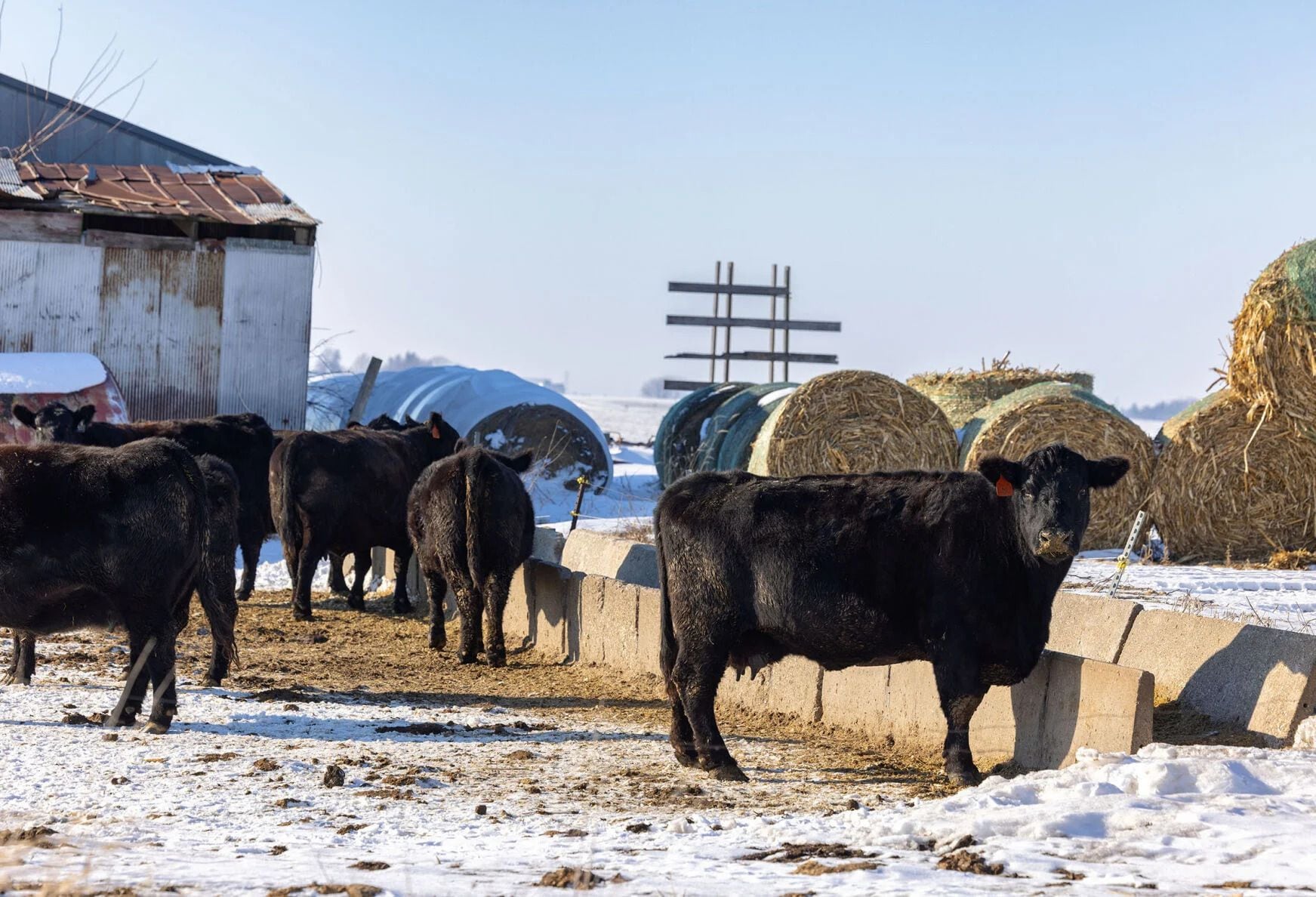
Livestock markets in 2025 are experiencing more favorable conditions compared to recent years, particularly when juxtaposed with crop markets. Despite this positive trend, experts caution that producers should not relax their approach to risk management. According to Brittney Goodrich, an assistant professor of agricultural economics at the University of Illinois, the cattle industry exemplifies the challenges that can arise despite favorable pricing environments.
Several years of drought have significantly reduced domestic beef supplies, while border closures due to the New World Screwworm have further complicated import dynamics, resulting in higher prices. “During this last year, we haven’t decreased the herd size as much as we had previously. We’ve also not slaughtered as high a percentage of cows and heifers as we had in prior years,” Goodrich stated. “So, there may be some modest indications that we’re starting to think about expansion, but it’s going to be slow.”
Projections from the U.S. Department of Agriculture (USDA) suggest that substantial herd expansion is unlikely until between 2026 and 2027, which could subsequently exert downward pressure on feeder and fed cattle prices. As of December 1, 2025, USDA reported approximately 11.7 million head of cattle on feed, a decline of 2% from the previous year. Furthermore, placements in feedlots saw a notable decrease, with 1.6 million head down 11%, while marketings of fed cattle also fell, with 1.52 million head representing a 12% drop from 2024.
Despite the slow progress in rebuilding the U.S. cattle herd, beef markets experienced some price fluctuations this year, recently retreating from the peaks observed in September. Goodrich noted, “I think that was just a seasonal thing that we kind of expected to happen; it was just much more drastic than we’re used to seeing.” This volatility underscores the necessity for producers to remain vigilant, even during periods of favorable pricing.
Goodrich emphasized that all livestock producers should be aware of the inherent downside price risks, even when prices are high. “Understanding your cost of production and employing hedging strategies, if you’re large enough to engage in the futures and options markets, can be effective tools,” she advised. Additionally, a relatively new risk management option offered by USDA provides subsidized protection for hogs, feeder cattle, and fed cattle, allowing smaller producers to safeguard against adverse price movements without requiring significant market participation.
Producers should also keep a close watch on the New World Screwworm situation into 2026. Should the U.S. reopen live cattle imports from Mexico, this could exert pressure on domestic beef prices, particularly impacting feeder and fed cattle markets. Goodrich shared this analysis during the Illinois Farm Economics Summits, which took place in DeKalb, Peoria, and Mt. Vernon from December 16 through 17.
For further insights on food and farming news, visit FarmWeekNow.com. As the livestock industry navigates these complex dynamics, understanding market conditions and employing effective risk management strategies will be essential for producers aiming to achieve stability and profitability in the coming years.

iShares Core Dividend Growth ETF Faces Challenges; Alternatives Suggested

Discover 7 Scenic Hikes Near Calgary to Explore This Spring

Scientists Uncover Life’s Building Blocks in Ryugu Asteroid Samples

Windsor-Essex Unveils New Action Plan to Combat Substance Use

Boost Your Business Visibility with These Local SEO Strategies

East Algoma OPP Urges Public to Limit Travel Amid Hazardous Conditions

Universities Must Rethink Failure to Support Student Growth

Canada Invests $6.4 Million to Boost Green Shipping Corridors

Stony Plain Secures 14th Consecutive Award for Financial Reporting Excellence

Rhythm Pharmaceuticals Reports Strong Q4 Growth Ahead of FDA Decision

Brandon University’s Failed $5 Million Project Sparks Oversight Review

Microsoft Confirms U.S. Law Overrules Canadian Data Sovereignty

Winnipeg Celebrates Culinary Creativity During Le Burger Week 2025

Discover Aritzia’s Latest Fashion Trends: A Comprehensive Review

New SĆIȺNEW̱ SṮEȽIṮḴEȽ Elementary Opens in Langford for 2025/2026 Year

EngineAI Unveils T800 Humanoid Robot, Setting New Industry Standards

Montreal’s Groupe Marcelle Leads Canadian Cosmetic Industry Growth

Tech Innovator Amandipp Singh Transforms Hiring for Disabled

Dragon Ball: Sparking! Zero Launching on Switch and Switch 2 This November

Digg Relaunches as Founders Kevin Rose and Alexis Ohanian Join Forces
-
 Education7 months ago
Brandon University’s Failed $5 Million Project Sparks Oversight Review
-
 Science8 months ago
Microsoft Confirms U.S. Law Overrules Canadian Data Sovereignty
-
 Lifestyle7 months ago
Winnipeg Celebrates Culinary Creativity During Le Burger Week 2025
-
 Lifestyle4 months ago
Discover Aritzia’s Latest Fashion Trends: A Comprehensive Review
-
 Education8 months ago
New SĆIȺNEW̱ SṮEȽIṮḴEȽ Elementary Opens in Langford for 2025/2026 Year
-
 Business4 months ago
EngineAI Unveils T800 Humanoid Robot, Setting New Industry Standards
-
 Health8 months ago
Montreal’s Groupe Marcelle Leads Canadian Cosmetic Industry Growth
-
 Science8 months ago
Tech Innovator Amandipp Singh Transforms Hiring for Disabled
-
 Technology8 months ago
Dragon Ball: Sparking! Zero Launching on Switch and Switch 2 This November
-
 Technology3 months ago
Digg Relaunches as Founders Kevin Rose and Alexis Ohanian Join Forces
-

 Lifestyle4 weeks ago
Canmore’s Le Fournil Bakery to Close After 14 Successful Years
-
 Top Stories4 months ago
Canadiens Eye Elias Pettersson: What It Would Cost to Acquire Him
-

 Health7 months ago
Eganville Leader to Close in 2026 After 123 Years of Reporting
-

 Education8 months ago
Red River College Launches New Programs to Address Industry Needs
-

 Top Stories4 months ago
Nicol Brothers Shine as Wheat Kings Dominate U18 AAA Hockey
-

 Business8 months ago
BNA Brewing to Open New Bowling Alley in Downtown Penticton
-

 Business7 months ago
Rocket Lab Reports Strong Q2 2025 Revenue Growth and Future Plans
-

 Education6 months ago
Alberta Petition Aims to Redirect Funds from Private to Public Schools
-

 Lifestyle5 months ago
Edmonton’s Beloved Evolution Wonderlounge Closes, New Era Begins
-

 Education8 months ago
Alberta Teachers’ Strike: Potential Impacts on Students and Families
-

 Technology6 months ago
Discord Faces Serious Security Breach Affecting Millions
-

 Technology8 months ago
Google Pixel 10 Pro Fold Specs Unveiled Ahead of Launch
-

 Business7 months ago
Iconic Golden Lion Restaurant in South Surrey to Close After 50 Years
-

 Lifestyle6 months ago
Canadian Author Secures Funding to Write Book Without Financial Strain