
Business
Doug Ford’s Fiscal Strategy Lacks Rob Ford’s Restraint

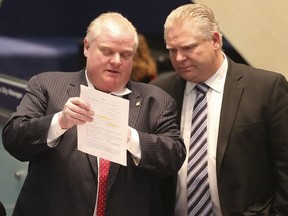
Ontario Premier Doug Ford has captured headlines for a variety of reasons, from his promotional campaigns to his controversial policy decisions. However, his handling of the province’s finances has drawn less scrutiny, despite its significant impact on the lives of Ontarians. A comparison with his late brother, Rob Ford, who served as mayor of Toronto, highlights a stark contrast in fiscal management.
Both Doug and Rob Ford come from a politically prominent family known for its populist approach. This includes their father, Doug Sr., and nephew Michael, who have also served in political positions. Historically, the Ford family has emphasized tax cuts and a skepticism towards government spending. Yet, Doug Ford’s record as Premier diverges sharply from Rob Ford’s policies during his time as mayor.
Rob Ford took office in 2010, promising to eliminate what he termed the “gravy train.” He implemented substantial fiscal measures, cutting approximately $600 million from the city budget. His administration privatized garbage collection, eliminated the vehicle registration tax, and kept tax increases below the rate of inflation during three of his four years in office. This approach contrasted sharply with that of his predecessor, David Miller, who had increased municipal spending and taxes.
During Rob’s tenure, he managed municipal debt at a rate lower than his successors. In contrast, Doug Ford’s governance since 2018 has seen Ontario’s net debt rise by $104 billion, a 7.3% increase once adjusted for inflation. By March 2024, this debt is projected to reach a staggering $460.7 billion, marking the highest level in Ontario’s history when adjusted for inflation.
Program spending has also escalated under Doug Ford. The percentage of provincial gross domestic product (GDP) allocated to program spending rose from 17.3% in 2017 to 18.0% in 2024. On a per capita basis, program spending has increased from $12,754 to $13,463 since he assumed office.
Despite his frequent criticism of former Premier Kathleen Wynne as an excessive spender, the numbers paint a different picture. Doug Ford has not only maintained increased government spending but has also broken several tax promises. He pledged to lower Ontario’s business income tax rate from 11.5% to 10.5% and to reduce the middle personal income tax rate. Instead, he has introduced limited measures such as cutting the gas tax and sending rebate cheques to residents.
Revenue has increased under his leadership, climbing from 18.3% of provincial GDP to 19.2%. This growth occurred despite his claims that the government is an inefficient place to allocate funds. Additionally, Ford has recorded six deficits in seven years and has plans for at least two more in 2025 and 2026.
While municipal and provincial governments operate differently, the fiscal records of the Ford brothers starkly contrast. Rob Ford implemented genuine spending restraints, tax reductions, and a cautious approach to debt accumulation. In comparison, Doug Ford has significantly expanded the size of Ontario’s government, reneged on tax commitments, and continues to increase spending beyond the province’s means.
If Doug Ford were to adopt some of his brother’s fiscal strategies, Ontario’s financial situation might be markedly different. As analysts from the Fraser Institute, Alex Whalen and Jake Fuss, suggest, there are lessons to be learned from Rob Ford’s governance that could benefit Ontario today.

iShares Core Dividend Growth ETF Faces Challenges; Alternatives Suggested

Discover 7 Scenic Hikes Near Calgary to Explore This Spring

Scientists Uncover Life’s Building Blocks in Ryugu Asteroid Samples

Windsor-Essex Unveils New Action Plan to Combat Substance Use

Boost Your Business Visibility with These Local SEO Strategies

East Algoma OPP Urges Public to Limit Travel Amid Hazardous Conditions

Universities Must Rethink Failure to Support Student Growth

Canada Invests $6.4 Million to Boost Green Shipping Corridors

Stony Plain Secures 14th Consecutive Award for Financial Reporting Excellence

Rhythm Pharmaceuticals Reports Strong Q4 Growth Ahead of FDA Decision

Brandon University’s Failed $5 Million Project Sparks Oversight Review

Microsoft Confirms U.S. Law Overrules Canadian Data Sovereignty

Discover Aritzia’s Latest Fashion Trends: A Comprehensive Review

Winnipeg Celebrates Culinary Creativity During Le Burger Week 2025

New SĆIȺNEW̱ SṮEȽIṮḴEȽ Elementary Opens in Langford for 2025/2026 Year

EngineAI Unveils T800 Humanoid Robot, Setting New Industry Standards

Montreal’s Groupe Marcelle Leads Canadian Cosmetic Industry Growth

Tech Innovator Amandipp Singh Transforms Hiring for Disabled

Canmore’s Le Fournil Bakery to Close After 14 Successful Years

Dragon Ball: Sparking! Zero Launching on Switch and Switch 2 This November
-
 Education8 months ago
Brandon University’s Failed $5 Million Project Sparks Oversight Review
-
 Science9 months ago
Microsoft Confirms U.S. Law Overrules Canadian Data Sovereignty
-
 Lifestyle4 months ago
Discover Aritzia’s Latest Fashion Trends: A Comprehensive Review
-
 Lifestyle8 months ago
Winnipeg Celebrates Culinary Creativity During Le Burger Week 2025
-
 Education8 months ago
New SĆIȺNEW̱ SṮEȽIṮḴEȽ Elementary Opens in Langford for 2025/2026 Year
-
 Business5 months ago
EngineAI Unveils T800 Humanoid Robot, Setting New Industry Standards
-
 Health9 months ago
Montreal’s Groupe Marcelle Leads Canadian Cosmetic Industry Growth
-
 Science9 months ago
Tech Innovator Amandipp Singh Transforms Hiring for Disabled
-
 Lifestyle2 months ago
Canmore’s Le Fournil Bakery to Close After 14 Successful Years
-
 Technology9 months ago
Dragon Ball: Sparking! Zero Launching on Switch and Switch 2 This November
-

 Technology4 months ago
Digg Relaunches as Founders Kevin Rose and Alexis Ohanian Join Forces
-
 Top Stories5 months ago
Canadiens Eye Elias Pettersson: What It Would Cost to Acquire Him
-

 Health7 months ago
Eganville Leader to Close in 2026 After 123 Years of Reporting
-

 Lifestyle6 months ago
Edmonton’s Beloved Evolution Wonderlounge Closes, New Era Begins
-

 Top Stories5 months ago
Nicol Brothers Shine as Wheat Kings Dominate U18 AAA Hockey
-

 Education8 months ago
Red River College Launches New Programs to Address Industry Needs
-

 Business8 months ago
BNA Brewing to Open New Bowling Alley in Downtown Penticton
-

 Business8 months ago
Rocket Lab Reports Strong Q2 2025 Revenue Growth and Future Plans
-

 Education6 months ago
Alberta Petition Aims to Redirect Funds from Private to Public Schools
-

 Education8 months ago
Alberta Teachers’ Strike: Potential Impacts on Students and Families
-

 Technology7 months ago
Discord Faces Serious Security Breach Affecting Millions
-

 Technology9 months ago
Google Pixel 10 Pro Fold Specs Unveiled Ahead of Launch
-

 Education5 months ago
ʔaq̓am Education Law Enacted, Affirming Self-Governance Rights
-

 Business8 months ago
Iconic Golden Lion Restaurant in South Surrey to Close After 50 Years