
Business
Canadian Airlines Scale Back U.S. Routes; Porter Expands Offerings

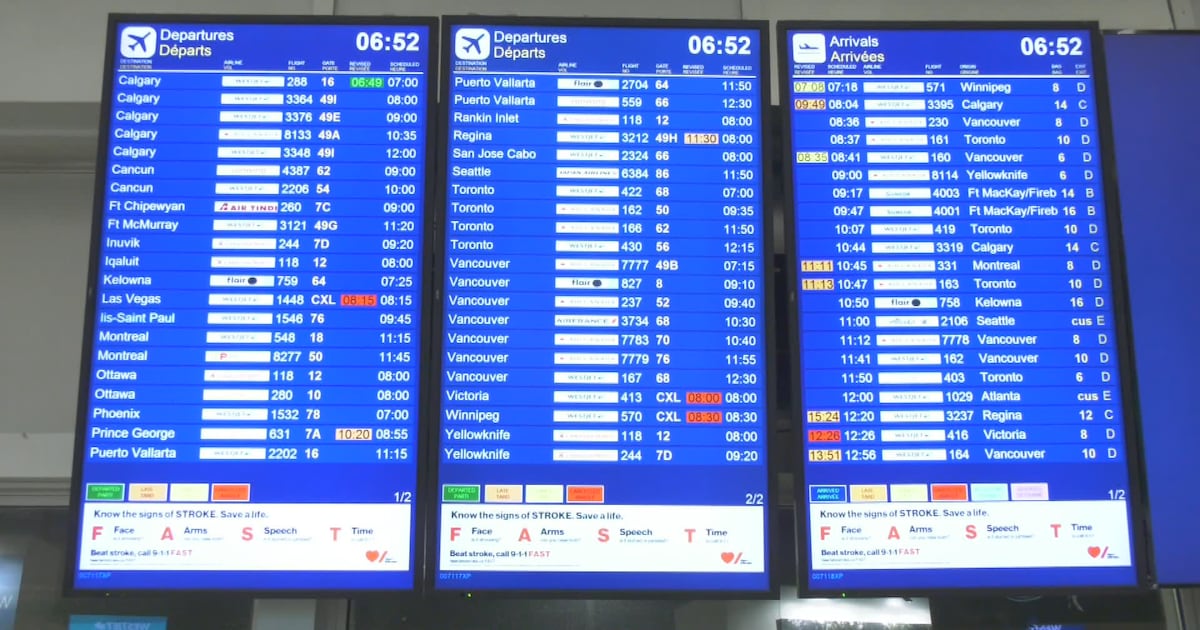
Airlines in Canada are adjusting their U.S. routes due to a significant decline in travel demand. Both WestJet and Air Transat have announced reductions in their services to various American destinations. This shift comes as data indicates Canadians are opting for fewer trips south of the border.
According to a spokesperson for WestJet, the airline has seen a “notable decline in transborder travel demand throughout 2025.” As a result, it will suspend services on 16 routes, including non-stop flights from Edmonton to Atlanta and Nashville, as well as from Toronto to Los Angeles. The decision aims to better align routes with Canadian travelers’ preferences.
A full list of suspended routes includes:
– Atlanta-Edmonton
– Nashville-Edmonton
– Nashville-Winnipeg
– Orlando-Edmonton
– Seattle-Kelowna
– San Francisco-Edmonton
– Nashville-Vancouver
– Boston-Vancouver
– Los Angeles-Toronto
– Raleigh-Durham-Calgary
– San Diego-Vancouver
– Seattle-Edmonton
– Tampa-Vancouver
– Atlanta-Winnipeg
– Orlando-Halifax
– San Francisco-Vancouver
The spokesperson further stated, “We see no indication that this trend will change in the foreseeable future.”
Air Transat, meanwhile, is halting all flights to the U.S. for the summer, including service to Fort Lauderdale and Orlando. Recent data from Statistics Canada revealed that Canadians took fewer trips to the U.S. in November 2025, reinforcing the airlines’ decisions.
Travel consultant Daryl Silver noted that while these changes may pose challenges for some travelers, they should not cause major concern. “In general, I don’t think that it’s that significant if it’s happening,” he said, adding that there have been no significant issues with border crossings.
Market Forces Drive Airline Decisions
Travel expert Barry Choi explained that airlines are motivated by profitability. “The airlines are going to shift their planes to where they can make the most profits,” he said. He highlighted that this may open new opportunities for Canadian travelers, as Air Transat has announced new flights to Ghana, which could benefit many African-Canadians.
WestJet is also adjusting its flight offerings to better serve its customers. “If they feel they can focus on domestic where they excel, especially on the West Coast, and if it’s profitable, it’s good for them,” Choi added.
Aviation analyst John Gradek emphasized that the airlines’ actions reflect consumer behavior. “The airlines are responding to a drop in market demand—driven by consumers, not driven by the weather,” he said. Gradek indicated that this trend may persist depending on changing attitudes among Canadian travelers. “This is customer driven. This is really Canadian driven – it depends on the mood of the Canadians,” he remarked.
Porter Airlines Seizes New Opportunities
While some airlines are cutting back, Porter Airlines is expanding its services. The airline recently announced new flights to Austin, Texas, and increased operations at Chicago’s O’Hare International Airport. Porter’s vice-president of network planning, Andrew Pierce, stated, “Porter continues to offer more destinations and flights that complement existing schedules and connect travelers across North America through our hubs.”
Year-round flights to Austin will commence on June 10, 2025, from Toronto Pearson International Airport, while services to Chicago will start on September 1, 2025, from Billy Bishop Toronto City Airport. This expansion reflects Porter’s commitment to meeting the needs of travelers seeking more options.
The contrasting strategies of Canadian airlines illustrate the evolving landscape of air travel in North America. As consumer preferences shift, airlines are compelled to adapt, whether by scaling back or exploring new opportunities.

iShares Core Dividend Growth ETF Faces Challenges; Alternatives Suggested

Discover 7 Scenic Hikes Near Calgary to Explore This Spring

Scientists Uncover Life’s Building Blocks in Ryugu Asteroid Samples

Windsor-Essex Unveils New Action Plan to Combat Substance Use

Boost Your Business Visibility with These Local SEO Strategies

East Algoma OPP Urges Public to Limit Travel Amid Hazardous Conditions

Universities Must Rethink Failure to Support Student Growth

Canada Invests $6.4 Million to Boost Green Shipping Corridors

Stony Plain Secures 14th Consecutive Award for Financial Reporting Excellence

Rhythm Pharmaceuticals Reports Strong Q4 Growth Ahead of FDA Decision

Brandon University’s Failed $5 Million Project Sparks Oversight Review

Microsoft Confirms U.S. Law Overrules Canadian Data Sovereignty

Winnipeg Celebrates Culinary Creativity During Le Burger Week 2025

New SĆIȺNEW̱ SṮEȽIṮḴEȽ Elementary Opens in Langford for 2025/2026 Year

EngineAI Unveils T800 Humanoid Robot, Setting New Industry Standards

Montreal’s Groupe Marcelle Leads Canadian Cosmetic Industry Growth

Tech Innovator Amandipp Singh Transforms Hiring for Disabled

Discover Aritzia’s Latest Fashion Trends: A Comprehensive Review

Dragon Ball: Sparking! Zero Launching on Switch and Switch 2 This November

Digg Relaunches as Founders Kevin Rose and Alexis Ohanian Join Forces
-
 Education7 months ago
Brandon University’s Failed $5 Million Project Sparks Oversight Review
-
 Science7 months ago
Microsoft Confirms U.S. Law Overrules Canadian Data Sovereignty
-
 Lifestyle7 months ago
Winnipeg Celebrates Culinary Creativity During Le Burger Week 2025
-
 Education7 months ago
New SĆIȺNEW̱ SṮEȽIṮḴEȽ Elementary Opens in Langford for 2025/2026 Year
-
 Business4 months ago
EngineAI Unveils T800 Humanoid Robot, Setting New Industry Standards
-
 Health7 months ago
Montreal’s Groupe Marcelle Leads Canadian Cosmetic Industry Growth
-
 Science7 months ago
Tech Innovator Amandipp Singh Transforms Hiring for Disabled
-
 Lifestyle3 months ago
Discover Aritzia’s Latest Fashion Trends: A Comprehensive Review
-
 Technology7 months ago
Dragon Ball: Sparking! Zero Launching on Switch and Switch 2 This November
-
 Technology2 months ago
Digg Relaunches as Founders Kevin Rose and Alexis Ohanian Join Forces
-
 Top Stories3 months ago
Canadiens Eye Elias Pettersson: What It Would Cost to Acquire Him
-

 Health6 months ago
Eganville Leader to Close in 2026 After 123 Years of Reporting
-

 Education7 months ago
Red River College Launches New Programs to Address Industry Needs
-

 Business6 months ago
Rocket Lab Reports Strong Q2 2025 Revenue Growth and Future Plans
-

 Top Stories3 months ago
Nicol Brothers Shine as Wheat Kings Dominate U18 AAA Hockey
-

 Business7 months ago
BNA Brewing to Open New Bowling Alley in Downtown Penticton
-

 Education5 months ago
Alberta Petition Aims to Redirect Funds from Private to Public Schools
-

 Technology7 months ago
Google Pixel 10 Pro Fold Specs Unveiled Ahead of Launch
-

 Technology6 months ago
Discord Faces Serious Security Breach Affecting Millions
-

 Education7 months ago
Alberta Teachers’ Strike: Potential Impacts on Students and Families
-

 Lifestyle2 weeks ago
Canmore’s Le Fournil Bakery to Close After 14 Successful Years
-

 Business7 months ago
Iconic Golden Lion Restaurant in South Surrey to Close After 50 Years
-

 Science7 months ago
China’s Wukong Spacesuit Sets New Standard for AI in Space
-

 Lifestyle5 months ago
Edmonton’s Beloved Evolution Wonderlounge Closes, New Era Begins