
Business
British Columbia’s Housing Bill Boosts Multi-Unit Developments

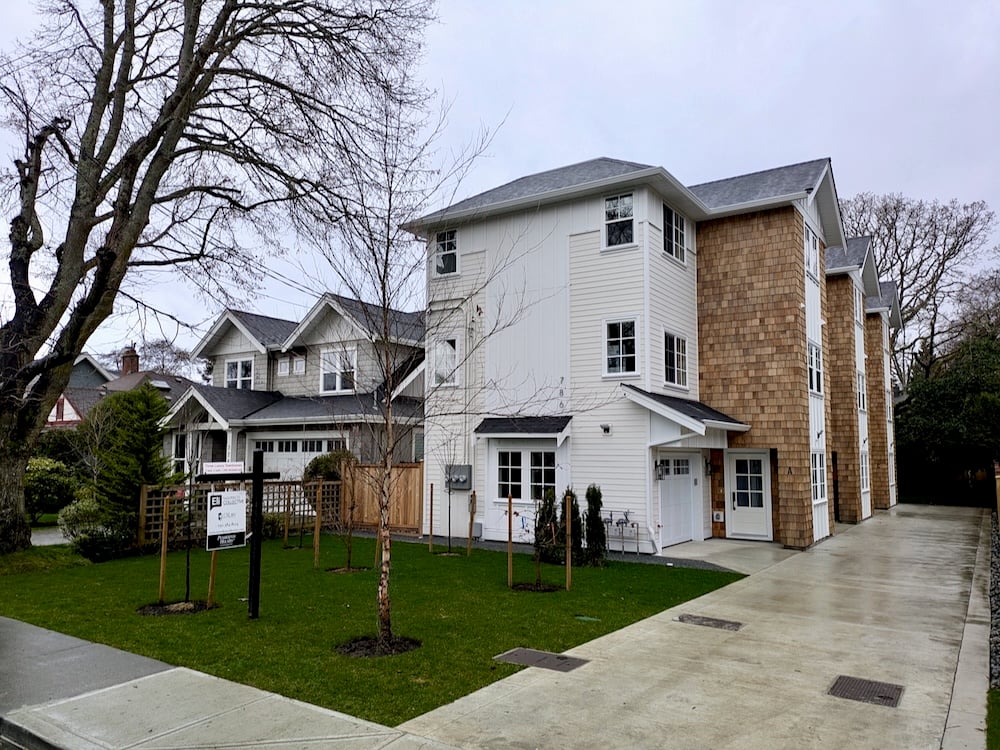
Changes to housing regulations in British Columbia, enacted through **Bill 44**, are successfully facilitating the construction of small-scale multi-unit housing in various neighborhoods. This legislation allows municipalities with populations over **5,000** to amend their bylaws to permit three to four units on residential lots previously designated for single-family homes, as well as up to six units on properties near frequent bus routes. The provincial government has set a deadline of **June 30, 2024**, for these updates, which many builders and developers are welcoming.
Xeniya Vins, an architect and co-owner of Xquimalt Developments, noted the immediate impact of these changes. “This is the first program in a long time that really picked up immediately,” she said. Vins has seen an uptick in projects, with two currently under construction and a third planned. She acknowledges that while the new regulations have opened doors for builders, community reactions are mixed. “If you ask the neighbours, did it work out for them, they’ll probably say no just because they don’t like the change in communities,” she stated.
The legislation has streamlined the approval process for developers. Previously, obtaining permission for such projects often involved extensive negotiations and community opposition. Now, projects that comply with the new regulations can expect a higher likelihood of approval. Vins emphasized that this shift is encouraging more diverse housing options for potential buyers, particularly those seeking homes without large yards.
Despite these advancements, concerns persist regarding the affordability of the new units. Vins pointed out that many of the three or four new units built under these regulations will likely be priced comparably to the single-family homes they replace. For instance, units in a newly listed triplex in **Oak Bay** are priced at **$1,549,000** each, reflecting ongoing challenges in achieving affordable housing.
Community Reactions and Local Government Concerns
Resistance to these developments often stems from generational differences in housing expectations. Vins highlighted a divide where older residents prefer to maintain the status quo, while younger individuals seek modern living spaces closer to urban centers. This sentiment was echoed in a letter to the **Goldstream News Gazette** from a local resident expressing discontent over a new fourplex in **Esquimalt**, which they felt overwhelmed the existing neighborhood.
Local government officials have voiced their apprehensions as well. **Richmond Mayor Malcolm Brodie** expressed concerns about the potential for unchecked density in residential areas. He argued that the province’s mandate undermines local planning efforts, which have traditionally focused on strategic development along major transit routes. “One size throughout the province does not fit all circumstances in residential areas,” he stated, emphasizing the need for tailored approaches to urban planning.
Brodie also highlighted issues surrounding infrastructure and parking, suggesting that the rapid introduction of new developments could strain existing services. He warned that without local discretion in planning, communities may experience detrimental changes that could diminish their character.
In response, **View Royal Mayor Sid Tobias** is rallying support from other municipalities for a judicial review of the housing bills. He questions whether local governments can effectively manage community planning or if they are becoming mere extensions of provincial authority.
Broader Implications for Housing Policy
Critics of Bill 44 have characterized the changes as a significant overreach into municipal authority, arguing that they compromise community input in the development process. **Elizabeth Murphy**, a former city project manager and member of the **Housing Reset** group, expressed concern over the lack of comprehensive community planning accompanying the new regulations. “We’re just very concerned the city has moved away from doing proper community planning,” she remarked, noting that the rapid implementation of these laws has left many municipalities unprepared.
The provincial government has not yet provided specific figures on the number of housing units created as a result of Bill 44, but **Housing Minister Christine Boyle** stated that **183** out of **188** local governments have adopted the new requirements for small-scale multi-unit housing. Boyle emphasized the intent behind these regulations: “The aim of small-scale multi-unit housing is to open the door to more types of homes being built across B.C. faster, providing more choices for families, workers, and people of all ages.”
As municipalities begin to report the number of permits issued, early statistics indicate a significant uptick in development applications. **Kelowna** recorded **65** applications for infill housing by September 2023, while **Vancouver** received **429** applications for multiplexes and issued **143** permits. **Surrey** reported **836** permits by January 2025, marking a **59 percent** increase since the legislation was enacted.
With the first projects under Bill 44 nearing completion, the long-term impacts of these changes remain uncertain. Vins believes that as more developments are completed, there will be greater acceptance within communities. “A few of these will get built and hopefully people will see it’s not as bad and [they’ll] get some more neighbours,” she said.
Overall, the evolution of housing policy in British Columbia represents a significant shift in how communities are shaped. While advocates celebrate the potential for increased housing availability, the concerns raised by local governments and residents underscore the complexities of urban development and the need for ongoing dialogue about community needs and aspirations.

iShares Core Dividend Growth ETF Faces Challenges; Alternatives Suggested

Discover 7 Scenic Hikes Near Calgary to Explore This Spring

Scientists Uncover Life’s Building Blocks in Ryugu Asteroid Samples

Windsor-Essex Unveils New Action Plan to Combat Substance Use

Boost Your Business Visibility with These Local SEO Strategies

East Algoma OPP Urges Public to Limit Travel Amid Hazardous Conditions

Universities Must Rethink Failure to Support Student Growth

Canada Invests $6.4 Million to Boost Green Shipping Corridors

Stony Plain Secures 14th Consecutive Award for Financial Reporting Excellence

Rhythm Pharmaceuticals Reports Strong Q4 Growth Ahead of FDA Decision

Brandon University’s Failed $5 Million Project Sparks Oversight Review

Microsoft Confirms U.S. Law Overrules Canadian Data Sovereignty

Discover Aritzia’s Latest Fashion Trends: A Comprehensive Review

Winnipeg Celebrates Culinary Creativity During Le Burger Week 2025

New SĆIȺNEW̱ SṮEȽIṮḴEȽ Elementary Opens in Langford for 2025/2026 Year

EngineAI Unveils T800 Humanoid Robot, Setting New Industry Standards

Montreal’s Groupe Marcelle Leads Canadian Cosmetic Industry Growth

Tech Innovator Amandipp Singh Transforms Hiring for Disabled

Canmore’s Le Fournil Bakery to Close After 14 Successful Years

Dragon Ball: Sparking! Zero Launching on Switch and Switch 2 This November
-
 Education8 months ago
Brandon University’s Failed $5 Million Project Sparks Oversight Review
-
 Science9 months ago
Microsoft Confirms U.S. Law Overrules Canadian Data Sovereignty
-
 Lifestyle4 months ago
Discover Aritzia’s Latest Fashion Trends: A Comprehensive Review
-
 Lifestyle8 months ago
Winnipeg Celebrates Culinary Creativity During Le Burger Week 2025
-
 Education8 months ago
New SĆIȺNEW̱ SṮEȽIṮḴEȽ Elementary Opens in Langford for 2025/2026 Year
-
 Business5 months ago
EngineAI Unveils T800 Humanoid Robot, Setting New Industry Standards
-
 Health9 months ago
Montreal’s Groupe Marcelle Leads Canadian Cosmetic Industry Growth
-
 Science9 months ago
Tech Innovator Amandipp Singh Transforms Hiring for Disabled
-
 Lifestyle2 months ago
Canmore’s Le Fournil Bakery to Close After 14 Successful Years
-
 Technology9 months ago
Dragon Ball: Sparking! Zero Launching on Switch and Switch 2 This November
-

 Technology4 months ago
Digg Relaunches as Founders Kevin Rose and Alexis Ohanian Join Forces
-
 Top Stories5 months ago
Canadiens Eye Elias Pettersson: What It Would Cost to Acquire Him
-

 Health7 months ago
Eganville Leader to Close in 2026 After 123 Years of Reporting
-

 Lifestyle6 months ago
Edmonton’s Beloved Evolution Wonderlounge Closes, New Era Begins
-

 Education9 months ago
Red River College Launches New Programs to Address Industry Needs
-

 Top Stories5 months ago
Nicol Brothers Shine as Wheat Kings Dominate U18 AAA Hockey
-

 Business9 months ago
BNA Brewing to Open New Bowling Alley in Downtown Penticton
-

 Business8 months ago
Rocket Lab Reports Strong Q2 2025 Revenue Growth and Future Plans
-

 Education6 months ago
Alberta Petition Aims to Redirect Funds from Private to Public Schools
-

 Education9 months ago
Alberta Teachers’ Strike: Potential Impacts on Students and Families
-

 Technology7 months ago
Discord Faces Serious Security Breach Affecting Millions
-

 Technology9 months ago
Google Pixel 10 Pro Fold Specs Unveiled Ahead of Launch
-

 Education5 months ago
ʔaq̓am Education Law Enacted, Affirming Self-Governance Rights
-

 Business8 months ago
Iconic Golden Lion Restaurant in South Surrey to Close After 50 Years