
Top Stories
British Columbia Faces Power Supply Challenge Amid AI Boom

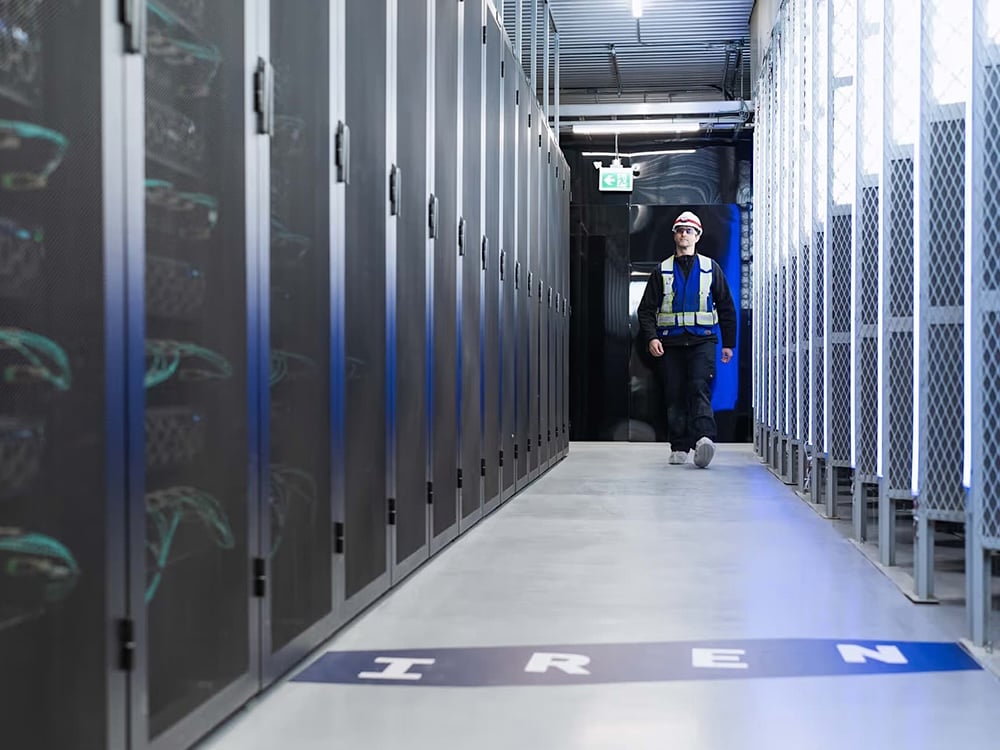
Artificial intelligence (AI) is rapidly transforming various sectors, and British Columbia (B.C.) is positioning itself to capitalize on this trend. The province is witnessing a surge in AI data centres, which are crucial for supporting this technological evolution. However, this growth presents a significant challenge: a limited electricity supply that must accommodate the escalating energy demands of these facilities.
B.C. recently inaugurated its first AI data centres in **Prince George** and **Kamloops**, with plans for additional facilities on the horizon. The provincial government views these data centres as essential for economic growth and maintaining data sovereignty by keeping information within Canada. “AI is everywhere. It’s changing how we work, learn, and do business,” stated **Rick Glumac**, B.C.’s Minister of State for Artificial Intelligence and New Technologies, who is tasked with expanding the province’s AI sector.
The challenge lies in the energy-intensive nature of AI data centres, which require substantial electricity for both operations and cooling. B.C.’s hydroelectric grid, predominantly powered by renewable sources, provides a clean energy option but is not without limitations. The province must balance the demands of various industries, including electric vehicles and liquid natural gas (LNG), while ensuring that AI does not monopolize the available power resources.
As the first province in Canada to establish a cabinet position for AI, B.C. is not alone in this endeavour. The federal government also appointed a Minister of Artificial Intelligence and Digital Innovation, aiming to propel Canada to the forefront of the AI sector. Following the recent federal election, this initiative was highlighted by the launch of an **AI Strategy Task Force**, which is currently seeking public input on infrastructure and security matters related to AI.
According to B.C.’s Ministry of Energy and Climate Solutions, the province categorizes data centres into three types: conventional, cryptocurrency mining, and AI. Presently, there are **12 notable conventional data centres** in B.C., with three more seeking power connections. If approved, these facilities could consume nearly **40 megawatts** of power—only a fraction of the province’s total capacity of **12,000 megawatts**. In contrast, AI data centres can each demand over **100 megawatts**.
In May, **Bell Canada** announced plans for an AI “data centre supercluster” that is expected to consume upwards of **500 megawatts**, approximately **5%** of the province’s current power supply. Its first facility, a **seven-megawatt** centre in Kamloops, opened in June, with another planned for **Merritt** by the end of next year. The company has additional projects in the works, including two **26-megawatt** data centres in partnership with local institutions.
The competitive landscape is further complicated by **Telus**, which announced plans for two Canadian data centres, including one in B.C. This centre aims to be “fully owned and operated on Canadian soil” to address concerns over data sovereignty. While Telus claims its Kamloops facility will be powered by **99% renewable energy**, specific power consumption details remain undisclosed.
As these developments unfold, Glumac emphasized the importance of closely monitoring the power grid’s capacity. BC Hydro is actively evaluating how the growth in AI and data centres will impact future energy demands. “We want to ensure that clean energy supports not just data centres but also the people in British Columbia and their economic opportunities,” Glumac added, indicating a potential need for regulation similar to the pause imposed on cryptocurrency mining operations due to their high energy consumption.
In December 2022, B.C. announced a moratorium on new electricity connections for cryptocurrency operations, citing their significant energy requirements. At that time, the province had six active cryptocurrency mining operations and several more in planning stages. While existing operations can continue, the moratorium halted **21 additional projects** that collectively sought over **1,400 megawatts** of power, exceeding **10%** of the total supply.
**Iren**, formerly known as **Iris Energy**, is B.C.’s largest bitcoin miner with operations in **Prince George**, **Mackenzie**, and **Canal Flats**. The company has promoted its activities as environmentally responsible, leveraging B.C.’s abundant renewable power. Iren’s facilities currently draw up to **160 megawatts**. However, under the new regulations, the company cannot expand its bitcoin operations but is diversifying into AI data storage. “We are interested in further expansion within B.C., and AI data centres are a use case that is allowed,” stated **Kent Draper**, Iren’s Chief Commercial Officer.
As AI and cryptocurrency mining both require high energy consumption, Draper noted that the transition to AI data centres involves minimal upgrades to existing infrastructure. “In that sense, AI is actually very similar to bitcoin mining,” he explained. Iren’s Prince George facility began offering AI data storage last year, with plans to double its capacity announced in September.
The looming energy demand from AI data centres is a concern shared by **Kate Harland**, research lead for clean growth at the **Canadian Climate Institute**. She advocates for proactive government planning to manage the expected surge in energy needs. “There is a lot of interest right now across Canada in having AI-enabled data centres,” Harland remarked. However, she warned of a potential “tipping point” where the benefits of AI might not outweigh the demands on the power grid.
B.C. has historically adopted a “first come, first served” policy for industrial power requests, but jurisdictions like Quebec are implementing new regulations to ensure fair allocation of limited resources. For instance, Quebec now requires ministerial approval for projects seeking more than **five megawatts** of power, considering economic and social impacts.
As British Columbia navigates this burgeoning AI landscape, the balance between energy supply and industrial demand will be crucial. The province’s commitment to maintaining clean energy while fostering economic growth will be tested as AI data centres continue to emerge as significant consumers of power.

iShares Core Dividend Growth ETF Faces Challenges; Alternatives Suggested

Discover 7 Scenic Hikes Near Calgary to Explore This Spring

Scientists Uncover Life’s Building Blocks in Ryugu Asteroid Samples

Windsor-Essex Unveils New Action Plan to Combat Substance Use

Boost Your Business Visibility with These Local SEO Strategies

East Algoma OPP Urges Public to Limit Travel Amid Hazardous Conditions

Universities Must Rethink Failure to Support Student Growth

Canada Invests $6.4 Million to Boost Green Shipping Corridors

Stony Plain Secures 14th Consecutive Award for Financial Reporting Excellence

Rhythm Pharmaceuticals Reports Strong Q4 Growth Ahead of FDA Decision

Brandon University’s Failed $5 Million Project Sparks Oversight Review

Microsoft Confirms U.S. Law Overrules Canadian Data Sovereignty

Discover Aritzia’s Latest Fashion Trends: A Comprehensive Review

Winnipeg Celebrates Culinary Creativity During Le Burger Week 2025

New SĆIȺNEW̱ SṮEȽIṮḴEȽ Elementary Opens in Langford for 2025/2026 Year

EngineAI Unveils T800 Humanoid Robot, Setting New Industry Standards

Montreal’s Groupe Marcelle Leads Canadian Cosmetic Industry Growth

Canmore’s Le Fournil Bakery to Close After 14 Successful Years

Tech Innovator Amandipp Singh Transforms Hiring for Disabled

Dragon Ball: Sparking! Zero Launching on Switch and Switch 2 This November
-
 Education9 months ago
Brandon University’s Failed $5 Million Project Sparks Oversight Review
-
 Science10 months ago
Microsoft Confirms U.S. Law Overrules Canadian Data Sovereignty
-
 Lifestyle5 months ago
Discover Aritzia’s Latest Fashion Trends: A Comprehensive Review
-
 Lifestyle9 months ago
Winnipeg Celebrates Culinary Creativity During Le Burger Week 2025
-
 Education9 months ago
New SĆIȺNEW̱ SṮEȽIṮḴEȽ Elementary Opens in Langford for 2025/2026 Year
-
 Business6 months ago
EngineAI Unveils T800 Humanoid Robot, Setting New Industry Standards
-
 Health10 months ago
Montreal’s Groupe Marcelle Leads Canadian Cosmetic Industry Growth
-
 Lifestyle3 months ago
Canmore’s Le Fournil Bakery to Close After 14 Successful Years
-
 Science10 months ago
Tech Innovator Amandipp Singh Transforms Hiring for Disabled
-
 Technology9 months ago
Dragon Ball: Sparking! Zero Launching on Switch and Switch 2 This November
-

 Technology5 months ago
Digg Relaunches as Founders Kevin Rose and Alexis Ohanian Join Forces
-
 Top Stories6 months ago
Canadiens Eye Elias Pettersson: What It Would Cost to Acquire Him
-

 Lifestyle7 months ago
Edmonton’s Beloved Evolution Wonderlounge Closes, New Era Begins
-

 Health8 months ago
Eganville Leader to Close in 2026 After 123 Years of Reporting
-

 Top Stories6 months ago
Nicol Brothers Shine as Wheat Kings Dominate U18 AAA Hockey
-

 Education9 months ago
Red River College Launches New Programs to Address Industry Needs
-

 Education6 months ago
ʔaq̓am Education Law Enacted, Affirming Self-Governance Rights
-

 Education8 months ago
Durham Schools Urged to Reconsider Prom Cancellation After Student Protest
-

 Business9 months ago
BNA Brewing to Open New Bowling Alley in Downtown Penticton
-

 Education7 months ago
Alberta Petition Aims to Redirect Funds from Private to Public Schools
-

 Business9 months ago
Rocket Lab Reports Strong Q2 2025 Revenue Growth and Future Plans
-

 Technology8 months ago
Discord Faces Serious Security Breach Affecting Millions
-

 Technology5 months ago
Amazon Unveils Kindle Plans for 2026: New Devices and Features
-

 Technology10 months ago
Google Pixel 10 Pro Fold Specs Unveiled Ahead of Launch