
Technology
Nvidia and Partners Accelerate Self-Driving Vehicle Innovations

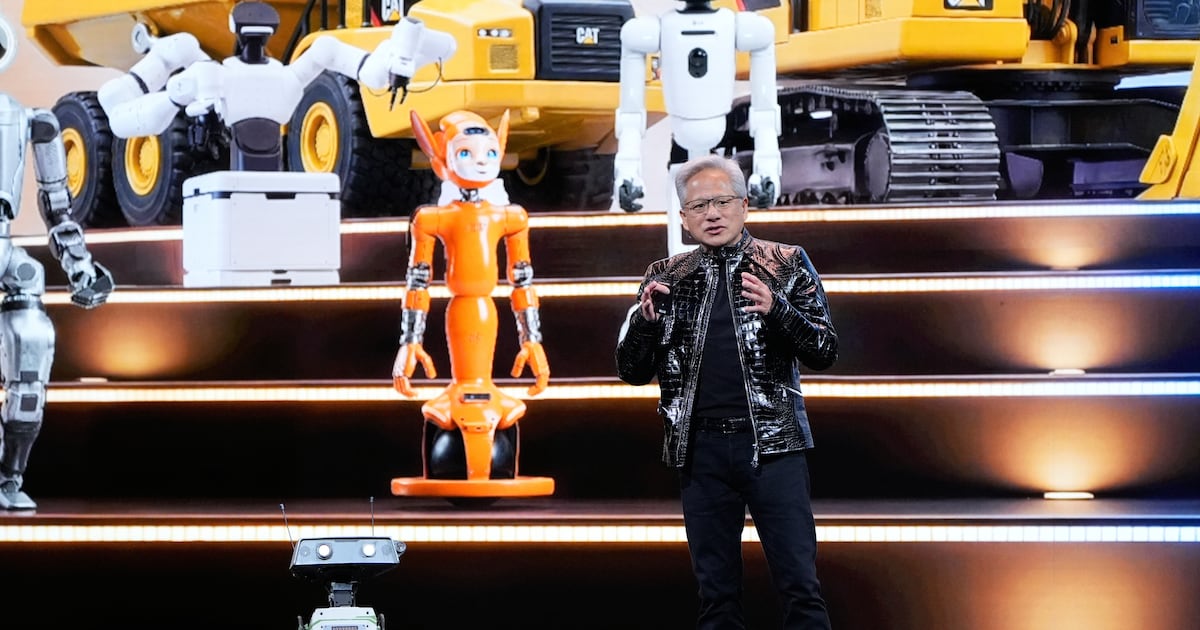
The self-driving car sector is witnessing renewed vigor as tech suppliers and automakers, including Nvidia, forge partnerships to advance autonomous vehicle technology. Despite the industry’s history of setbacks and delays, these collaborations aim to leverage artificial intelligence (AI) to drive progress. Yet, many automakers remain cautious, questioning the economic viability of such investments amid concerns about costs, scalability, and consumer demand.
At the annual CES event in Las Vegas this week, significant announcements were made that highlight this momentum. AWS partnered with German supplier Aumovio to support the rollout of self-driving vehicles. Additionally, Kodiak AI and Bosch revealed a collaboration to enhance the production of autonomous trucking hardware and sensors. In another notable development, Nvidia introduced its next-generation platform, which will power a new robotaxi alliance formed by Lucid Group, Nuro, and Uber. Furthermore, Mercedes-Benz announced plans to launch an advanced driver-assistance system in the United States later this year, utilizing Nvidia’s technology to enable autonomous operations on city streets under driver supervision.
The pivotal role of AI in this evolution cannot be overstated. According to Ozgur Tohumcu, general manager for automotive and manufacturing at Amazon Web Services, AI is serving as a “big accelerant” for the industry. It facilitates significant development and validation processes while reducing resource requirements. This technological boost is essential as Western automakers strive to keep pace with rapid advancements in autonomous driving led by China. Recently, the Chinese government approved two vehicles equipped with Level 3 autonomous capabilities, allowing for hands-free driving.
The auto industry recognizes five levels of autonomous driving, ranging from simple cruise control at Level 1 to fully autonomous operation at Level 5. Despite the excitement surrounding these advancements, Jochen Hanebeck, CEO of German chipmaker Infineon, cautioned against unrealistic expectations regarding the rapid adoption of fully self-driving cars. He pointed out that rather than investing heavily in fully autonomous technologies, many automakers are focusing on revenue-generating driver assistance systems classified as Level 2, which still require driver attention.
In recent months, several small robotaxi operations have been launched across China, the United States, Europe, and the Middle East. However, expanding the operational areas of these services demands extensive data and logistical resources, which can be financially burdensome. Jeremy McClain, head of system and software at Aumovio’s autonomous mobility unit, emphasized the need for more data and fleets to effectively broaden coverage.
The self-driving car industry has often been characterized by lofty promises. In 2019, Tesla CEO Elon Musk claimed that his company would have one million self-driving vehicles on the road by 2020. However, it was not until last year that Tesla launched a limited robotaxi trial, six years after Musk’s assertion. The challenge lies in the unpredictable nature of real-world driving, where vehicles must navigate billions of potential incidents or “edge cases.” A classic example is the difference in response between human drivers and autonomous systems when a ball rolls into the street.
After earlier setbacks, major automakers like Ford and General Motors shifted away from autonomous vehicle programs that were financially draining. The challenges faced by GM’s Cruise unit were exacerbated by incidents such as a pedestrian being struck and dragged by one of its vehicles.
Despite these difficulties, Ali Kani, general manager of the automotive team at Nvidia, expressed confidence that AI advancements are addressing significant weaknesses in self-driving technology. He noted, “There are some foundational pieces of technology that make us feel like we’re there.”
Analysts from Morgan Stanley highlighted Nvidia’s new Alpamayo platform as a potential key to helping traditional automakers compete with Tesla. While they recognize that Tesla is currently ahead in the market, Nvidia’s open-source platform offers a collaborative environment for its competitors. Russell Ong, a former product lead at self-driving vehicle maker Zoox, likened the situation to the competition between Apple’s and Android’s operating systems, suggesting that Nvidia’s approach could foster innovation among those striving to catch up.
In conclusion, while the path to fully autonomous vehicles remains fraught with challenges, the recent partnerships and technological advances signify a renewed commitment to pushing the boundaries of self-driving innovation. The industry’s next steps will be crucial in determining whether these efforts will ultimately lead to safer, more efficient autonomous transportation.

iShares Core Dividend Growth ETF Faces Challenges; Alternatives Suggested

Discover 7 Scenic Hikes Near Calgary to Explore This Spring

Scientists Uncover Life’s Building Blocks in Ryugu Asteroid Samples

Windsor-Essex Unveils New Action Plan to Combat Substance Use

Boost Your Business Visibility with These Local SEO Strategies

East Algoma OPP Urges Public to Limit Travel Amid Hazardous Conditions

Universities Must Rethink Failure to Support Student Growth

Canada Invests $6.4 Million to Boost Green Shipping Corridors

Stony Plain Secures 14th Consecutive Award for Financial Reporting Excellence

Rhythm Pharmaceuticals Reports Strong Q4 Growth Ahead of FDA Decision

Brandon University’s Failed $5 Million Project Sparks Oversight Review

Microsoft Confirms U.S. Law Overrules Canadian Data Sovereignty

Discover Aritzia’s Latest Fashion Trends: A Comprehensive Review

Winnipeg Celebrates Culinary Creativity During Le Burger Week 2025

New SĆIȺNEW̱ SṮEȽIṮḴEȽ Elementary Opens in Langford for 2025/2026 Year

EngineAI Unveils T800 Humanoid Robot, Setting New Industry Standards

Montreal’s Groupe Marcelle Leads Canadian Cosmetic Industry Growth

Tech Innovator Amandipp Singh Transforms Hiring for Disabled

Canmore’s Le Fournil Bakery to Close After 14 Successful Years

Dragon Ball: Sparking! Zero Launching on Switch and Switch 2 This November
-
 Education8 months ago
Brandon University’s Failed $5 Million Project Sparks Oversight Review
-
 Science9 months ago
Microsoft Confirms U.S. Law Overrules Canadian Data Sovereignty
-
 Lifestyle4 months ago
Discover Aritzia’s Latest Fashion Trends: A Comprehensive Review
-
 Lifestyle8 months ago
Winnipeg Celebrates Culinary Creativity During Le Burger Week 2025
-
 Education8 months ago
New SĆIȺNEW̱ SṮEȽIṮḴEȽ Elementary Opens in Langford for 2025/2026 Year
-
 Business5 months ago
EngineAI Unveils T800 Humanoid Robot, Setting New Industry Standards
-
 Health9 months ago
Montreal’s Groupe Marcelle Leads Canadian Cosmetic Industry Growth
-
 Science9 months ago
Tech Innovator Amandipp Singh Transforms Hiring for Disabled
-
 Lifestyle2 months ago
Canmore’s Le Fournil Bakery to Close After 14 Successful Years
-
 Technology9 months ago
Dragon Ball: Sparking! Zero Launching on Switch and Switch 2 This November
-

 Technology4 months ago
Digg Relaunches as Founders Kevin Rose and Alexis Ohanian Join Forces
-
 Top Stories5 months ago
Canadiens Eye Elias Pettersson: What It Would Cost to Acquire Him
-

 Lifestyle6 months ago
Edmonton’s Beloved Evolution Wonderlounge Closes, New Era Begins
-

 Health7 months ago
Eganville Leader to Close in 2026 After 123 Years of Reporting
-

 Top Stories5 months ago
Nicol Brothers Shine as Wheat Kings Dominate U18 AAA Hockey
-

 Education9 months ago
Red River College Launches New Programs to Address Industry Needs
-

 Business9 months ago
BNA Brewing to Open New Bowling Alley in Downtown Penticton
-

 Business8 months ago
Rocket Lab Reports Strong Q2 2025 Revenue Growth and Future Plans
-

 Education7 months ago
Alberta Petition Aims to Redirect Funds from Private to Public Schools
-

 Education7 months ago
Durham Schools Urged to Reconsider Prom Cancellation After Student Protest
-

 Education9 months ago
Alberta Teachers’ Strike: Potential Impacts on Students and Families
-

 Technology7 months ago
Discord Faces Serious Security Breach Affecting Millions
-

 Technology9 months ago
Google Pixel 10 Pro Fold Specs Unveiled Ahead of Launch
-

 Education5 months ago
ʔaq̓am Education Law Enacted, Affirming Self-Governance Rights