
Science
Virtual Reality Brings Shakespeare to Life at University of Guelph

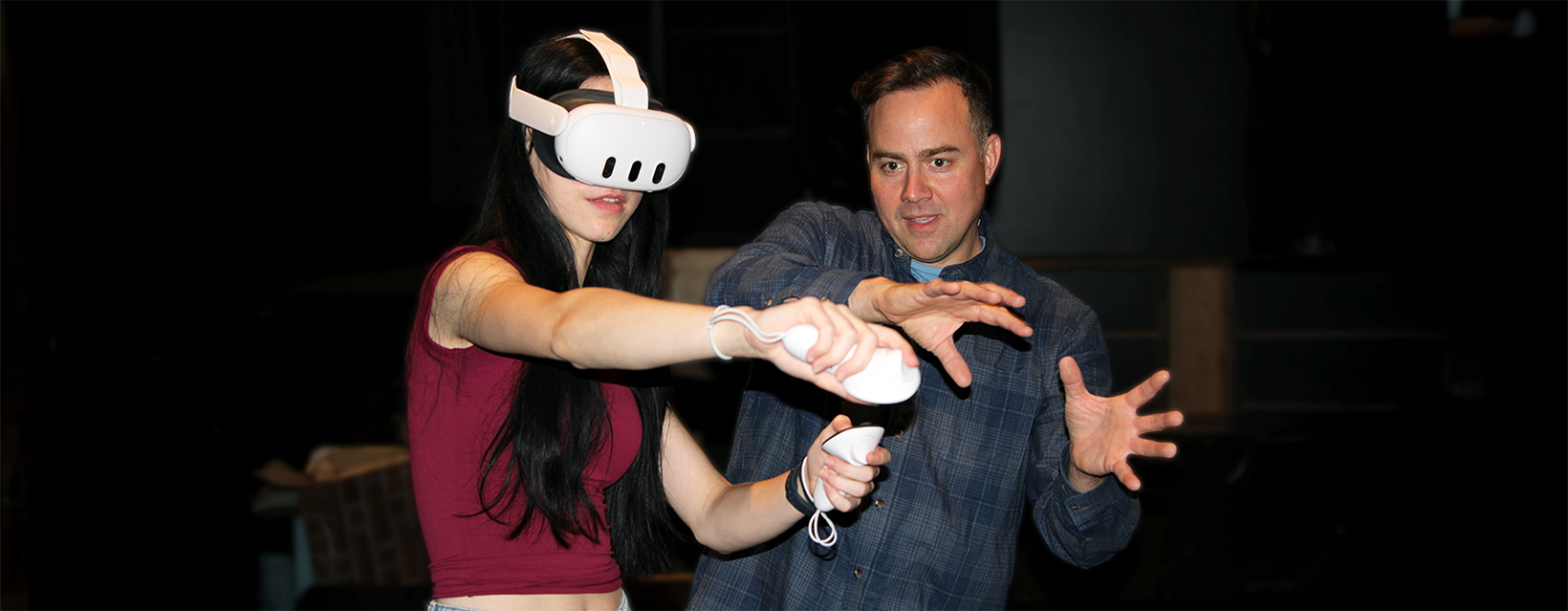
A virtual reality theatre initiative that immerses high school students in Shakespearean plays has been awarded the University of Guelph’s prestigious 2025 Innovation of the Year Award. This project transforms classic works into interactive experiences, making Shakespeare accessible to learners regardless of their background or location. The award, presented annually by the University’s Office of Research and the Research Innovation Office, acknowledges research-driven advancements that significantly enhance people’s lives.
“This project is a perfect example of turning innovation into real-world impact,” said Dr. Shayan Sharif, interim vice-president of research at the university. The initiative combines cutting-edge virtual reality technology with Shakespeare’s timeless works, offering students a unique and engaging way to experience literature.
Dr. Peter Kuling, a professor in the School of Theatre, English, and Creative Writing, collaborated with Calian, an Ottawa-based company specializing in virtual reality development, to create this technology. “I partnered with Calian because they understood the psychological and spatial experience of being ‘inside’ a scene and gave the experience of what it feels like to explore, make choices and be immersed in an environment,” Kuling explained. Their previous work, including projects for the Canadian War Museum, provided them with valuable insights into environmental design and realism in virtual spaces.
The project emerged during the COVID-19 pandemic when the Ontario Government launched funding to support digital and innovative teaching projects for high schools, colleges, and universities. Kuling saw this as an opportunity to explore how theatre could adapt to a digital format. “I kept wondering what theatre could offer in a digital world and what I would have wanted in high school to truly understand Shakespeare,” he stated. “This project gives students a chance to experience Shakespeare not as a distant text, but as a living, breathing world they can step inside.”
The initiative began with the Hamlet VR Experience and followed with the Macbeth VR Experience, both designed as interactive productions of 12 and 26 minutes, respectively. In the Hamlet VR, players take on the role of Bernardo, a castle guard who encounters the ghost of Hamlet’s father, allowing them to either speak the character’s lines or let an actor perform them. In the Macbeth VR, participants become one of the three witches, casting spells and delivering prophecies. They can replay the experience from each witch’s perspective, gaining diverse insights into the scenes.
These experiences are designed to be inclusive, featuring a wide array of characters and settings that reflect contemporary Canada. They are accessible to a broad audience, offering variations for standing or seated gameplay, as well as multilingual support through recorded dialogue instead of on-screen text. The outcome has been a transformative way for high school students in Ontario to engage with Shakespeare’s works, which is now freely available to schools across the province and utilized by educators as far away as California and the United Kingdom.
Educators in Ontario have begun to integrate Shakespeare VR into their classrooms. At John Fraser Secondary School in Mississauga, students have responded positively to the immersive experiences. “Watching students step inside the world of the play was incredible, and even those who are usually shy lit up,” commented Robert Gale, an English and history teacher at the school. “The immersive details and 360-degree environment helped them feel the story rather than just read it, and it brought Shakespeare to life in a way I’ve never seen in a classroom.”
Kuling plans to expand the project further by introducing additional Shakespeare plays, including VR Julius Caesar and VR Antony and Cleopatra. He is also developing the Globe VR Experience, a virtual recreation of Shakespeare’s Globe Theatre, set to launch in 2026. “With the Globe VR Experience, we’re bringing Shakespeare’s world directly to students, with no travel required,” he explained. “We can offer world-class performances directly to students at every level, from high school to university.”
Receiving the Innovation of the Year Award is a shared recognition for Kuling, who emphasizes the collaborative effort behind the project. “This project was built on collaboration and creativity, and the award truly belongs to everyone who worked together to make something innovative and inspiring,” he said. “It’s humbling to see an idea that grew through teamwork and imagination recognized as Innovation of the Year. This work is about expanding educational opportunities, supporting students, and demonstrating how the arts can innovate alongside technology.”
The project also benefited from the contributions of various collaborators, including Theatre Studies PhD students Alice Hinchliffe and Erin O’Brien, alumni Gabriella Sundar-Singh, Kyle Blair, and Kyle Golemba, as well as members from the Stratford and Shaw Festivals. This initiative was funded by the Ontario Exchange Network, showcasing the potential of educational innovation in the realm of the arts.

iShares Core Dividend Growth ETF Faces Challenges; Alternatives Suggested

Discover 7 Scenic Hikes Near Calgary to Explore This Spring

Scientists Uncover Life’s Building Blocks in Ryugu Asteroid Samples

Windsor-Essex Unveils New Action Plan to Combat Substance Use

Boost Your Business Visibility with These Local SEO Strategies

East Algoma OPP Urges Public to Limit Travel Amid Hazardous Conditions

Universities Must Rethink Failure to Support Student Growth

Canada Invests $6.4 Million to Boost Green Shipping Corridors

Stony Plain Secures 14th Consecutive Award for Financial Reporting Excellence

Rhythm Pharmaceuticals Reports Strong Q4 Growth Ahead of FDA Decision

Brandon University’s Failed $5 Million Project Sparks Oversight Review

Microsoft Confirms U.S. Law Overrules Canadian Data Sovereignty

Winnipeg Celebrates Culinary Creativity During Le Burger Week 2025

Discover Aritzia’s Latest Fashion Trends: A Comprehensive Review

New SĆIȺNEW̱ SṮEȽIṮḴEȽ Elementary Opens in Langford for 2025/2026 Year

EngineAI Unveils T800 Humanoid Robot, Setting New Industry Standards

Montreal’s Groupe Marcelle Leads Canadian Cosmetic Industry Growth

Tech Innovator Amandipp Singh Transforms Hiring for Disabled

Dragon Ball: Sparking! Zero Launching on Switch and Switch 2 This November

Digg Relaunches as Founders Kevin Rose and Alexis Ohanian Join Forces
-
 Education7 months ago
Brandon University’s Failed $5 Million Project Sparks Oversight Review
-
 Science8 months ago
Microsoft Confirms U.S. Law Overrules Canadian Data Sovereignty
-
 Lifestyle7 months ago
Winnipeg Celebrates Culinary Creativity During Le Burger Week 2025
-
 Lifestyle4 months ago
Discover Aritzia’s Latest Fashion Trends: A Comprehensive Review
-
 Education7 months ago
New SĆIȺNEW̱ SṮEȽIṮḴEȽ Elementary Opens in Langford for 2025/2026 Year
-
 Business4 months ago
EngineAI Unveils T800 Humanoid Robot, Setting New Industry Standards
-
 Health8 months ago
Montreal’s Groupe Marcelle Leads Canadian Cosmetic Industry Growth
-
 Science8 months ago
Tech Innovator Amandipp Singh Transforms Hiring for Disabled
-
 Technology8 months ago
Dragon Ball: Sparking! Zero Launching on Switch and Switch 2 This November
-
 Technology3 months ago
Digg Relaunches as Founders Kevin Rose and Alexis Ohanian Join Forces
-
 Top Stories4 months ago
Canadiens Eye Elias Pettersson: What It Would Cost to Acquire Him
-

 Lifestyle3 weeks ago
Canmore’s Le Fournil Bakery to Close After 14 Successful Years
-

 Health6 months ago
Eganville Leader to Close in 2026 After 123 Years of Reporting
-

 Education8 months ago
Red River College Launches New Programs to Address Industry Needs
-

 Top Stories4 months ago
Nicol Brothers Shine as Wheat Kings Dominate U18 AAA Hockey
-

 Business7 months ago
Rocket Lab Reports Strong Q2 2025 Revenue Growth and Future Plans
-

 Business8 months ago
BNA Brewing to Open New Bowling Alley in Downtown Penticton
-

 Education6 months ago
Alberta Petition Aims to Redirect Funds from Private to Public Schools
-

 Education8 months ago
Alberta Teachers’ Strike: Potential Impacts on Students and Families
-

 Technology6 months ago
Discord Faces Serious Security Breach Affecting Millions
-

 Technology8 months ago
Google Pixel 10 Pro Fold Specs Unveiled Ahead of Launch
-

 Lifestyle5 months ago
Edmonton’s Beloved Evolution Wonderlounge Closes, New Era Begins
-

 Business7 months ago
Iconic Golden Lion Restaurant in South Surrey to Close After 50 Years
-

 Science8 months ago
China’s Wukong Spacesuit Sets New Standard for AI in Space