
Science
Stanford Team Decodes Inner Speech, Raises Privacy Concerns

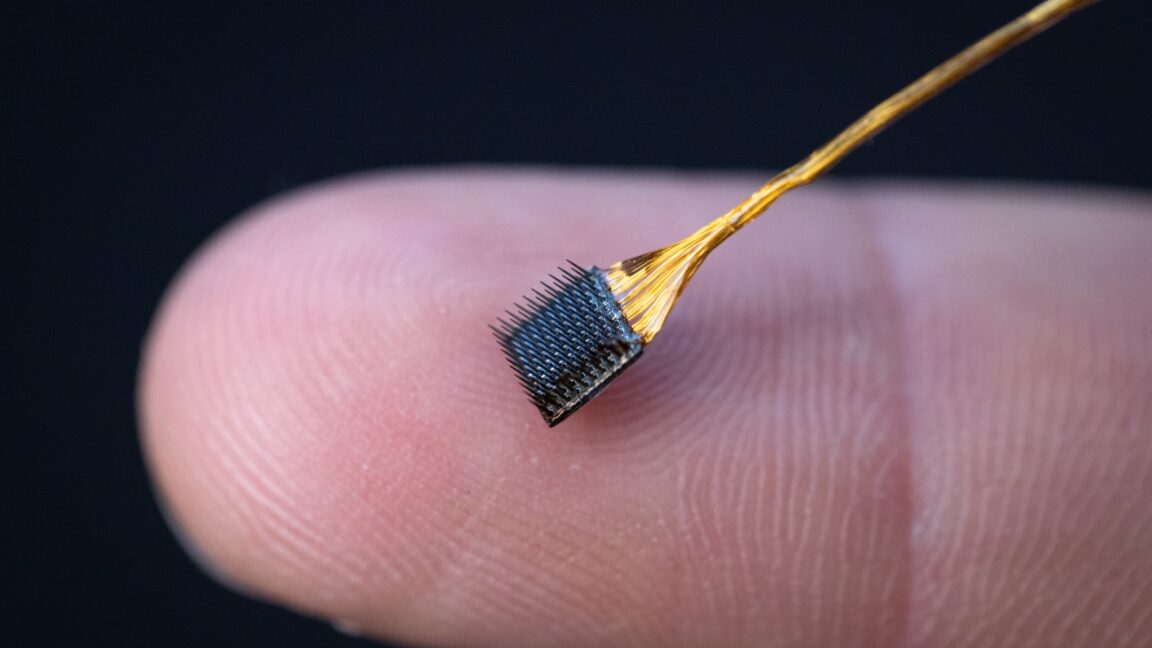
Researchers at Stanford University have developed a groundbreaking brain-computer interface (BCI) capable of decoding inner speech, a significant advancement that raises important questions about mental privacy. This new technology allows individuals with severe paralysis to communicate without physically attempting to speak, offering a potential lifeline for those suffering from conditions like ALS or tetraplegia.
Traditional BCIs have primarily focused on interpreting signals from the brain areas responsible for muscle movements associated with speech. These systems require patients to make physical attempts to speak, a challenging task for individuals with limited mobility. Recognizing this limitation, the Stanford team, led by neuroscientists Benyamin Meschede Abramovich Krasa and Erin M. Kunz, pivoted to decoding inner speech—the silent dialogue that occurs during activities like reading or thinking.
Innovative Approach to Inner Speech Decoding
The research team collected neural data from four participants, each with microelectrode arrays implanted in their motor cortex. The participants engaged in tasks that involved listening to spoken words or silently reading sentences. The analysis revealed that signals associated with inner speech were present in the same brain regions that control attempted speech. This finding led to concerns about whether existing speech decoding systems could unintentionally capture private thoughts.
In a previous study conducted at the University of California—Davis, researchers showcased a BCI that translated brain signals into sounds. When questioned about the ability to distinguish between inner and attempted speech, the lead researcher stated it was not an issue, as their system focused on muscle control signals. Krasa’s team, however, demonstrated that traditional systems could misinterpret inner thoughts, leading to unintended privacy breaches.
To address these concerns, the Stanford team implemented two safeguards. The first method automatically differentiated between signals for attempted and inner speech by training AI systems to ignore inner speech signals. Krasa noted that this approach proved effective. The second safeguard required participants to visualize a designated “mental password” to activate the BCI, achieving an impressive recognition accuracy of 98 percent with the phrase “Chitty chitty bang bang.”
Testing the Limits of Inner Speech Technology
Once the privacy safeguards were established, the researchers began testing the inner speech system using cued words. Participants were shown sentences on a screen and asked to imagine saying them. The results varied, achieving a maximum accuracy of 86 percent with a limited vocabulary of 50 words. However, accuracy dropped to 74 percent when the vocabulary expanded to 125,000 words.
The team then shifted focus to unstructured inner speech tests, where patients were instructed to visualize sequences of arrows on a screen. This task aimed to determine if the BCI could capture thoughts of “up, right, up.” While the system performed slightly above chance levels, it highlighted the current limitations of the technology. More complex tasks, such as recalling favorite foods or movie quotes, resulted in outputs that resembled gibberish.
Despite these challenges, Krasa views the inner speech neural prosthesis as a proof of concept. “We didn’t think this would be possible, but we did it, and that’s exciting,” he stated. Nonetheless, he acknowledged that the error rates remain too high for practical use, suggesting that improvements in hardware and electrode precision may enhance the technology’s effectiveness.
Looking ahead, Krasa’s team is involved in two additional projects stemming from this research. One project aims to determine how much faster an inner speech BCI can operate compared to traditional attempted speech systems. The second project explores the potential benefits of inner speech decoding for individuals with aphasia, a condition that affects speech production despite maintaining motor control.
As research in this field continues, the implications of decoding inner speech are vast, raising both hope for improved communication for those with disabilities and important questions about the ethics of accessing thoughts that many might prefer to keep private.

iShares Core Dividend Growth ETF Faces Challenges; Alternatives Suggested

Discover 7 Scenic Hikes Near Calgary to Explore This Spring

Scientists Uncover Life’s Building Blocks in Ryugu Asteroid Samples

Windsor-Essex Unveils New Action Plan to Combat Substance Use

Boost Your Business Visibility with These Local SEO Strategies

East Algoma OPP Urges Public to Limit Travel Amid Hazardous Conditions

Universities Must Rethink Failure to Support Student Growth

Canada Invests $6.4 Million to Boost Green Shipping Corridors

Stony Plain Secures 14th Consecutive Award for Financial Reporting Excellence

Rhythm Pharmaceuticals Reports Strong Q4 Growth Ahead of FDA Decision

Brandon University’s Failed $5 Million Project Sparks Oversight Review

Microsoft Confirms U.S. Law Overrules Canadian Data Sovereignty

Discover Aritzia’s Latest Fashion Trends: A Comprehensive Review

Winnipeg Celebrates Culinary Creativity During Le Burger Week 2025

New SĆIȺNEW̱ SṮEȽIṮḴEȽ Elementary Opens in Langford for 2025/2026 Year

EngineAI Unveils T800 Humanoid Robot, Setting New Industry Standards

Montreal’s Groupe Marcelle Leads Canadian Cosmetic Industry Growth

Tech Innovator Amandipp Singh Transforms Hiring for Disabled

Canmore’s Le Fournil Bakery to Close After 14 Successful Years

Dragon Ball: Sparking! Zero Launching on Switch and Switch 2 This November
-
 Education8 months ago
Brandon University’s Failed $5 Million Project Sparks Oversight Review
-
 Science9 months ago
Microsoft Confirms U.S. Law Overrules Canadian Data Sovereignty
-
 Lifestyle4 months ago
Discover Aritzia’s Latest Fashion Trends: A Comprehensive Review
-
 Lifestyle8 months ago
Winnipeg Celebrates Culinary Creativity During Le Burger Week 2025
-
 Education8 months ago
New SĆIȺNEW̱ SṮEȽIṮḴEȽ Elementary Opens in Langford for 2025/2026 Year
-
 Business5 months ago
EngineAI Unveils T800 Humanoid Robot, Setting New Industry Standards
-
 Health9 months ago
Montreal’s Groupe Marcelle Leads Canadian Cosmetic Industry Growth
-
 Science9 months ago
Tech Innovator Amandipp Singh Transforms Hiring for Disabled
-
 Lifestyle2 months ago
Canmore’s Le Fournil Bakery to Close After 14 Successful Years
-
 Technology9 months ago
Dragon Ball: Sparking! Zero Launching on Switch and Switch 2 This November
-

 Technology4 months ago
Digg Relaunches as Founders Kevin Rose and Alexis Ohanian Join Forces
-
 Top Stories5 months ago
Canadiens Eye Elias Pettersson: What It Would Cost to Acquire Him
-

 Lifestyle6 months ago
Edmonton’s Beloved Evolution Wonderlounge Closes, New Era Begins
-

 Health7 months ago
Eganville Leader to Close in 2026 After 123 Years of Reporting
-

 Top Stories5 months ago
Nicol Brothers Shine as Wheat Kings Dominate U18 AAA Hockey
-

 Education9 months ago
Red River College Launches New Programs to Address Industry Needs
-

 Business9 months ago
BNA Brewing to Open New Bowling Alley in Downtown Penticton
-

 Business8 months ago
Rocket Lab Reports Strong Q2 2025 Revenue Growth and Future Plans
-

 Education6 months ago
Alberta Petition Aims to Redirect Funds from Private to Public Schools
-

 Education9 months ago
Alberta Teachers’ Strike: Potential Impacts on Students and Families
-

 Technology7 months ago
Discord Faces Serious Security Breach Affecting Millions
-

 Technology9 months ago
Google Pixel 10 Pro Fold Specs Unveiled Ahead of Launch
-

 Education7 months ago
Durham Schools Urged to Reconsider Prom Cancellation After Student Protest
-
 Education5 months ago
ʔaq̓am Education Law Enacted, Affirming Self-Governance Rights