
Science
North Vancouver Student Develops Solar-Powered Medical Device

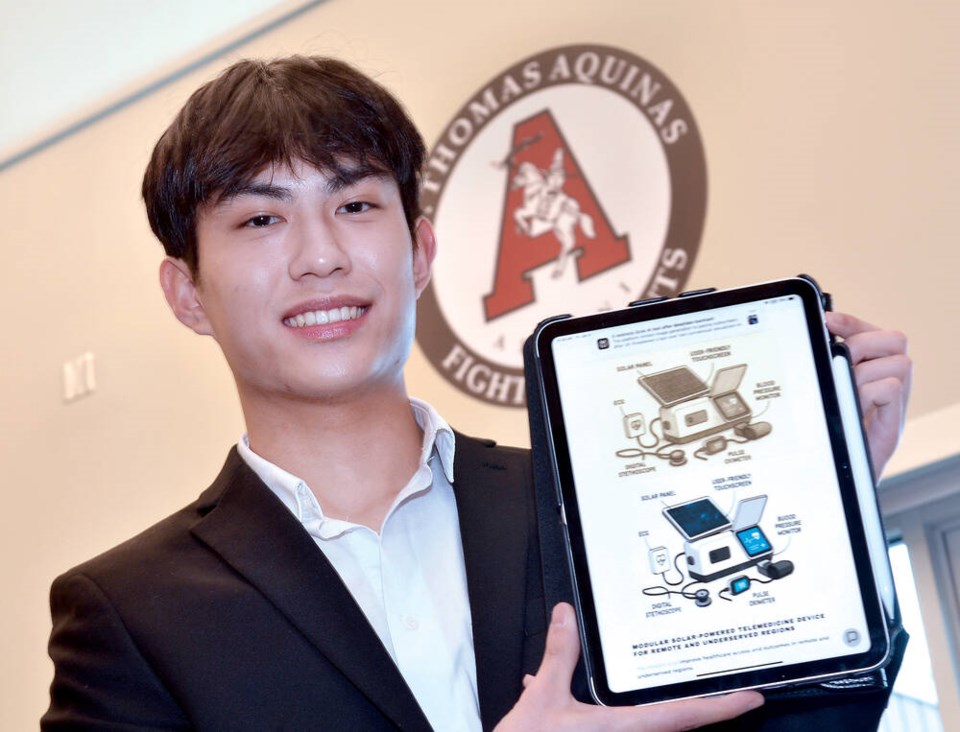
A remarkable innovation from North Vancouver is poised to enhance healthcare access in remote areas. Jonathan Weng, a student at St. Thomas Aquinas School, has invented a solar-powered medical device specifically designed for use in clinics that frequently experience power outages. This development aims to address critical gaps in healthcare delivery to underserved populations.
The device, which harnesses solar energy, provides a reliable power source for essential medical equipment in locations where traditional electricity is inconsistent or unavailable. Weng’s invention could significantly improve patient care in these settings. During testing, the device proved effective in operating medical instruments, including diagnostic tools and monitoring systems, even in challenging conditions.
Weng’s journey began as a school project, motivated by a personal connection to the issue of healthcare accessibility. He recognized the struggles faced by healthcare workers in remote areas, where electricity supply can be sporadic. These conditions often hinder the ability to provide timely medical assistance, leading to adverse outcomes for patients.
To transform his idea into a functional prototype, Weng collaborated with local engineers and healthcare professionals. This partnership not only refined the design but also ensured that the device meets the specific needs of healthcare workers. The collaborative effort highlights the importance of community engagement in addressing global health challenges.
As he prepares to present his invention at an upcoming technology fair, Weng hopes to attract interest from potential investors and healthcare organizations. His goal is to secure funding for further development and eventual production of the device. Weng believes that with adequate support, his invention could be deployed in remote clinics across Canada and beyond, making a tangible difference in healthcare delivery.
In addition to its practical applications, Weng’s project serves as an inspiring example of youth innovation in the face of pressing global issues. By leveraging technology to tackle real-world problems, he embodies the spirit of entrepreneurship and social responsibility.
As the world increasingly faces challenges related to climate change and energy access, solutions like Weng’s solar-powered medical device could play a pivotal role in enhancing healthcare infrastructure in vulnerable regions. The intersection of renewable energy and healthcare innovation holds promise for improving lives and ensuring that essential medical services reach those who need them most.
Looking ahead, Weng is optimistic about the future of his invention. He envisions a world where healthcare is accessible to everyone, regardless of their location. Through continued innovation and collaboration, he hopes to contribute to a more equitable healthcare landscape, ensuring that no one is left behind due to power limitations.

Rock Falls High School Hosts Annual College and Career Fair

Romanian Inflation Nears 10% as Government Measures Impact Prices

Carson Bivins Scores 1,000 Career Points in Falcons’ Victory

North Vancouver Student Develops Solar-Powered Medical Device

Saskatchewan Launches First Wellness Centre Alongside Urgent Care

REANIMAL Launches Nintendo Switch 2 Demo Ahead of Release

Rock Falls High School Hosts Annual College and Career Fair

Edgewise Therapeutics Showcases Innovations at J.P. Morgan Conference

Carson Bivins Surpasses 1,000 Career Points in Dominant Victory

North Vancouver Student Develops Solar-Powered Medical Device

Brandon University’s Failed $5 Million Project Sparks Oversight Review

Microsoft Confirms U.S. Law Overrules Canadian Data Sovereignty

Winnipeg Celebrates Culinary Creativity During Le Burger Week 2025

Montreal’s Groupe Marcelle Leads Canadian Cosmetic Industry Growth

Tech Innovator Amandipp Singh Transforms Hiring for Disabled

Dragon Ball: Sparking! Zero Launching on Switch and Switch 2 This November

New SĆIȺNEW̱ SṮEȽIṮḴEȽ Elementary Opens in Langford for 2025/2026 Year

Red River College Launches New Programs to Address Industry Needs

Rocket Lab Reports Strong Q2 2025 Revenue Growth and Future Plans

Google Pixel 10 Pro Fold Specs Unveiled Ahead of Launch
-
 Education4 months ago
Brandon University’s Failed $5 Million Project Sparks Oversight Review
-
 Science5 months ago
Microsoft Confirms U.S. Law Overrules Canadian Data Sovereignty
-
 Lifestyle5 months ago
Winnipeg Celebrates Culinary Creativity During Le Burger Week 2025
-
 Health5 months ago
Montreal’s Groupe Marcelle Leads Canadian Cosmetic Industry Growth
-
 Science5 months ago
Tech Innovator Amandipp Singh Transforms Hiring for Disabled
-
 Technology5 months ago
Dragon Ball: Sparking! Zero Launching on Switch and Switch 2 This November
-
 Education5 months ago
New SĆIȺNEW̱ SṮEȽIṮḴEȽ Elementary Opens in Langford for 2025/2026 Year
-
 Education5 months ago
Red River College Launches New Programs to Address Industry Needs
-
 Business4 months ago
Rocket Lab Reports Strong Q2 2025 Revenue Growth and Future Plans
-
 Technology5 months ago
Google Pixel 10 Pro Fold Specs Unveiled Ahead of Launch
-
 Top Stories1 month ago
Canadiens Eye Elias Pettersson: What It Would Cost to Acquire Him
-

 Technology3 months ago
Discord Faces Serious Security Breach Affecting Millions
-

 Education5 months ago
Alberta Teachers’ Strike: Potential Impacts on Students and Families
-

 Business1 month ago
EngineAI Unveils T800 Humanoid Robot, Setting New Industry Standards
-

 Business5 months ago
BNA Brewing to Open New Bowling Alley in Downtown Penticton
-

 Science5 months ago
China’s Wukong Spacesuit Sets New Standard for AI in Space
-

 Lifestyle3 months ago
Canadian Author Secures Funding to Write Book Without Financial Strain
-

 Business5 months ago
New Estimates Reveal ChatGPT-5 Energy Use Could Soar
-

 Business3 months ago
Hydro-Québec Espionage Trial Exposes Internal Oversight Failures
-

 Business5 months ago
Dawson City Residents Rally Around Buy Canadian Movement
-

 Technology5 months ago
Future Entertainment Launches DDoD with Gameplay Trailer Showcase
-

 Top Stories3 months ago
Patrik Laine Struggles to Make Impact for Canadiens Early Season
-

 Top Stories4 months ago
Blue Jays Shift José Berríos to Bullpen Ahead of Playoffs
-

 Technology5 months ago
World of Warcraft Players Buzz Over 19-Quest Bee Challenge