
Top Stories
Politicians Propose Controversial Oilsands Pipeline Expansion

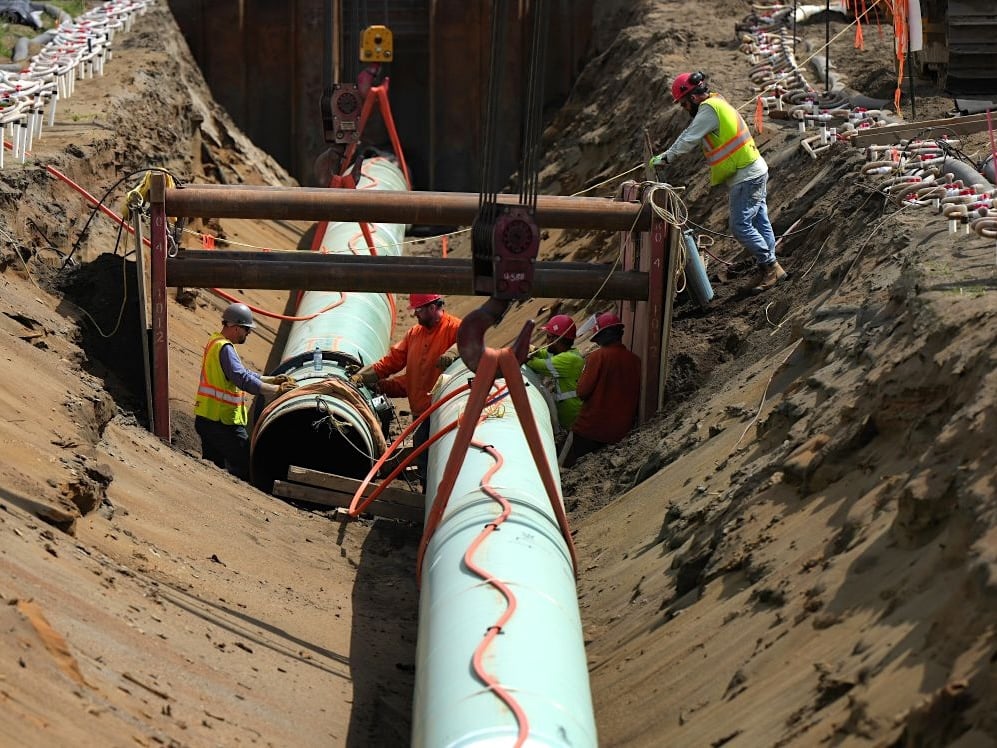
Prime Minister Mark Carney and Alberta Premier Danielle Smith are advocating for a significant expansion of oilsands infrastructure in Canada. They support a new pipeline project that aims to transport bitumen from Alberta to the northwest coast of British Columbia. The proposal, still in its formative stages, is being touted as a means to stimulate economic growth and address the challenges faced by the nation.
In a bold move, oilsands advocate Robbie Picard has suggested naming the new project the Spirit Bear Pipeline, symbolizing resilience and harmony between nature and industry. However, critical voices are emerging, including those from experts like David Hughes, a respected energy analyst and former geologist for the Geological Survey of Canada. Hughes argues that the project lacks necessity and presents substantial environmental risks.
Hughes, based in British Columbia, emphasizes that many have previously deemed similar projects, such as the now-abandoned Northern Gateway, as fundamentally flawed. The Northern Gateway sought to transport half a million barrels of bitumen daily through ecologically sensitive areas to the port of Kitimat, ultimately facing strong opposition due to environmental concerns. The proposed new pipeline, which has no definitive route or proponent yet, aims to move a staggering one million barrels per day, potentially necessitating adjustments to a long-standing tanker ban in the region.
The implications of this ambitious plan extend beyond mere logistics. To mitigate climate change effects, Alberta proposes implementing carbon capture and storage (CCS) technologies to address the emissions generated by increased production. Despite these intentions, Hughes remains skeptical, stating that such technologies have a history of unmet expectations and potential environmental risks.
Hughes sheds light on the broader context of fossil fuel consumption. He notes that since 1850, humanity has consumed nearly 1.6 trillion barrels of oil, with half of that amount utilized in the last 28 years alone. Current estimates suggest that by 2050, another trillion barrels could be consumed, leading to a future where remaining resources are increasingly challenging to extract. This trajectory raises critical questions about sustainability and the long-term viability of continued fossil fuel reliance.
The proposed Carney-Smith pipeline could further exacerbate Canada’s already significant carbon emissions, which account for approximately 30 percent of the nation’s total pollution. Hughes asserts that without a drastic shift in energy policies, Canada is unlikely to meet its ambitious goal of achieving net-zero emissions by 2050. He argues that achieving this target would require either tripling nuclear power production or drastically scaling up CCS technologies, a prospect he considers both economically and technically daunting.
Ownership of the oilsands presents another layer of complexity. Hughes highlights that a small number of companies, often referred to as the “Big Five,” control around 80 percent of Canada’s bitumen production. Many of these companies, such as Imperial Oil and Suncor, have significant foreign ownership, raising concerns about who truly benefits from the expansion of oilsands production.
The financial implications of constructing a new pipeline are substantial. Previous estimates for similar projects, like the Trans Mountain expansion, reached upwards of $34 billion, far exceeding initial projections. Hughes estimates that the cost of a pipeline from Alberta to Kitimat could range from $30 billion to $40 billion, potentially leaving taxpayers to shoulder much of the financial burden.
As discussions around the proposed pipeline continue, Hughes urges a reevaluation of energy consumption patterns. He points out that Canadians currently consume over four times the global average of energy per capita, a statistic that raises questions about sustainability moving forward.
Hughes calls for a more prudent approach to energy use, suggesting that policymakers should consider strategies for reducing consumption and addressing economic inequality rather than pursuing expansive fossil fuel projects. He warns that without such changes, the consequences may lead to unavoidable disruptions driven by climate change.
In conclusion, while Carney and Smith champion the proposed pipeline as a path to progress, Hughes presents a stark counter-narrative grounded in environmental realities and the limitations of finite resources. He reflects on the urgency of the situation for future generations, stating, “I have four grandchildren who will feel it.” This statement serves as a poignant reminder of the long-term implications of today’s energy decisions.

Louvre Raises Ticket Prices by 45%, Impacting Visitor Access

Mastering the Art of Bending Thick-Walled Tubes for Precision Manufacturing

Beaverlodge Hospital Launches Virtual Doctor Program to Enhance Care

Discover the Best Portable Speakers for Every Adventure

Train Derailment Blocks Road Near Elkford, No Injuries Reported

School District 57 Graduation Rates Reach Pre-Pandemic Levels

St. Vincent Place Sets Ambitious Fundraising Goal for Coldest Night

Mastering Thick-Walled Tube Bending: Key Techniques Revealed

SOL Global Executes 10-for-1 Share Consolidation to Boost Value

Julio Iglesias Faces Sexual Assault Allegations in Caribbean

Brandon University’s Failed $5 Million Project Sparks Oversight Review

Microsoft Confirms U.S. Law Overrules Canadian Data Sovereignty

Winnipeg Celebrates Culinary Creativity During Le Burger Week 2025

Montreal’s Groupe Marcelle Leads Canadian Cosmetic Industry Growth

Tech Innovator Amandipp Singh Transforms Hiring for Disabled

Dragon Ball: Sparking! Zero Launching on Switch and Switch 2 This November

New SĆIȺNEW̱ SṮEȽIṮḴEȽ Elementary Opens in Langford for 2025/2026 Year

Red River College Launches New Programs to Address Industry Needs

Rocket Lab Reports Strong Q2 2025 Revenue Growth and Future Plans

Google Pixel 10 Pro Fold Specs Unveiled Ahead of Launch
-
 Education4 months ago
Brandon University’s Failed $5 Million Project Sparks Oversight Review
-
 Science5 months ago
Microsoft Confirms U.S. Law Overrules Canadian Data Sovereignty
-
 Lifestyle5 months ago
Winnipeg Celebrates Culinary Creativity During Le Burger Week 2025
-
 Health5 months ago
Montreal’s Groupe Marcelle Leads Canadian Cosmetic Industry Growth
-
 Science5 months ago
Tech Innovator Amandipp Singh Transforms Hiring for Disabled
-
 Technology5 months ago
Dragon Ball: Sparking! Zero Launching on Switch and Switch 2 This November
-
 Education5 months ago
New SĆIȺNEW̱ SṮEȽIṮḴEȽ Elementary Opens in Langford for 2025/2026 Year
-
 Education5 months ago
Red River College Launches New Programs to Address Industry Needs
-
 Business4 months ago
Rocket Lab Reports Strong Q2 2025 Revenue Growth and Future Plans
-
 Technology5 months ago
Google Pixel 10 Pro Fold Specs Unveiled Ahead of Launch
-
 Top Stories1 month ago
Canadiens Eye Elias Pettersson: What It Would Cost to Acquire Him
-

 Technology3 months ago
Discord Faces Serious Security Breach Affecting Millions
-

 Education5 months ago
Alberta Teachers’ Strike: Potential Impacts on Students and Families
-

 Business1 month ago
EngineAI Unveils T800 Humanoid Robot, Setting New Industry Standards
-

 Business5 months ago
BNA Brewing to Open New Bowling Alley in Downtown Penticton
-

 Science5 months ago
China’s Wukong Spacesuit Sets New Standard for AI in Space
-

 Lifestyle3 months ago
Canadian Author Secures Funding to Write Book Without Financial Strain
-

 Business5 months ago
New Estimates Reveal ChatGPT-5 Energy Use Could Soar
-

 Business3 months ago
Hydro-Québec Espionage Trial Exposes Internal Oversight Failures
-

 Business5 months ago
Dawson City Residents Rally Around Buy Canadian Movement
-

 Technology5 months ago
Future Entertainment Launches DDoD with Gameplay Trailer Showcase
-

 Top Stories3 months ago
Patrik Laine Struggles to Make Impact for Canadiens Early Season
-

 Top Stories4 months ago
Blue Jays Shift José Berríos to Bullpen Ahead of Playoffs
-

 Technology5 months ago
World of Warcraft Players Buzz Over 19-Quest Bee Challenge