
Technology
Major AI Data Centre Planned for Île-des-Chênes, Manitoba

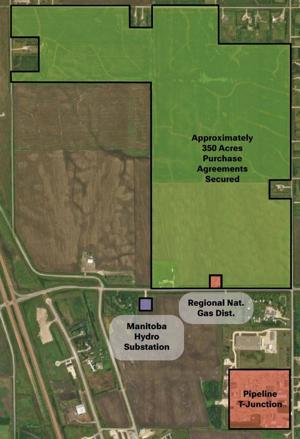
Plans for a significant artificial intelligence (AI) data centre are underway in Île-des-Chênes, Manitoba, marking the province’s first major facility of its kind. On December 4, 2023, Jet.AI, a Nevada-based provider of GPU infrastructure and AI cloud services, announced its collaboration with Vancouver’s Consensus Core Technologies Inc. Together, they have formed a new entity, Convergence Compute, with the goal of establishing at least two AI data centres in Canada.
The first project, known as the Midwestern Project, is set to occupy approximately 350 acres on the north side of Île-des-Chênes. Jet.AI describes this large-scale development as a response to the increasing North American demand for AI capabilities and high-density computing resources. Early indications suggest that the proposed campus is attracting interest from major tech companies seeking the infrastructure necessary for large-scale AI operations.
Another data centre project, referred to as the Maritime Project, is also being planned for the east coast of Canada.
Strategic Location and Energy Resources
According to Jet.AI’s founder and CEO, Mike Winston, the chosen site benefits from abundant energy and natural resources, crucial for powering data centres. In a recent statement, Winston emphasized the company’s commitment to securing energy sources necessary for the facilities’ operations: “We’re making sure we don’t just have places to build data centres, but also the energy commitments to make them run.”
The provincial government has expressed support for Manitoba-based data storage infrastructure initiatives. In remarks to the Manitoba Chamber of Commerce, Premier Wab Kinew highlighted the importance of reducing reliance on U.S.-based tech giants like Google and Microsoft. He emphasized that increasing domestic capacity would enhance privacy protections for Canadians and ensure compliance with Canadian law.
“We want to keep your privacy so that future generations can express themselves freely,” Kinew stated. “This probably means that we should stop sending all of our information south of the border.”
The Rural Municipality of Ritchot, which encompasses Île-des-Chênes, is taking a cautious approach. A communications coordinator for the municipality noted, “To date, nothing has come before council for consideration. Until something is presented, it would be premature for us to provide a comment.”
Site Advantages and Development Progress
Jet.AI’s promotional materials characterize the Île-des-Chênes location as a “Goldilocks” site for data centre development. The procurement of 350 contiguous acres adjacent to key energy infrastructure is a notable advantage. A site map indicates that the land is bordered by Arnould Road and Highway 59, with Mondor Road and Highway 405 marking its vertical limits.
Energy efficiency is pivotal in data centre operations, where substantial energy input is necessary to maintain advanced cooling systems. The Midwestern Project is expected to require six operational turbines to meet its energy needs. The proposed site benefits from proximity to a Manitoba Hydro substation, the Riel Converter, and a major natural gas transmission station operated by TC Energy, ensuring reliable energy access.
Winston pointed out that as demand for AI computing escalates, securing energy-advantaged locations is becoming increasingly difficult. “The combination of power, redundancy, and buildable scale here is extremely hard to replicate,” he remarked.
In addition to energy resources, the site is well-positioned near a high-speed fibre internet corridor, essential for managing the bandwidth demands of large-scale computing operations. Wayne Lloyd, CEO of Consensus Core, echoed these sentiments, stating, “This site aligns with the long-term compute and energy profile the industry is moving toward.”
Convergence Compute has completed its initial milestones of securing land and is progressing toward the third milestone, which includes submitting the Transmission Power Load Study application. In a press release dated November 14, Jet.AI noted that it has made substantial progress in securing natural gas supply to operate the proposed turbines, with ongoing discussions anticipated to avoid any bottlenecks.
For the Maritime Project, conversations are underway regarding energy acquisition from a proposed wind farm.
Canada’s Growing Role in AI Development
As AI data centres proliferate, Canada emerges as a promising location for such developments due to its energy infrastructure and supportive policy environment. According to a report by Norton Rose Fulbright, AI data centres are becoming increasingly energy-intensive, with global electricity consumption for data transmission expected to exceed 1.4 percent of total usage in the coming years.
The report indicates that large tech companies are actively seeking long-term contracts with local energy providers, benefiting from competitive rates compared to other developed nations. The Canadian government’s AI Compute Strategy, introduced in late 2022, is set to provide $2 billion in funding over five years to mobilize private investment and enhance public computing infrastructure.
Despite these opportunities, the rise of AI data centres brings with it potential risks, particularly concerning water consumption. According to Water Security News Wire, data centres consume vast quantities of water, primarily for cooling purposes, raising concerns about water scarcity in several regions. A small, one-megawatt data centre can use up to 26 million litres of water annually, equating to the consumption of approximately 62 American families.
The rapid expansion of data centres globally is creating challenges, especially in developing economies where digital transformation is prioritized. In advanced economies, the impact on local resources is becoming evident, as seen in increased water usage in areas hosting major facilities.
As the digital landscape continues to evolve, the establishment of AI data centres like the one planned in Île-des-Chênes underscores the need for careful consideration of resources and infrastructure to ensure sustainable growth in the technology sector.

Engineering Firm Unveils Flushing Plan to Improve Blacks Harbour Water

St. Andrews Non-Profits Request Municipal Support for Growth

Lethbridge Polytechnic Achieves Ninth Place in National Research Rankings

Concerns Grow Over Medicare Changes Impacting Campobello Island Residents

Queen’s Research Celebrates Major Milestones in 2025

Top News Stories from Charlotte County That Shaped 2025

Ottawa Approves Teck-Anglo American Merger with Major Investments

Investigative Journalism Foundation Earns Two Nominations for COPA 2025

Lethbridge Polytechnic Achieves Top Ten Ranking in Canada

Surge in Influenza Cases Hits Ontario Children, Experts Urge Vaccination

Brandon University’s Failed $5 Million Project Sparks Oversight Review

Microsoft Confirms U.S. Law Overrules Canadian Data Sovereignty

Winnipeg Celebrates Culinary Creativity During Le Burger Week 2025

Montreal’s Groupe Marcelle Leads Canadian Cosmetic Industry Growth

Tech Innovator Amandipp Singh Transforms Hiring for Disabled

Dragon Ball: Sparking! Zero Launching on Switch and Switch 2 This November

Red River College Launches New Programs to Address Industry Needs

Rocket Lab Reports Strong Q2 2025 Revenue Growth and Future Plans

Google Pixel 10 Pro Fold Specs Unveiled Ahead of Launch

Discord Faces Serious Security Breach Affecting Millions
-
 Education3 months ago
Brandon University’s Failed $5 Million Project Sparks Oversight Review
-
 Science4 months ago
Microsoft Confirms U.S. Law Overrules Canadian Data Sovereignty
-
 Lifestyle4 months ago
Winnipeg Celebrates Culinary Creativity During Le Burger Week 2025
-
 Health4 months ago
Montreal’s Groupe Marcelle Leads Canadian Cosmetic Industry Growth
-
 Science4 months ago
Tech Innovator Amandipp Singh Transforms Hiring for Disabled
-
 Technology4 months ago
Dragon Ball: Sparking! Zero Launching on Switch and Switch 2 This November
-
 Education4 months ago
Red River College Launches New Programs to Address Industry Needs
-
 Business3 months ago
Rocket Lab Reports Strong Q2 2025 Revenue Growth and Future Plans
-
 Technology4 months ago
Google Pixel 10 Pro Fold Specs Unveiled Ahead of Launch
-
 Technology2 months ago
Discord Faces Serious Security Breach Affecting Millions
-

 Education4 months ago
Alberta Teachers’ Strike: Potential Impacts on Students and Families
-

 Education4 months ago
New SĆIȺNEW̱ SṮEȽIṮḴEȽ Elementary Opens in Langford for 2025/2026 Year
-

 Science4 months ago
China’s Wukong Spacesuit Sets New Standard for AI in Space
-

 Business4 months ago
BNA Brewing to Open New Bowling Alley in Downtown Penticton
-

 Business4 months ago
New Estimates Reveal ChatGPT-5 Energy Use Could Soar
-

 Business4 months ago
Dawson City Residents Rally Around Buy Canadian Movement
-

 Technology4 months ago
World of Warcraft Players Buzz Over 19-Quest Bee Challenge
-

 Technology4 months ago
Future Entertainment Launches DDoD with Gameplay Trailer Showcase
-

 Top Stories3 months ago
Blue Jays Shift José Berríos to Bullpen Ahead of Playoffs
-

 Technology2 months ago
Huawei MatePad 12X Redefines Tablet Experience for Professionals
-

 Technology4 months ago
Global Launch of Ragnarok M: Classic Set for September 3, 2025
-

 Technology4 months ago
Innovative 140W GaN Travel Adapter Combines Power and Convenience
-

 Science4 months ago
Xi Labs Innovates with New AI Operating System Set for 2025 Launch
-

 Lifestyle2 months ago
Canadian Author Secures Funding to Write Book Without Financial Strain