
Technology
Gavin Newsom Challenges Trump’s AI Executive Order Amid Backlash

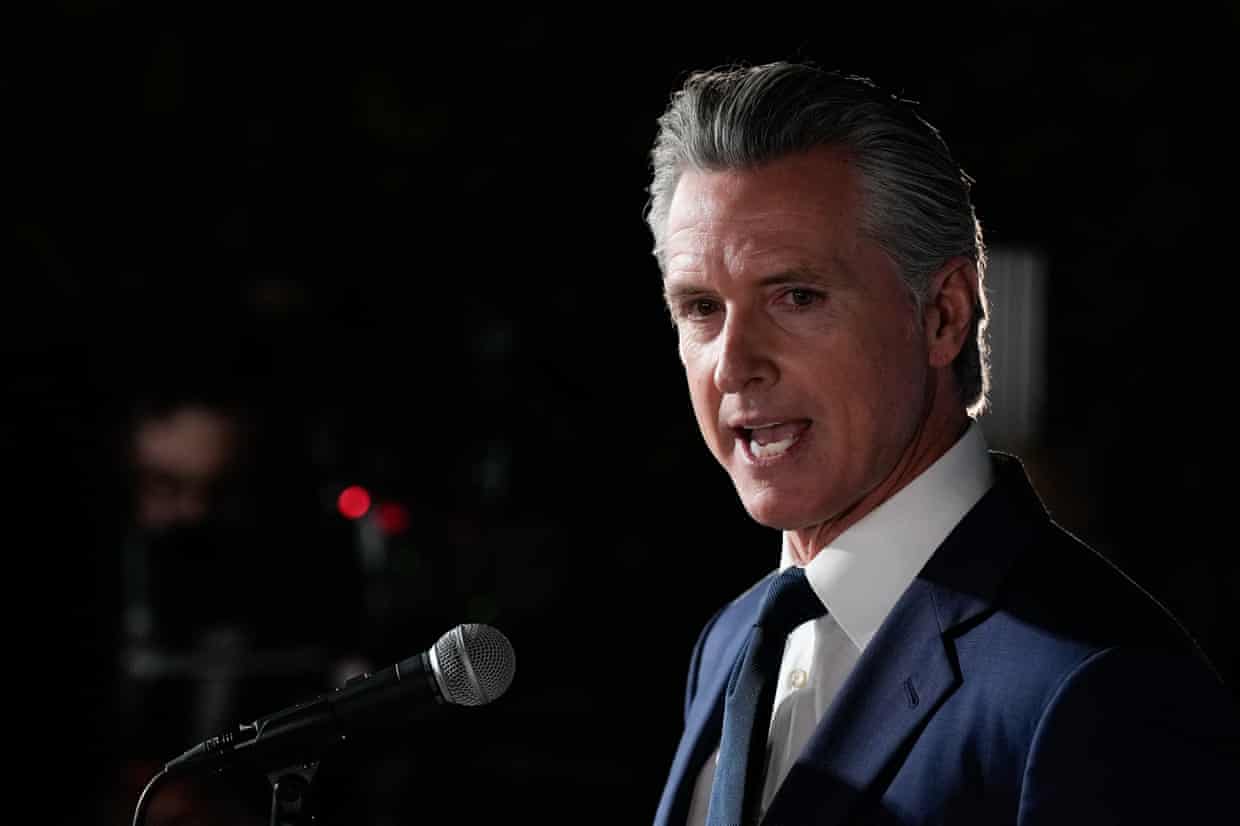
California Governor Gavin Newsom has sharply criticized Donald Trump’s recent executive order on artificial intelligence (AI) regulation, which aims to prevent states from enacting their own laws on the technology. The order was signed on October 5, 2023, and Newsom responded within hours, condemning it as a move that promotes “grift and corruption” rather than genuine innovation.
Newsom’s remarks targeted both Trump and David Sacks, a prominent advisor on AI to the former president, suggesting that their approach is less about policy and more about self-interest. “President Trump and David Sacks aren’t making policy – they’re running a con,” he stated, emphasizing the potential negative implications for state governance and public safety.
The executive order is viewed as a significant win for major tech corporations that have lobbied against state-level restrictions. This development has sparked a confrontation between state officials and the federal government over the future of AI governance in the United States.
Legal Challenges and Backlash
Critics, including various child safety organizations, labor unions, and state officials, have raised serious concerns about the legality of Trump’s executive order. Many argue that it undermines the authority of state legislatures to regulate AI technologies, asserting that Trump lacks the power to negate existing state laws. Rob Bonta, the California Attorney General, announced intentions to explore potential legal challenges against the order, setting the stage for a significant legal battle.
The backlash has been swift and widespread. Sara Jacobs, a California Democratic representative, characterized the executive order as “deeply misguided” and stated intentions to pursue all available avenues, including legal action and congressional engagement, to reverse the decision.
California, as a hub for leading AI companies, has been particularly vocal in its opposition. In September 2023, Newsom signed the Transparency in Frontier Artificial Intelligence Act, which mandates developers of advanced AI models to produce transparency reports and report safety incidents promptly. This legislation has been positioned as a model for national standards in AI regulation.
Responses from Across the Nation
Trump’s executive order also establishes an AI litigation taskforce, tasked with reviewing state laws that do not align with the goal of enhancing the United States’ global dominance in AI. This taskforce is expected to take legal action against such state laws and may threaten to withhold federal broadband funding to states that do not comply.
Critics of the order, including Liz Shuler, president of the AFL-CIO, have condemned it as an attempt to grant unchecked power to tech companies while jeopardizing worker protections and safety standards. Shuler described the executive order as a “brazen effort to upend AI safety.”
Opposition has not been limited to California. Lawmakers from various states have expressed similar concerns. Alex Padilla, a California senator, stated that the order represents an attack on state rights. Fellow senator Adam Schiff warned that the order threatens critical safeguards currently in place.
Even within Trump’s own political circle, there was dissent. Steve Bannon, a longtime Trump ally, criticized the order, suggesting that it misleads the president regarding the implications of state preemption.
The order has also prompted strong reactions from child advocacy groups, particularly in light of rising concerns about the impact of AI technologies on children. James Steyer, CEO of Common Sense Media, highlighted the dangers posed by AI engagement and criticized the administration’s prioritization of tech industry interests over child safety.
As the debate continues, coalitions of bereaved parents and advocacy organizations are mobilizing to push for legislative measures that protect children from harmful AI interactions. They have released public service announcements urging for stronger protections and opposing the federal preemption of state laws.
In summary, the clash over AI regulation between state authorities and the federal government is intensifying, with California at the forefront of the resistance against a federal approach perceived as advantageous to tech giants. This ongoing confrontation may shape the future landscape of AI governance in the United States.

Gavin Newsom Challenges Trump’s AI Executive Order Amid Backlash

Major Storm Threatens Blizzard Conditions Across Nova Scotia

Family Expert Shares Simple Strategy for Education Savings

Vancouver Ranks Fourth in World’s Most Desirable Cities List

Explore 6 Free Courses at Calgary Public Library This Winter

Global Governments Enact Historic Protections for Sharks and Rays

Woman with Rare Digestive Disorders Seeks Surgery in U.S.

Discover Five Thoughtful Gifts for Designers Beyond Gadgets

Canadian Woman Seeks Rare Surgery in U.S. for Digestive Condition

New Study Challenges Myths About Early Bilingualism in Children

Brandon University’s Failed $5 Million Project Sparks Oversight Review

Microsoft Confirms U.S. Law Overrules Canadian Data Sovereignty

Winnipeg Celebrates Culinary Creativity During Le Burger Week 2025

Montreal’s Groupe Marcelle Leads Canadian Cosmetic Industry Growth

Tech Innovator Amandipp Singh Transforms Hiring for Disabled

Dragon Ball: Sparking! Zero Launching on Switch and Switch 2 This November

Red River College Launches New Programs to Address Industry Needs

Rocket Lab Reports Strong Q2 2025 Revenue Growth and Future Plans

Google Pixel 10 Pro Fold Specs Unveiled Ahead of Launch

Discord Faces Serious Security Breach Affecting Millions
-
 Education3 months ago
Brandon University’s Failed $5 Million Project Sparks Oversight Review
-
 Science4 months ago
Microsoft Confirms U.S. Law Overrules Canadian Data Sovereignty
-
 Lifestyle4 months ago
Winnipeg Celebrates Culinary Creativity During Le Burger Week 2025
-
 Health4 months ago
Montreal’s Groupe Marcelle Leads Canadian Cosmetic Industry Growth
-
 Science4 months ago
Tech Innovator Amandipp Singh Transforms Hiring for Disabled
-
 Technology4 months ago
Dragon Ball: Sparking! Zero Launching on Switch and Switch 2 This November
-
 Education4 months ago
Red River College Launches New Programs to Address Industry Needs
-
 Business3 months ago
Rocket Lab Reports Strong Q2 2025 Revenue Growth and Future Plans
-
 Technology4 months ago
Google Pixel 10 Pro Fold Specs Unveiled Ahead of Launch
-
 Technology2 months ago
Discord Faces Serious Security Breach Affecting Millions
-

 Education4 months ago
Alberta Teachers’ Strike: Potential Impacts on Students and Families
-

 Education4 months ago
New SĆIȺNEW̱ SṮEȽIṮḴEȽ Elementary Opens in Langford for 2025/2026 Year
-

 Science4 months ago
China’s Wukong Spacesuit Sets New Standard for AI in Space
-

 Business4 months ago
BNA Brewing to Open New Bowling Alley in Downtown Penticton
-

 Business4 months ago
New Estimates Reveal ChatGPT-5 Energy Use Could Soar
-

 Technology4 months ago
World of Warcraft Players Buzz Over 19-Quest Bee Challenge
-

 Business4 months ago
Dawson City Residents Rally Around Buy Canadian Movement
-

 Technology2 months ago
Huawei MatePad 12X Redefines Tablet Experience for Professionals
-

 Top Stories3 months ago
Blue Jays Shift José Berríos to Bullpen Ahead of Playoffs
-

 Technology4 months ago
Future Entertainment Launches DDoD with Gameplay Trailer Showcase
-

 Technology4 months ago
Global Launch of Ragnarok M: Classic Set for September 3, 2025
-

 Technology4 months ago
Innovative 140W GaN Travel Adapter Combines Power and Convenience
-

 Science4 months ago
Xi Labs Innovates with New AI Operating System Set for 2025 Launch
-

 Technology4 months ago
New IDR01 Smart Ring Offers Advanced Sports Tracking for $169