
Education
Edmonton Public Schools Report Reveals Declines Amid Caution

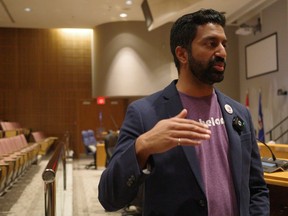
A recent report from Edmonton Public Schools has highlighted concerning declines in education quality and support access, according to findings presented during the board of trustees meeting on March 15, 2024. The annual education results report revealed that key performance metrics—specifically in areas such as educational quality, support access, and safe learning environments—had each dropped significantly, mirroring trends observed across Alberta.
The report, which draws upon a series of provincial measures, indicated a decline of between 1.4 points and 1.7 points compared to three-year averages. School boards are mandated to prepare these annual results reports to provide insights into provincial achievement tests, quality metrics derived from surveys, and progress towards educational goals.
Trustee Julie Kusiek raised important concerns regarding the reliability of this year’s metrics, citing ten cautionary notes from Alberta Education. These notes highlight various factors that could influence results, including the impacts of COVID-19, changes in funding, shifts in diploma and Provincial Achievement Test (PAT) protocols, alterations to the curriculum, and ongoing wildfires. “There are significant cautions about interpreting the data due to these factors,” Kusiek stated.
The report includes a page dedicated to these cautionary notes, which outline critical context that may affect various results. Among the caveats, it was noted that job actions by support workers could have influenced metrics related to access to educational supports and services. Furthermore, changes in the identification process for students classified as English as an Additional Language (EAL) led to a notable reduction in that population, likely skewing some data outcomes.
Significant declines were reported in provincial achievement tests for EAL students. On the Grade 9 PAT, the percentage of students achieving acceptable grades fell by 10 points compared to prior years. Additionally, the three-year high school completion rate for EAL students decreased by nearly 15.4 points. Metrics from the annual assurance survey, which gauges sentiment among parents, teachers, and students regarding educational quality, also come with a caution this year. A 20 percent drop in family responses was attributed to changes mandated by the province.
Despite these challenges, Kusiek and her fellow trustees noted an overall decrease in test scores for junior high students. While literacy test results for students in grades 4 to 6 showed improvement, junior high students experienced a slight decline. Board chairman Saadiq Sumar remarked on the profound effects of the pandemic on this student cohort, suggesting that the evolving context of education must be considered when interpreting results.
Describing the last few years as “volatile,” Sumar emphasized the necessity of a multifaceted approach to evaluating educational success. “We can’t base our understanding solely on one particular metric or compare it to previous years,” he said. Sumar instead portrayed the results report as a narrative of ongoing improvement and growth within the division.
As of last year, Edmonton Public Schools reported a total enrollment of over 120,000 students, reflecting a 9.4 percent increase over three years. The number of EAL students rose by 10 percent, reaching over 28,000, while the population of Indigenous students remained stable. Notably, the number of students requiring special education services surged past 16,000, marking an increase of nearly 24 percent.
In terms of successful initiatives, Sumar highlighted the introduction of CARE classrooms in 2023, designed for early intervention among students in grades 4 to 6, focusing on mental health and well-being. The results report indicated high satisfaction levels, with all cohorts experiencing waitlist challenges due to demand.
At the meeting, advocacy group representative Philip Ney addressed the board’s annual results report, pointing out the lack of detailed information on the use of seclusion rooms and restraints within the division. Ney noted that while the board has made commendable progress in reducing such practices, the summary provided in the report lacked the granularity of previous reports, which detailed monthly usage statistics.
Trustee Sarah Doll inquired about ongoing efforts to further limit the use of seclusion in schools. Superintendent Ron Thompson responded that reducing reliance on seclusion requires time and careful research. He reassured the board that seclusion is regarded as a last resort, utilized only after all other strategies have failed to ensure safety.
The board approved the annual results report last week, and a final version will be submitted to Alberta Education. When asked about his hopes for the ministry’s response to the report, Sumar expressed a desire for the ministry to consider what the division could achieve with adequate funding and support. “With a well-funded, well-supported public education system, we can expect to see more of the growth reflected in this report,” he concluded.

iShares Core Dividend Growth ETF Faces Challenges; Alternatives Suggested

Discover 7 Scenic Hikes Near Calgary to Explore This Spring

Scientists Uncover Life’s Building Blocks in Ryugu Asteroid Samples

Windsor-Essex Unveils New Action Plan to Combat Substance Use

Boost Your Business Visibility with These Local SEO Strategies

East Algoma OPP Urges Public to Limit Travel Amid Hazardous Conditions

Universities Must Rethink Failure to Support Student Growth

Canada Invests $6.4 Million to Boost Green Shipping Corridors

Stony Plain Secures 14th Consecutive Award for Financial Reporting Excellence

Rhythm Pharmaceuticals Reports Strong Q4 Growth Ahead of FDA Decision

Brandon University’s Failed $5 Million Project Sparks Oversight Review

Microsoft Confirms U.S. Law Overrules Canadian Data Sovereignty

Winnipeg Celebrates Culinary Creativity During Le Burger Week 2025

Discover Aritzia’s Latest Fashion Trends: A Comprehensive Review

New SĆIȺNEW̱ SṮEȽIṮḴEȽ Elementary Opens in Langford for 2025/2026 Year

EngineAI Unveils T800 Humanoid Robot, Setting New Industry Standards

Montreal’s Groupe Marcelle Leads Canadian Cosmetic Industry Growth

Tech Innovator Amandipp Singh Transforms Hiring for Disabled

Dragon Ball: Sparking! Zero Launching on Switch and Switch 2 This November

Digg Relaunches as Founders Kevin Rose and Alexis Ohanian Join Forces
-
 Education7 months ago
Brandon University’s Failed $5 Million Project Sparks Oversight Review
-
 Science8 months ago
Microsoft Confirms U.S. Law Overrules Canadian Data Sovereignty
-
 Lifestyle7 months ago
Winnipeg Celebrates Culinary Creativity During Le Burger Week 2025
-
 Lifestyle4 months ago
Discover Aritzia’s Latest Fashion Trends: A Comprehensive Review
-
 Education8 months ago
New SĆIȺNEW̱ SṮEȽIṮḴEȽ Elementary Opens in Langford for 2025/2026 Year
-
 Business4 months ago
EngineAI Unveils T800 Humanoid Robot, Setting New Industry Standards
-
 Health8 months ago
Montreal’s Groupe Marcelle Leads Canadian Cosmetic Industry Growth
-
 Science8 months ago
Tech Innovator Amandipp Singh Transforms Hiring for Disabled
-
 Technology8 months ago
Dragon Ball: Sparking! Zero Launching on Switch and Switch 2 This November
-
 Technology3 months ago
Digg Relaunches as Founders Kevin Rose and Alexis Ohanian Join Forces
-

 Lifestyle4 weeks ago
Canmore’s Le Fournil Bakery to Close After 14 Successful Years
-
 Top Stories4 months ago
Canadiens Eye Elias Pettersson: What It Would Cost to Acquire Him
-

 Health7 months ago
Eganville Leader to Close in 2026 After 123 Years of Reporting
-

 Education8 months ago
Red River College Launches New Programs to Address Industry Needs
-

 Top Stories4 months ago
Nicol Brothers Shine as Wheat Kings Dominate U18 AAA Hockey
-

 Business8 months ago
BNA Brewing to Open New Bowling Alley in Downtown Penticton
-

 Business7 months ago
Rocket Lab Reports Strong Q2 2025 Revenue Growth and Future Plans
-

 Education6 months ago
Alberta Petition Aims to Redirect Funds from Private to Public Schools
-

 Lifestyle5 months ago
Edmonton’s Beloved Evolution Wonderlounge Closes, New Era Begins
-

 Education8 months ago
Alberta Teachers’ Strike: Potential Impacts on Students and Families
-

 Technology6 months ago
Discord Faces Serious Security Breach Affecting Millions
-

 Technology8 months ago
Google Pixel 10 Pro Fold Specs Unveiled Ahead of Launch
-

 Business7 months ago
Iconic Golden Lion Restaurant in South Surrey to Close After 50 Years
-

 Lifestyle6 months ago
Canadian Author Secures Funding to Write Book Without Financial Strain