
Science
Farmers Test Deep Banding to Enhance Crop Nutrient Efficiency

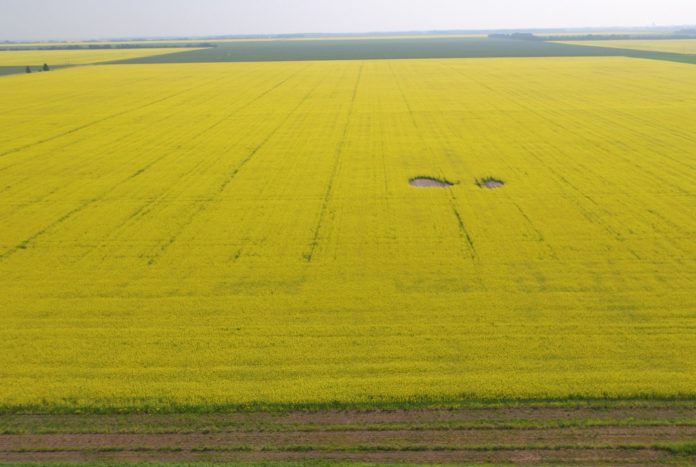
A recent trial in Canada is exploring the agricultural technique of deep banding to optimize nutrient application for crops. Conducted by SARDA Ag Research, the project focuses on injecting essential nutrients like phosphorus and potassium four to six inches below the soil surface. This method aims to streamline the seeding process while potentially lowering costs and reducing the reliance on multiple annual fertilizer applications.
Deep banding is designed for use primarily in no-till or reduced-tillage farming systems. The practice involves a single application, typically every three years, which makes nutrients more accessible to plant roots. According to grain farmer Norm Boulet, who is participating in the trial, this approach not only speeds up the seeding process but also enhances efficiency in fertilizer management.
“By deep banding, we put nutrients into the soil bank for the roots of the crop to access when it’s needed,” Boulet explains. In his trial, Boulet applied 200 lbs per acre of 11-52 phosphorus fertilizer, aiming to eliminate the need for additional applications for four years. Normally, farmers might apply 50 lbs per acre during seeding, but this trial seeks to demonstrate the viability of a more substantial initial application.
The benefits of this technique extend beyond just nutrient management. Boulet notes that, by deep banding, farmers can reduce the number of products they need to handle during seeding. This is particularly advantageous for those with smaller equipment, where carrying capacity is limited. With fewer products to manage, farmers can cover more acres per tank fill, ultimately increasing productivity during the busy spring season.
In 2021, Boulet’s farm established a 50-acre trial to assess the effectiveness of deep banding. They used leftover phosphorus fertilizer from previous applications, and the initial results showed no yield loss after three years of observation. This was particularly encouraging, as farmers typically prioritize yield when considering changes to their practices.
Boulet emphasizes that early seeding often correlates with better yields. “If a farmer can seed more quickly, then their crop can establish sooner and take greater advantage of the soil moisture before the weeds or evaporation gets it,” he states. This aspect of deep banding could prove crucial for farmers looking to maximize their yield potential.
The trial also considered long-term implications. Boulet’s family farm applied 200 lbs/ac of fertilizer in the fall of 2021, which they expected would be sufficient for four years. The phosphorus used in this method is largely immobile in soil, making it crucial to ensure it remains accessible to crops over time. The trial’s findings indicated that, by the fourth year, yields remained consistent with the normal practice of applying 50 lbs/ac at seeding.
While the initial results are promising, economic factors also play a significant role in the decision to adopt deep banding widely. Boulet notes that fluctuations in fertilizer prices can influence farmers’ choices. “Unfortunately, fertilizer prices jumped drastically the year following the trial establishment, and adopting it didn’t seem to make economic sense for us,” he adds.
Despite the challenges posed by market conditions, Boulet believes that deep banding could be beneficial for farmers facing time constraints during planting. “If I were to be offered a very good price on MAP in the fall and had the time to deep band the product, I would certainly consider it,” he says.
In addition to phosphorus, Boulet’s farming operation includes a practice of applying elemental sulphur (ES) every four years to ensure adequate nutrient levels in the soil. He highlights the potential synergy between deep banding phosphorus and broadcasting sulphur, which could streamline operations further and improve crop health.
After four years of monitoring, the key takeaway from the trial is that deep banding did not negatively impact yield or grain quality. Boulet concludes that this practice could enhance the seeding process and offer financial benefits, particularly if fertilizer prices are lower in the fall.
Other agricultural organizations, such as Farming Smarter from Lethbridge, conducted similar trials to assess deep banding’s effectiveness across different regions. For more information about deep banding practices, interested farmers can contact the SARDA Ag Research office at (780) 837-2900.

Red Deer Ranks Among Canada’s Fastest Growing Rental Markets

Red Deer Plans Social Services Campus at Former Peavey Mart Site

Cybercriminals Target Business Insiders on Dark Web for Recruitment

Health Union Raises Alarm Over Hospital Safety in Saskatchewan

Create and Play: HH Bricks Unveils DIY LEGO Connect 4 Set

Red Deer Ranks High in Canada’s Rapidly Growing Rental Markets

Generate Passive Income: Invest $20,000 in Safe Dividends

Roam Transit Celebrates Three Million Riders in Banff Area

Meta Invests US$14 Billion in Next-Gen Nuclear Reactors

Ontario Aims for Universal Primary Care Access by 2029

Brandon University’s Failed $5 Million Project Sparks Oversight Review

Microsoft Confirms U.S. Law Overrules Canadian Data Sovereignty

Winnipeg Celebrates Culinary Creativity During Le Burger Week 2025

Montreal’s Groupe Marcelle Leads Canadian Cosmetic Industry Growth

Tech Innovator Amandipp Singh Transforms Hiring for Disabled

Dragon Ball: Sparking! Zero Launching on Switch and Switch 2 This November

New SĆIȺNEW̱ SṮEȽIṮḴEȽ Elementary Opens in Langford for 2025/2026 Year

Red River College Launches New Programs to Address Industry Needs

Rocket Lab Reports Strong Q2 2025 Revenue Growth and Future Plans

Google Pixel 10 Pro Fold Specs Unveiled Ahead of Launch
-
 Education4 months ago
Brandon University’s Failed $5 Million Project Sparks Oversight Review
-
 Science5 months ago
Microsoft Confirms U.S. Law Overrules Canadian Data Sovereignty
-
 Lifestyle5 months ago
Winnipeg Celebrates Culinary Creativity During Le Burger Week 2025
-
 Health5 months ago
Montreal’s Groupe Marcelle Leads Canadian Cosmetic Industry Growth
-
 Science5 months ago
Tech Innovator Amandipp Singh Transforms Hiring for Disabled
-
 Technology5 months ago
Dragon Ball: Sparking! Zero Launching on Switch and Switch 2 This November
-
 Education5 months ago
New SĆIȺNEW̱ SṮEȽIṮḴEȽ Elementary Opens in Langford for 2025/2026 Year
-
 Education5 months ago
Red River College Launches New Programs to Address Industry Needs
-
 Business4 months ago
Rocket Lab Reports Strong Q2 2025 Revenue Growth and Future Plans
-
 Technology5 months ago
Google Pixel 10 Pro Fold Specs Unveiled Ahead of Launch
-
 Top Stories4 weeks ago
Canadiens Eye Elias Pettersson: What It Would Cost to Acquire Him
-

 Technology3 months ago
Discord Faces Serious Security Breach Affecting Millions
-

 Education5 months ago
Alberta Teachers’ Strike: Potential Impacts on Students and Families
-

 Business1 month ago
EngineAI Unveils T800 Humanoid Robot, Setting New Industry Standards
-

 Business5 months ago
BNA Brewing to Open New Bowling Alley in Downtown Penticton
-

 Science5 months ago
China’s Wukong Spacesuit Sets New Standard for AI in Space
-

 Lifestyle3 months ago
Canadian Author Secures Funding to Write Book Without Financial Strain
-

 Business5 months ago
New Estimates Reveal ChatGPT-5 Energy Use Could Soar
-

 Business3 months ago
Hydro-Québec Espionage Trial Exposes Internal Oversight Failures
-

 Business5 months ago
Dawson City Residents Rally Around Buy Canadian Movement
-

 Technology5 months ago
Future Entertainment Launches DDoD with Gameplay Trailer Showcase
-

 Top Stories4 months ago
Blue Jays Shift José Berríos to Bullpen Ahead of Playoffs
-

 Technology5 months ago
World of Warcraft Players Buzz Over 19-Quest Bee Challenge
-

 Top Stories3 months ago
Patrik Laine Struggles to Make Impact for Canadiens Early Season