
Science
Atlantic Farmers Embrace AI Solutions Amid Climate Challenges

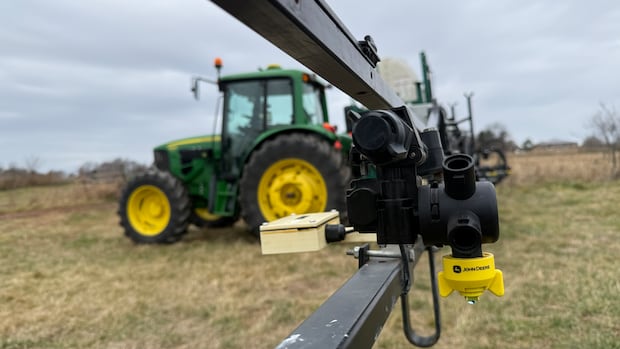
Farmers in Atlantic Canada are increasingly turning to technology as they face the mounting challenges of climate change. The newly established Atlantic Institute for Digital Agriculture at Dalhousie University aims to assist local farmers by developing innovative solutions tailored to their specific conditions. Among those participating in this initiative is Peter Swinkels, a wild blueberry farmer from Belmont, Nova Scotia, who has seen significant changes in the industry over the past four decades.
Swinkels, who began his farming career in 1979, originally harvested wild blueberries by hand. Today, he employs artificial intelligence (AI) as part of his farming toolkit. This transition is particularly vital as wild blueberries face increased threats from climate variability. Swinkels expressed his excitement about the institute’s mission, emphasizing the importance of applying pesticides judiciously. “If you burn it or hurt it, it takes years to come back,” he noted, highlighting the need for precision in pesticide application.
The precision sprayer project, developed by Patrick Hennessy, a PhD student at Dalhousie, exemplifies this technological advancement. The project necessitated the labelling and uploading of 4,000 images of weeds into the system. This enables the sprayers to automatically target and spray weeds without needing an internet connection. “Everything on the sprayer operates on the sprayer; it does not have to communicate with an outside network at all,” Hennessy explained.
Innovative Tools for Sustainable Farming
In addition to precision sprayers, the institute is exploring the use of mobile applications to assist farmers in monitoring crop health. Hennessy is also developing an app to help count wild blueberry buds, which will aid in determining the optimal timing for fungicide application. This tailored approach is essential for smaller and medium-sized farms, which often struggle to justify the costs of technological investments.
Travis Esau, director of the Atlantic Institute for Digital Agriculture, emphasized the institute’s focus on supporting smaller farms. “You really have to have, for a lot of cases, large acres to be able to make the technology pay for itself,” he said. “The solutions need to be adapted to be applicable for the small and medium-sized farms in Atlantic Canada. And that’s really where we’re looking to help fill a void.”
Plans are underway for a new building to house the institute at Dalhousie’s agricultural campus in Bible Hill, Nova Scotia. While no specific timeline or budget has been disclosed, faculty members are currently seeking funding and partnerships to support this initiative.
Drone technology is another promising development for wild blueberry farmers. Although some countries have embraced the use of drones for pesticide application, regulations in Canada are still being established. Currently, only five pesticide products are approved for drone application by Health Canada, with additional products under review. “Pesticide application by drone is a new technology, and drone-specific data is typically required to assess the risks,” Health Canada stated.
Hennessy noted that drone-based spraying can help mitigate crop damage often caused by larger farm equipment. “We’re in the process of collecting data to see how effective that is, if it works just as well as ground-based spraying,” he said.
Facing Climatic Challenges with Technology
The need for innovation in farming has never been more pressing. This year, wild blueberry yields have been adversely affected by drought conditions. Swinkels explained that challenges such as excessive rainfall three years ago and severe frost the previous year are becoming more common. “We’re very fortunate that the wild blueberry plant is very hardy, and I feel with a little support from technology that we might be able to work through these extreme climate changes,” he stated.
As farmers like Swinkels embrace new technologies, the collaboration between academia and agricultural practitioners is likely to play a crucial role in the future of farming in Atlantic Canada. The Atlantic Institute for Digital Agriculture stands as a beacon of hope, aiming to equip local farmers with the tools necessary to thrive in an increasingly unpredictable climate.

Red Deer Ranks Among Canada’s Fastest Growing Rental Markets

Red Deer Plans Social Services Campus at Former Peavey Mart Site

Cybercriminals Target Business Insiders on Dark Web for Recruitment

Health Union Raises Alarm Over Hospital Safety in Saskatchewan

Create and Play: HH Bricks Unveils DIY LEGO Connect 4 Set

Red Deer Ranks High in Canada’s Rapidly Growing Rental Markets

Generate Passive Income: Invest $20,000 in Safe Dividends

Roam Transit Celebrates Three Million Riders in Banff Area

Meta Invests US$14 Billion in Next-Gen Nuclear Reactors

Ontario Aims for Universal Primary Care Access by 2029

Brandon University’s Failed $5 Million Project Sparks Oversight Review

Microsoft Confirms U.S. Law Overrules Canadian Data Sovereignty

Winnipeg Celebrates Culinary Creativity During Le Burger Week 2025

Tech Innovator Amandipp Singh Transforms Hiring for Disabled

Montreal’s Groupe Marcelle Leads Canadian Cosmetic Industry Growth

Dragon Ball: Sparking! Zero Launching on Switch and Switch 2 This November

New SĆIȺNEW̱ SṮEȽIṮḴEȽ Elementary Opens in Langford for 2025/2026 Year

Red River College Launches New Programs to Address Industry Needs

Rocket Lab Reports Strong Q2 2025 Revenue Growth and Future Plans

Google Pixel 10 Pro Fold Specs Unveiled Ahead of Launch
-
 Education4 months ago
Brandon University’s Failed $5 Million Project Sparks Oversight Review
-
 Science5 months ago
Microsoft Confirms U.S. Law Overrules Canadian Data Sovereignty
-
 Lifestyle5 months ago
Winnipeg Celebrates Culinary Creativity During Le Burger Week 2025
-
 Science5 months ago
Tech Innovator Amandipp Singh Transforms Hiring for Disabled
-
 Health5 months ago
Montreal’s Groupe Marcelle Leads Canadian Cosmetic Industry Growth
-
 Technology5 months ago
Dragon Ball: Sparking! Zero Launching on Switch and Switch 2 This November
-
 Education5 months ago
New SĆIȺNEW̱ SṮEȽIṮḴEȽ Elementary Opens in Langford for 2025/2026 Year
-
 Education5 months ago
Red River College Launches New Programs to Address Industry Needs
-
 Business4 months ago
Rocket Lab Reports Strong Q2 2025 Revenue Growth and Future Plans
-
 Technology5 months ago
Google Pixel 10 Pro Fold Specs Unveiled Ahead of Launch
-
 Top Stories4 weeks ago
Canadiens Eye Elias Pettersson: What It Would Cost to Acquire Him
-

 Technology3 months ago
Discord Faces Serious Security Breach Affecting Millions
-

 Education5 months ago
Alberta Teachers’ Strike: Potential Impacts on Students and Families
-

 Business1 month ago
EngineAI Unveils T800 Humanoid Robot, Setting New Industry Standards
-

 Business5 months ago
BNA Brewing to Open New Bowling Alley in Downtown Penticton
-

 Science5 months ago
China’s Wukong Spacesuit Sets New Standard for AI in Space
-

 Lifestyle3 months ago
Canadian Author Secures Funding to Write Book Without Financial Strain
-

 Business5 months ago
New Estimates Reveal ChatGPT-5 Energy Use Could Soar
-

 Business3 months ago
Hydro-Québec Espionage Trial Exposes Internal Oversight Failures
-

 Business5 months ago
Dawson City Residents Rally Around Buy Canadian Movement
-

 Technology5 months ago
Future Entertainment Launches DDoD with Gameplay Trailer Showcase
-

 Top Stories4 months ago
Blue Jays Shift José Berríos to Bullpen Ahead of Playoffs
-

 Top Stories3 months ago
Patrik Laine Struggles to Make Impact for Canadiens Early Season
-

 Technology5 months ago
World of Warcraft Players Buzz Over 19-Quest Bee Challenge