
Top Stories
Vatican Returns Historic Inuvialuit Kayak After 100 Years

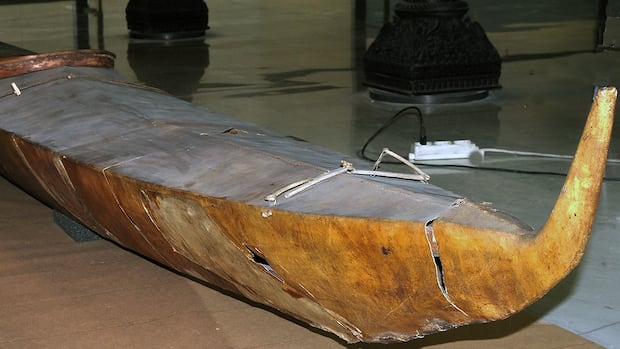
A historic Inuvialuit kayak, held by the Vatican for the past century, is set to return to its home in the western Arctic. The kayak, unique to the Inuvialuit culture, is among 62 sacred and cultural objects being repatriated from the Vatican Museums to Canada, with an arrival date scheduled for December 6, 2023.
Darrell Nasogaluak, a resident of Tuktoyuktuk, Northwest Territories, expressed pride in the kayak’s craftsmanship. He remarked, “It’s unique to this area and there’s no other area that used them that had the same horn.” The kayak features distinctive curved tips at its bow and stern, allowing for easy identification from a distance.
The repatriation follows extensive negotiations led by the Inuvialuit Regional Corporation (IRC), which has worked alongside the federal government and Indigenous organizations to secure the return of this culturally significant item. Duane Smith, the IRC Chair and Chief Executive Officer, stated, “It’s a part of our history, our culture and what it means to the Inuvialuit.”
Negotiations and Significance
The kayak is believed to have originated from an area known as Kitigaaryuit, recognized by Canada as a national historic site. The IRC’s efforts to bring the kayak home began in earnest in 2022, coinciding with a historic visit to the Vatican by Indigenous delegates from Canada. During this visit, they met with Pope Francis and toured the Vatican Museums, where the kayak was on display.
Smith highlighted the importance of the kayak, which was designed for hunting beluga whales in the Mackenzie Delta. He recalled stories of up to 250 kayaks being used at once before a pandemic severely impacted the Inuvialuit population. The kayak’s construction reflects the ingenuity of the Inuvialuit, made from local driftwood, sealskin, and sinew, tailored to the hunter’s build for optimal performance.
The negotiations expanded beyond the kayak after the Vatican expressed interest in returning additional items. As a result, the final agreement included a total of 62 cultural objects, featuring items from Inuit, First Nations, and Métis communities.
Historical Context and Future Plans
The kayak was sent to the Vatican in 1925 by Roman Catholic missionaries, along with approximately 100,000 artifacts from around the world. The missionaries claimed the items were part of an exhibition to showcase Indigenous cultures, but the nature of their acquisition remains disputed. Smith noted that the kayak, being an essential tool for survival, likely would not have been willingly given away by the Inuvialuit.
As the kayak returns to Canada, it will initially be housed at the Canadian Museum of History in Gatineau, Quebec, where representatives from the IRC and the Assembly of First Nations will oversee its examination. The decision on its final resting place will involve consultation with Inuit, First Nations, and Métis leaders.
Nasogaluak is optimistic about the kayak’s return, stating, “We’re going to have an opportunity to finally own one again. It may spark a revival of the use of them.” He emphasized the need for a proper facility in the Inuvialuit region to preserve this significant cultural artifact.
In summary, the return of this Inuvialuit kayak marks a significant moment in the ongoing efforts toward reconciliation and recognition of Indigenous history and culture. As the process unfolds, it symbolizes not only a restoration of heritage but also a commitment to preserving the traditions and craftsmanship of the Inuvialuit people.

Sault Ste. Marie Library Hosts Annual Christmas Open House

G7 Ministers Convene in Montreal to Discuss AI and Quantum Technologies

Eight-Year-Old Michael Gomes Meets Blue Jays Star George Springer

Ottawa Police Charge Drivers in Festive RIDE Campaign Crackdown

Students Transform Classrooms into Native Prairie Plant Labs

Bodybuilder Larissa Shines as STAR in Fitness Spotlight

G7 Ministers Convene in Montreal to Address AI and Quantum Technologies

Eli Lilly, Pfizer, and Johnson & Johnson Join China’s Drug Insurance List

Newfoundland and Labrador Weighs Future of $3.2M U.S. Alcohol Stockpile

Aries Faces Tough Questions on December 8: Honesty Required

Brandon University’s Failed $5 Million Project Sparks Oversight Review

Microsoft Confirms U.S. Law Overrules Canadian Data Sovereignty

Winnipeg Celebrates Culinary Creativity During Le Burger Week 2025

Montreal’s Groupe Marcelle Leads Canadian Cosmetic Industry Growth

Tech Innovator Amandipp Singh Transforms Hiring for Disabled

Dragon Ball: Sparking! Zero Launching on Switch and Switch 2 This November

Red River College Launches New Programs to Address Industry Needs

Google Pixel 10 Pro Fold Specs Unveiled Ahead of Launch

Rocket Lab Reports Strong Q2 2025 Revenue Growth and Future Plans

Discord Faces Serious Security Breach Affecting Millions
-
 Education3 months ago
Brandon University’s Failed $5 Million Project Sparks Oversight Review
-
 Science4 months ago
Microsoft Confirms U.S. Law Overrules Canadian Data Sovereignty
-
 Lifestyle3 months ago
Winnipeg Celebrates Culinary Creativity During Le Burger Week 2025
-
 Health4 months ago
Montreal’s Groupe Marcelle Leads Canadian Cosmetic Industry Growth
-
 Science4 months ago
Tech Innovator Amandipp Singh Transforms Hiring for Disabled
-
 Technology4 months ago
Dragon Ball: Sparking! Zero Launching on Switch and Switch 2 This November
-
 Education4 months ago
Red River College Launches New Programs to Address Industry Needs
-
 Technology4 months ago
Google Pixel 10 Pro Fold Specs Unveiled Ahead of Launch
-
 Business3 months ago
Rocket Lab Reports Strong Q2 2025 Revenue Growth and Future Plans
-
 Technology2 months ago
Discord Faces Serious Security Breach Affecting Millions
-

 Education4 months ago
Alberta Teachers’ Strike: Potential Impacts on Students and Families
-

 Education3 months ago
New SĆIȺNEW̱ SṮEȽIṮḴEȽ Elementary Opens in Langford for 2025/2026 Year
-

 Science4 months ago
China’s Wukong Spacesuit Sets New Standard for AI in Space
-

 Technology4 months ago
World of Warcraft Players Buzz Over 19-Quest Bee Challenge
-

 Business4 months ago
BNA Brewing to Open New Bowling Alley in Downtown Penticton
-

 Business4 months ago
New Estimates Reveal ChatGPT-5 Energy Use Could Soar
-

 Business4 months ago
Dawson City Residents Rally Around Buy Canadian Movement
-

 Technology2 months ago
Huawei MatePad 12X Redefines Tablet Experience for Professionals
-

 Technology4 months ago
Future Entertainment Launches DDoD with Gameplay Trailer Showcase
-

 Technology4 months ago
Global Launch of Ragnarok M: Classic Set for September 3, 2025
-

 Technology4 months ago
Innovative 140W GaN Travel Adapter Combines Power and Convenience
-

 Top Stories3 months ago
Blue Jays Shift José Berríos to Bullpen Ahead of Playoffs
-

 Science4 months ago
Xi Labs Innovates with New AI Operating System Set for 2025 Launch
-

 Technology4 months ago
New IDR01 Smart Ring Offers Advanced Sports Tracking for $169