
Top Stories
BCGEU Strike Spurs Wage Increases for B.C. Public Sector Workers

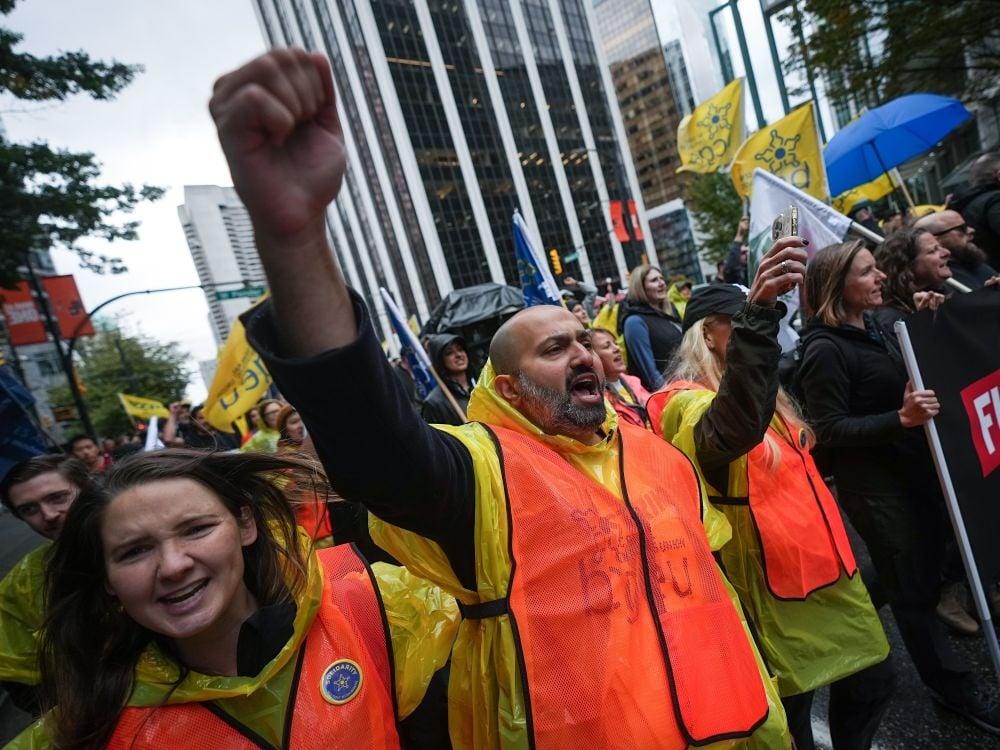
The recent agreement reached between the BC General Employees’ Union (BCGEU) and the B.C. government has set a new precedent for public sector negotiations across the province. After an intense eight-week strike, the union secured a wage increase of 3% annually over four years, a deal that is now influencing negotiations for approximately 452,000 public sector workers, including nurses and teachers.
David Hannah, a business professor at Simon Fraser University, emphasized the impact of this agreement. “The financial side is now set,” he noted, explaining that employers are now aware of the budget constraints they face. This clarity is crucial as many public sector unions, including hospital staff and engineers, prepare to negotiate similar wage increases.
Public sector employers have already begun extending the same proposal to other unions. In fact, the Facilities Bargaining Association, which represents around 67,500 health employees, announced a tentative agreement on November 17 that mirrors the BCGEU’s terms. This agreement will require ratification from union members later in December.
Paul Finch, president of the BCGEU, reflected on the successful strike, stating, “Our strategy worked very well. Our goal was to get a fair agreement that addressed the affordability concerns of our membership, and obviously, we did that.” The provincial government increased its wage offer from a total of 3.5% over two years to a total of 12.6% over four years, illustrating the negotiation’s success.
Despite these gains, unions are preparing for challenging discussions over non-monetary issues, such as benefits and nurse-to-patient ratios. Adriane Gear, president of the BC Nurses’ Union, praised the BCGEU for raising expectations within her own union, stating, “The general wage increase that the BCGEU was able to secure after their valiant job action benefits everybody.”
Yet, Gear also pointed out that negotiations are still in the early stages, with the nurses’ union yet to receive a wage offer. She anticipates that the establishment of mandatory nurse-to-patient ratios, introduced by the provincial government last year, will be a significant topic during bargaining. “The challenge is we need to recruit many, many more nurses to fill the lines,” Gear added, highlighting ongoing staffing concerns.
As negotiations continue, the financial implications of the BCGEU agreement loom large. The B.C. Ministry of Finance estimates that a 1% increase in total compensation for all public sector employees would cost approximately $532 million annually. Should the province extend the BCGEU’s wage offer to all public sector workers, this could lead to an additional cost of $2.1 billion over the next two years.
Hannah noted that the improved wage offer sets a clear financial limit for this round of negotiations. He cautioned that while there may be some flexibility, unions might struggle to secure additional demands beyond wage increases. “It’s not just a wage increase; it’s like a budget,” he explained.
The BCGEU’s largest bargaining unit, which includes 34,000 workers who participated in the strike, successfully negotiated the improved wage terms. However, other bargaining units within the BCGEU are also facing challenges. On November 27, the Community Bargaining Association, representing over 26,000 community health workers, voted overwhelmingly in favor of a strike, although they have not yet acted on this decision.
BCGEU vice-president Scott De Long expressed the need for equity in negotiations, seeking similar benefits and wages as other health workers. “We’re calling on government and health employers to return to the table with a mandate to fix these long-standing inequities and deliver real improvements to our day-to-day working conditions,” he stated.
The provincial government has expressed its commitment to achieving equitable agreements. Brenda Bailey, B.C. Finance Minister, stated that the government is eager to facilitate productive discussions across public sector negotiations. “Right now, bargaining is underway across the B.C. public sector, and we want to give those tables the space they need to have those important discussions,” she said.
As the discussions progress into December, many workers and unions will be closely monitoring the outcomes, hoping the momentum created by the BCGEU will lead to improved conditions and compensation for all public sector employees in British Columbia.

Join The Tyee’s Fight Against Disinformation and Win Prizes

LaSalle Artist Roy James Showcases ‘Solitary Man’ Exhibition

Agentic AI Transforms Sustainability and Risk Management Practices

Vancouver Health Officials Warn Parents: E-Scooters Are Not Toys

Fishing Mega-Game Set for January 2026 Launch on Steam

BCGEU Strike Spurs Wage Increases for B.C. Public Sector Workers

Nova Scotia’s Mo Gato Brings Unique Mauritian Flavors to Local Market

Trump Administration Proposes Portable Mortgages to Boost Housing Market

Randall Simpson Keeps Saskatoon’s Christmas Display Thriving

Agentic AI Transforms Sustainability and Risk Management Landscape

Brandon University’s Failed $5 Million Project Sparks Oversight Review

Microsoft Confirms U.S. Law Overrules Canadian Data Sovereignty

Winnipeg Celebrates Culinary Creativity During Le Burger Week 2025

Montreal’s Groupe Marcelle Leads Canadian Cosmetic Industry Growth

Tech Innovator Amandipp Singh Transforms Hiring for Disabled

Dragon Ball: Sparking! Zero Launching on Switch and Switch 2 This November

Red River College Launches New Programs to Address Industry Needs

Google Pixel 10 Pro Fold Specs Unveiled Ahead of Launch

Rocket Lab Reports Strong Q2 2025 Revenue Growth and Future Plans

Discord Faces Serious Security Breach Affecting Millions
-
 Education3 months ago
Brandon University’s Failed $5 Million Project Sparks Oversight Review
-
 Science4 months ago
Microsoft Confirms U.S. Law Overrules Canadian Data Sovereignty
-
 Lifestyle3 months ago
Winnipeg Celebrates Culinary Creativity During Le Burger Week 2025
-
 Health4 months ago
Montreal’s Groupe Marcelle Leads Canadian Cosmetic Industry Growth
-
 Science4 months ago
Tech Innovator Amandipp Singh Transforms Hiring for Disabled
-
 Technology4 months ago
Dragon Ball: Sparking! Zero Launching on Switch and Switch 2 This November
-
 Education4 months ago
Red River College Launches New Programs to Address Industry Needs
-
 Technology4 months ago
Google Pixel 10 Pro Fold Specs Unveiled Ahead of Launch
-
 Business3 months ago
Rocket Lab Reports Strong Q2 2025 Revenue Growth and Future Plans
-
 Technology2 months ago
Discord Faces Serious Security Breach Affecting Millions
-

 Education4 months ago
Alberta Teachers’ Strike: Potential Impacts on Students and Families
-

 Education3 months ago
New SĆIȺNEW̱ SṮEȽIṮḴEȽ Elementary Opens in Langford for 2025/2026 Year
-

 Science4 months ago
China’s Wukong Spacesuit Sets New Standard for AI in Space
-

 Technology4 months ago
World of Warcraft Players Buzz Over 19-Quest Bee Challenge
-

 Business4 months ago
BNA Brewing to Open New Bowling Alley in Downtown Penticton
-

 Business4 months ago
New Estimates Reveal ChatGPT-5 Energy Use Could Soar
-

 Business4 months ago
Dawson City Residents Rally Around Buy Canadian Movement
-

 Technology4 months ago
Future Entertainment Launches DDoD with Gameplay Trailer Showcase
-

 Technology2 months ago
Huawei MatePad 12X Redefines Tablet Experience for Professionals
-

 Technology4 months ago
Global Launch of Ragnarok M: Classic Set for September 3, 2025
-

 Technology4 months ago
Innovative 140W GaN Travel Adapter Combines Power and Convenience
-

 Top Stories3 months ago
Blue Jays Shift José Berríos to Bullpen Ahead of Playoffs
-

 Science4 months ago
Xi Labs Innovates with New AI Operating System Set for 2025 Launch
-

 Technology4 months ago
New IDR01 Smart Ring Offers Advanced Sports Tracking for $169