
Technology
Rimac’s Verne Redefines Mobility with Lounge-like Robotaxi

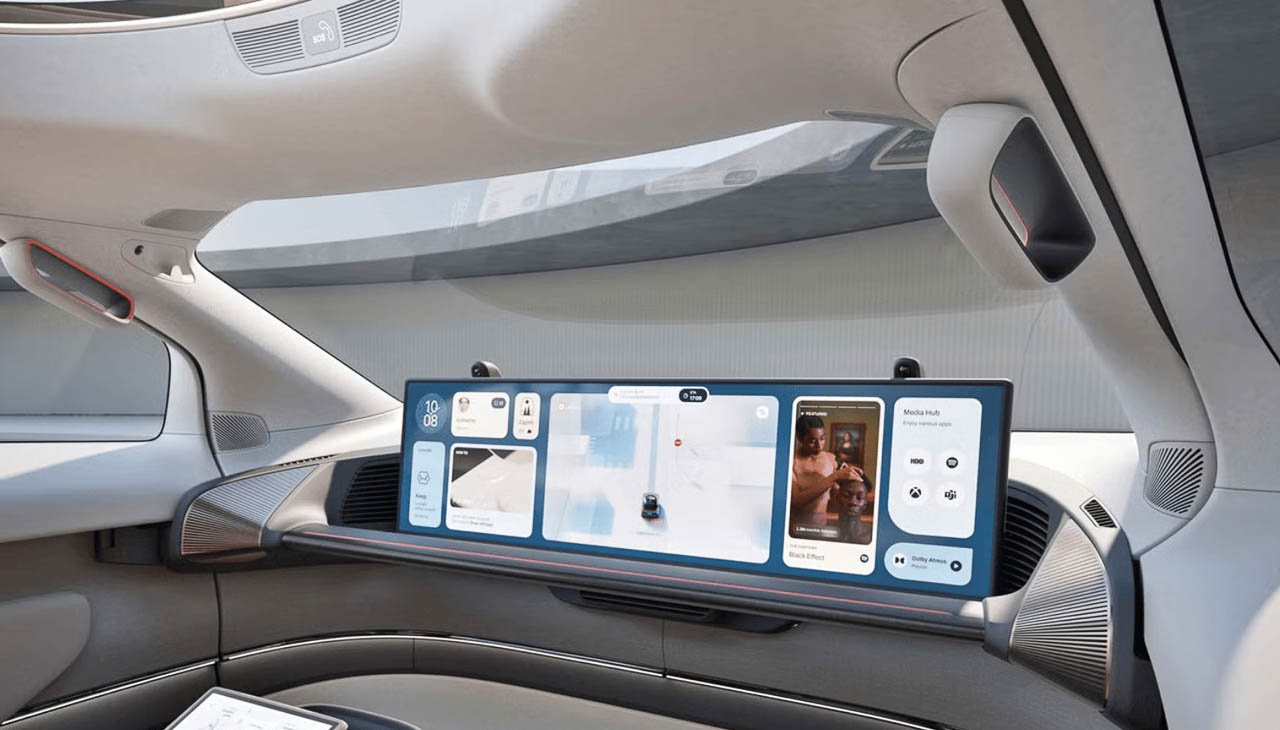
The unveiling of the Verne by Rimac Automobili marks a significant shift in urban mobility design. Instead of a traditional vehicle, the Verne operates as a robotaxi resembling a private lounge on wheels, designed to navigate city speeds without a steering wheel or pedals. This innovative approach challenges conventional automotive norms by asking a crucial question: what does a vehicle become when it no longer requires a driver?
Rimac’s vision for the Verne prioritizes passenger comfort and experience over traditional automotive design. The interior eliminates the dashboard-centric layout that has characterized vehicles for decades. Instead, a striking 43-inch ultra-wide display stretches across the cabin, flanked by lounge seats that recline into five different positions, including a fully flat option. Rimac describes the interior as “less automotive and more like a living room,” emphasizing a complete departure from standard car interfaces.
Revolutionary Design Focused on Comfort
In crafting the Verne, Rimac’s design team approached the vehicle from a unique perspective: they started with a two-person living room concept and built outward. The result is a compact exterior with a trapezoidal profile, short overhangs, and a spacious cabin that offers more legroom than a Rolls-Royce, all while being adaptable to narrow European streets. By removing the engine bay and other driver-centric components, Rimac maximized space for passenger amenities, creating an environment that prioritizes comfort.
The external design of the Verne resembles a clean monovolume pod. Unlike many autonomous test vehicles that feature visible sensor arrays, the Verne integrates its Mobileye hardware seamlessly into the bodywork. This includes lidar, radar, and camera systems that enable Level 4 autonomy, allowing the vehicle to manage all driving tasks without human supervision. Such design choices reflect a philosophy that technology should enhance the passenger experience without drawing attention to itself.
The Verne’s twin sliding doors further reinforce this innovative design. They glide open, providing easy access without obstructing traffic or requiring passengers to navigate around protruding door edges. This thoughtful detail is crucial for a vehicle intended for urban environments, where picking up passengers at crowded curbs is common.
A New Era of Passenger-Centric Mobility
Entering the Verne transforms the passenger experience. The absence of traditional automotive features creates a spacious atmosphere more akin to a premium railway compartment or a private jet than a conventional car. The interior is equipped with a 17-speaker audio system and a circular sunroof designed to provide warm ambient light, enhancing the sense of relaxation.
Rimac’s design does not merely add luxury features; it creates a coherent experience optimized for passenger enjoyment. Without the need to accommodate a driver, every element—from seating geometry to ambient lighting—works harmoniously. A single tactile “Median” control within reach allows passengers to start and end their rides, providing a sense of psychological reassurance in an otherwise automated environment.
Although the two-seat configuration may seem limiting, Rimac’s analysis of ride-hailing data suggests otherwise. Research indicates that approximately 90% of trips involve one or two passengers, rendering traditional rear bench seats largely unnecessary. By focusing on a two-seat layout, Rimac has prioritized space for legroom and luggage, creating an open and inviting atmosphere.
The Verne’s powertrain is intentionally modest, producing around 150 kW compared to the nearly 2,000 horsepower of the Nevera. The vehicle features a 60 kWh battery and offers a range of approximately 240 kilometers, sufficient for urban operations where vehicles frequently return to charging hubs. This represents a conscious choice to optimize for city use, emphasizing lower material consumption and reduced complexity, rather than competing for sheer power.
Rimac’s commitment to “invisible infrastructure” extends to the autonomous driving platform. The Verne operates using Mobileye Drive, which integrates sensors designed to enhance the passenger experience without becoming obtrusive. An accompanying app personalizes the ride before arrival, allowing passengers to set preferences for temperature, seating, and even scent, creating a curated experience that feels more like entering a hotel room than a vehicle.
As Rimac plans to deploy the Verne in various European and Middle Eastern cities starting in 2026, the vehicle stands as a potential catalyst for reimagining urban mobility. Rather than personal transportation, the Verne represents a fleet of identical pods circulating through cities to pick up and deliver passengers, challenging traditional notions of automotive identity.
The introduction of the Verne prompts significant questions for the automotive industry. What does it mean for vehicle identity when drivers are removed from the equation? How should cities adapt curb space for vehicles that open sideways? The Verne does not provide all the answers but is the first production-intent vehicle that urges the industry to confront these questions seriously.
In a surprising turn for a manufacturer known for high-performance hypercars, Rimac has delivered a vehicle that may influence urban mobility design more profoundly than any high-speed supercar. Sometimes, the most ambitious engineering lies in knowing when to embrace simplicity.

iShares Core Dividend Growth ETF Faces Challenges; Alternatives Suggested

Discover 7 Scenic Hikes Near Calgary to Explore This Spring

Scientists Uncover Life’s Building Blocks in Ryugu Asteroid Samples

Windsor-Essex Unveils New Action Plan to Combat Substance Use

Boost Your Business Visibility with These Local SEO Strategies

East Algoma OPP Urges Public to Limit Travel Amid Hazardous Conditions

Universities Must Rethink Failure to Support Student Growth

Canada Invests $6.4 Million to Boost Green Shipping Corridors

Stony Plain Secures 14th Consecutive Award for Financial Reporting Excellence

Rhythm Pharmaceuticals Reports Strong Q4 Growth Ahead of FDA Decision

Brandon University’s Failed $5 Million Project Sparks Oversight Review

Microsoft Confirms U.S. Law Overrules Canadian Data Sovereignty

Winnipeg Celebrates Culinary Creativity During Le Burger Week 2025

Discover Aritzia’s Latest Fashion Trends: A Comprehensive Review

New SĆIȺNEW̱ SṮEȽIṮḴEȽ Elementary Opens in Langford for 2025/2026 Year

EngineAI Unveils T800 Humanoid Robot, Setting New Industry Standards

Montreal’s Groupe Marcelle Leads Canadian Cosmetic Industry Growth

Tech Innovator Amandipp Singh Transforms Hiring for Disabled

Dragon Ball: Sparking! Zero Launching on Switch and Switch 2 This November

Digg Relaunches as Founders Kevin Rose and Alexis Ohanian Join Forces
-
 Education7 months ago
Brandon University’s Failed $5 Million Project Sparks Oversight Review
-
 Science8 months ago
Microsoft Confirms U.S. Law Overrules Canadian Data Sovereignty
-
 Lifestyle7 months ago
Winnipeg Celebrates Culinary Creativity During Le Burger Week 2025
-
 Lifestyle4 months ago
Discover Aritzia’s Latest Fashion Trends: A Comprehensive Review
-
 Education7 months ago
New SĆIȺNEW̱ SṮEȽIṮḴEȽ Elementary Opens in Langford for 2025/2026 Year
-
 Business4 months ago
EngineAI Unveils T800 Humanoid Robot, Setting New Industry Standards
-
 Health8 months ago
Montreal’s Groupe Marcelle Leads Canadian Cosmetic Industry Growth
-
 Science8 months ago
Tech Innovator Amandipp Singh Transforms Hiring for Disabled
-
 Technology8 months ago
Dragon Ball: Sparking! Zero Launching on Switch and Switch 2 This November
-
 Technology3 months ago
Digg Relaunches as Founders Kevin Rose and Alexis Ohanian Join Forces
-
 Top Stories4 months ago
Canadiens Eye Elias Pettersson: What It Would Cost to Acquire Him
-

 Lifestyle4 weeks ago
Canmore’s Le Fournil Bakery to Close After 14 Successful Years
-

 Health6 months ago
Eganville Leader to Close in 2026 After 123 Years of Reporting
-

 Education8 months ago
Red River College Launches New Programs to Address Industry Needs
-

 Top Stories4 months ago
Nicol Brothers Shine as Wheat Kings Dominate U18 AAA Hockey
-

 Business7 months ago
Rocket Lab Reports Strong Q2 2025 Revenue Growth and Future Plans
-

 Business8 months ago
BNA Brewing to Open New Bowling Alley in Downtown Penticton
-

 Education6 months ago
Alberta Petition Aims to Redirect Funds from Private to Public Schools
-

 Education8 months ago
Alberta Teachers’ Strike: Potential Impacts on Students and Families
-

 Technology6 months ago
Discord Faces Serious Security Breach Affecting Millions
-

 Technology8 months ago
Google Pixel 10 Pro Fold Specs Unveiled Ahead of Launch
-

 Lifestyle5 months ago
Edmonton’s Beloved Evolution Wonderlounge Closes, New Era Begins
-

 Business7 months ago
Iconic Golden Lion Restaurant in South Surrey to Close After 50 Years
-

 Science8 months ago
China’s Wukong Spacesuit Sets New Standard for AI in Space