
Technology
Luigi Colani’s 1970s Tobifant Desk Redefines Children’s Furniture

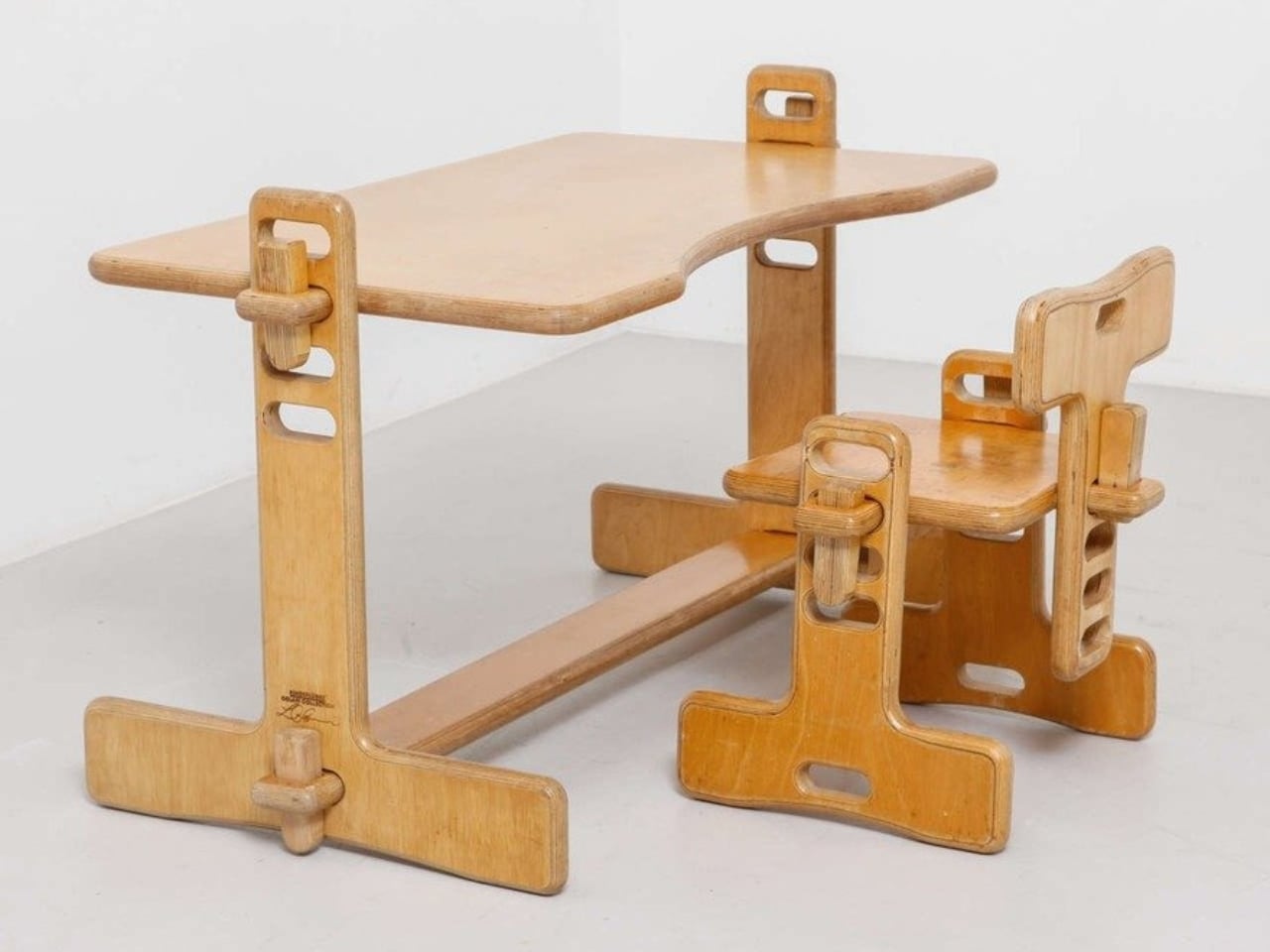
In the 1970s, designer Luigi Colani introduced the Tobifant desk and chair set, revolutionizing children’s furniture long before IKEA popularized flatpack design. This innovative collection, produced for the West German brand Kinderlübke, tackled a significant issue for parents: the rapid growth of children.
Colani, known for his signature curves and organic shapes, applied his unique design philosophy to create a product that was both functional and aesthetically pleasing. The Tobifant set featured height-adjustable frames made from beech plywood, allowing it to grow with a child. Instead of purchasing new furniture every few years, families could invest in a single set that adapted as their child matured. This approach not only offered practicality but also represented a sustainable design solution long before the term became widely used.
The Tobifant desk and chair set was remarkable for its time. During an era when many children’s furniture pieces were either disposable or expensive heirlooms, Colani’s design provided a middle ground. The desk and chair could serve children from toddlerhood through their teenage years, promoting longevity and sustainability.
Colani’s vision extended beyond mere functionality. Each Tobifant desk was accompanied by a kilogram of modeling clay and three wooden tools, reflecting his belief that a desk should be a space for creativity and exploration. His understanding of children’s needs showcased a level of foresight that many furniture designers overlook.
The flatpack design also democratized high-quality furniture. By making it easier to transport and assemble, Colani ensured that good design was accessible to families of various backgrounds. This thoughtful, human-centered approach to furniture design set a precedent that resonates with contemporary trends.
Examining the Tobifant set today reveals how modern it still appears. Its clean lines and warm plywood finish maintain a timeless quality, making it suitable for contemporary homes. In contrast to the bold aesthetics of much 1970s furniture, the Tobifant’s minimalist design is a testament to Colani’s innovative vision.
Production of the Tobifant set began in the late 1970s, and surviving pieces have become sought after by collectors. They often command impressive prices on vintage reseller sites, reflecting the rarity and significance of Colani’s work. The Tobifant exemplifies the intersection of form, function, and a forward-thinking design philosophy that is increasingly valued in today’s market.
Colani’s pioneering approach encompassed several design trends that are often perceived as recent innovations. Flatpack furniture? Achieved. Modular, adjustable design? Accomplished. Sustainability through longevity? Realized. Child-centered functionality that does not compromise aesthetics? Absolutely. Colani’s work laid the groundwork for many modern furniture startups that strive to achieve similar goals.
As consumers navigate the complexities of contemporary furniture assembly, it is worth reflecting on Luigi Colani and his Tobifant collection. His legacy demonstrates that flatpack furniture can transcend mere affordability, embodying beauty, innovation, and a genuine enhancement of family life. This remarkable design deserves broader recognition in the annals of furniture history.

iShares Core Dividend Growth ETF Faces Challenges; Alternatives Suggested

Discover 7 Scenic Hikes Near Calgary to Explore This Spring

Scientists Uncover Life’s Building Blocks in Ryugu Asteroid Samples

Windsor-Essex Unveils New Action Plan to Combat Substance Use

Boost Your Business Visibility with These Local SEO Strategies

East Algoma OPP Urges Public to Limit Travel Amid Hazardous Conditions

Universities Must Rethink Failure to Support Student Growth

Canada Invests $6.4 Million to Boost Green Shipping Corridors

Stony Plain Secures 14th Consecutive Award for Financial Reporting Excellence

Rhythm Pharmaceuticals Reports Strong Q4 Growth Ahead of FDA Decision

Brandon University’s Failed $5 Million Project Sparks Oversight Review

Microsoft Confirms U.S. Law Overrules Canadian Data Sovereignty

Winnipeg Celebrates Culinary Creativity During Le Burger Week 2025

Discover Aritzia’s Latest Fashion Trends: A Comprehensive Review

New SĆIȺNEW̱ SṮEȽIṮḴEȽ Elementary Opens in Langford for 2025/2026 Year

EngineAI Unveils T800 Humanoid Robot, Setting New Industry Standards

Montreal’s Groupe Marcelle Leads Canadian Cosmetic Industry Growth

Tech Innovator Amandipp Singh Transforms Hiring for Disabled

Dragon Ball: Sparking! Zero Launching on Switch and Switch 2 This November

Digg Relaunches as Founders Kevin Rose and Alexis Ohanian Join Forces
-
 Education7 months ago
Brandon University’s Failed $5 Million Project Sparks Oversight Review
-
 Science8 months ago
Microsoft Confirms U.S. Law Overrules Canadian Data Sovereignty
-
 Lifestyle7 months ago
Winnipeg Celebrates Culinary Creativity During Le Burger Week 2025
-
 Lifestyle4 months ago
Discover Aritzia’s Latest Fashion Trends: A Comprehensive Review
-
 Education7 months ago
New SĆIȺNEW̱ SṮEȽIṮḴEȽ Elementary Opens in Langford for 2025/2026 Year
-
 Business4 months ago
EngineAI Unveils T800 Humanoid Robot, Setting New Industry Standards
-
 Health8 months ago
Montreal’s Groupe Marcelle Leads Canadian Cosmetic Industry Growth
-
 Science8 months ago
Tech Innovator Amandipp Singh Transforms Hiring for Disabled
-
 Technology8 months ago
Dragon Ball: Sparking! Zero Launching on Switch and Switch 2 This November
-
 Technology3 months ago
Digg Relaunches as Founders Kevin Rose and Alexis Ohanian Join Forces
-

 Lifestyle4 weeks ago
Canmore’s Le Fournil Bakery to Close After 14 Successful Years
-
 Top Stories4 months ago
Canadiens Eye Elias Pettersson: What It Would Cost to Acquire Him
-

 Health7 months ago
Eganville Leader to Close in 2026 After 123 Years of Reporting
-

 Education8 months ago
Red River College Launches New Programs to Address Industry Needs
-

 Top Stories4 months ago
Nicol Brothers Shine as Wheat Kings Dominate U18 AAA Hockey
-

 Business8 months ago
BNA Brewing to Open New Bowling Alley in Downtown Penticton
-

 Business7 months ago
Rocket Lab Reports Strong Q2 2025 Revenue Growth and Future Plans
-

 Education6 months ago
Alberta Petition Aims to Redirect Funds from Private to Public Schools
-

 Lifestyle5 months ago
Edmonton’s Beloved Evolution Wonderlounge Closes, New Era Begins
-

 Education8 months ago
Alberta Teachers’ Strike: Potential Impacts on Students and Families
-

 Technology6 months ago
Discord Faces Serious Security Breach Affecting Millions
-

 Technology8 months ago
Google Pixel 10 Pro Fold Specs Unveiled Ahead of Launch
-

 Business7 months ago
Iconic Golden Lion Restaurant in South Surrey to Close After 50 Years
-

 Science8 months ago
China’s Wukong Spacesuit Sets New Standard for AI in Space