
Science
McGill University Develops Automated Microneedle Patch for IVF

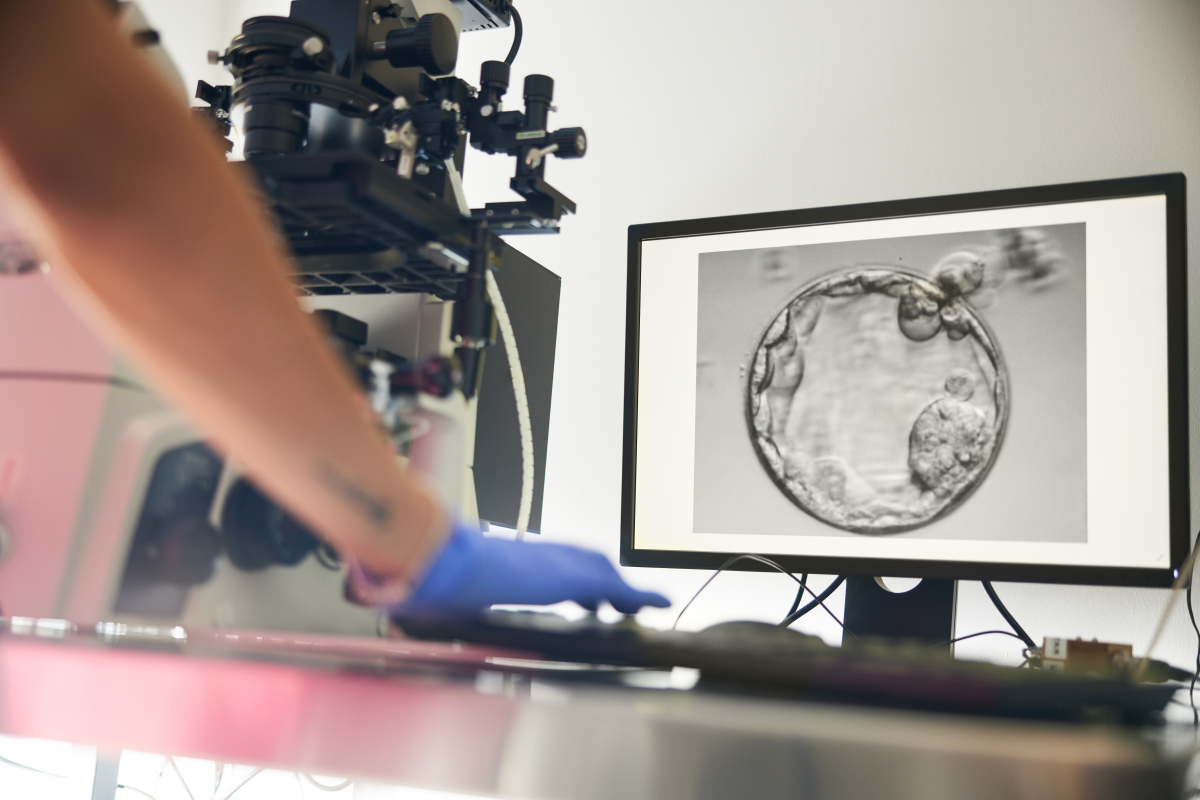
A research team at McGill University has introduced a groundbreaking solution for the delivery of hormones used in in vitro fertilization (IVF). Their new light-activated microneedle patch promises a painless and automated method for administering hormone treatments, potentially transforming the IVF experience for patients worldwide.
This innovative system employs a hydrogel microneedle patch embedded with specially engineered nanoparticles designed to hold and release the hormone leuprolide when stimulated by near-infrared light. Patients undergoing IVF typically need to self-administer hormones daily at specific intervals, a process that can be both physically and emotionally taxing. With this new technology, the hormone can be released automatically at pre-programmed times, aiming to eliminate human error associated with self-injection.
Advancements in Drug Delivery Technology
The research team has addressed a significant challenge in current light-triggered drug delivery systems, which often release foreign materials into the body, raising safety and regulatory concerns. According to Marta Cerruti, a professor of materials engineering and the senior author of the study published in Small, “This is the first time that we were able to show light-triggered drug release from a nanoparticle-microneedle composite without releasing any foreign substance into the body.”
This advancement not only enhances patient safety but also accelerates the potential for clinical application, as the new system leaves no residual nanoparticles behind in the skin. The researchers optimized the incorporation of hormone-bearing nanoparticles into each microneedle to maintain effective skin penetration. They demonstrated the system’s efficacy by releasing leuprolide in a porcine skin model over a two-hour period, and even a five-minute pulse of light successfully delivered measurable hormone levels into the bloodstream and organs of a live rat.
Implications for IVF and Beyond
The implications of this technology are significant for IVF patients, as it could make treatments less painful and more efficient. The current success rates for IVF hover around 30 percent, even for the youngest women. As noted by Vivienne Tam, the lead author of the study and a PhD student in Cerruti’s lab, the automated system could improve these rates by ensuring that hormones are delivered at optimal times tailored for each individual.
Beyond the realm of IVF, this microneedle patch could benefit anyone who requires daily injections, such as individuals with diabetes or multiple sclerosis. Since the delivery platform avoids introducing nanoparticles into the body, it has a clearer pathway for clinical adoption compared to previous systems.
Further research will focus on refining dosing, exploring hormone release profiles, and evaluating commercial opportunities to bring this innovative technology to market. The study, titled “Upconverting Nanoparticle-Loaded Microneedles for Near-Infrared Responsive Delivery of Gonadotropins to Increase Success of In-Vitro Fertilization,” highlights the collaborative efforts of the research team, which includes Tam, Cerruti, and other contributors.
Funding for this research was provided by the Natural Sciences and Engineering Research Council (NSERC) and Vanier Canada Graduate Scholarships, underscoring the importance of support for advancements in medical technology. As the technology advances, it holds the potential to reshape the landscape of fertility treatments and daily medical care.

Strategy Transforms into a Leveraged Bitcoin Vehicle, Faces $12.4B Loss

Oswego Panthers Triumph as Ethan Vahl Celebrates 1,000 Points

Fungi Transform Carrot Waste into Sustainable Protein Source

Victoria Counsellors Launch Initiative to Enhance Mental Health Access

Winnipeg’s Shivers & Shimmies Gala Showcases New Talent

Create Your Own Stained Glass Heart at FrogWerkz Workshops

Marcus Lewis Outlines Ambitious Agenda for 2026 Congressional Bid

DeKalb County Community Foundation Appoints Kyle White as Manager

Fungi Transform Carrot Waste into Sustainable Protein Source

Urgent Action Needed: B.C. Paramedics Vote on Potential Strike

Brandon University’s Failed $5 Million Project Sparks Oversight Review

Microsoft Confirms U.S. Law Overrules Canadian Data Sovereignty

Winnipeg Celebrates Culinary Creativity During Le Burger Week 2025

Montreal’s Groupe Marcelle Leads Canadian Cosmetic Industry Growth

New SĆIȺNEW̱ SṮEȽIṮḴEȽ Elementary Opens in Langford for 2025/2026 Year

Tech Innovator Amandipp Singh Transforms Hiring for Disabled

Dragon Ball: Sparking! Zero Launching on Switch and Switch 2 This November

EngineAI Unveils T800 Humanoid Robot, Setting New Industry Standards

Digg Relaunches as Founders Kevin Rose and Alexis Ohanian Join Forces

Canadiens Eye Elias Pettersson: What It Would Cost to Acquire Him
-
 Education5 months ago
Brandon University’s Failed $5 Million Project Sparks Oversight Review
-
 Science6 months ago
Microsoft Confirms U.S. Law Overrules Canadian Data Sovereignty
-
 Lifestyle5 months ago
Winnipeg Celebrates Culinary Creativity During Le Burger Week 2025
-
 Health6 months ago
Montreal’s Groupe Marcelle Leads Canadian Cosmetic Industry Growth
-
 Education5 months ago
New SĆIȺNEW̱ SṮEȽIṮḴEȽ Elementary Opens in Langford for 2025/2026 Year
-
 Science6 months ago
Tech Innovator Amandipp Singh Transforms Hiring for Disabled
-
 Technology6 months ago
Dragon Ball: Sparking! Zero Launching on Switch and Switch 2 This November
-
 Business2 months ago
EngineAI Unveils T800 Humanoid Robot, Setting New Industry Standards
-
 Technology3 weeks ago
Digg Relaunches as Founders Kevin Rose and Alexis Ohanian Join Forces
-
Top Stories2 months ago
Canadiens Eye Elias Pettersson: What It Would Cost to Acquire Him
-

 Education6 months ago
Red River College Launches New Programs to Address Industry Needs
-

 Business5 months ago
Rocket Lab Reports Strong Q2 2025 Revenue Growth and Future Plans
-

 Technology6 months ago
Google Pixel 10 Pro Fold Specs Unveiled Ahead of Launch
-

 Education6 months ago
Alberta Teachers’ Strike: Potential Impacts on Students and Families
-

 Technology4 months ago
Discord Faces Serious Security Breach Affecting Millions
-

 Business6 months ago
BNA Brewing to Open New Bowling Alley in Downtown Penticton
-

 Science6 months ago
China’s Wukong Spacesuit Sets New Standard for AI in Space
-

 Lifestyle4 months ago
Canadian Author Secures Funding to Write Book Without Financial Strain
-

 Business6 months ago
New Estimates Reveal ChatGPT-5 Energy Use Could Soar
-

 Business1 month ago
Nvidia and AMD CEOs Unveil AI Innovations at CES 2026
-

 Business4 months ago
Hydro-Québec Espionage Trial Exposes Internal Oversight Failures
-

 Top Stories4 months ago
Patrik Laine Struggles to Make Impact for Canadiens Early Season
-

 Business6 months ago
Dawson City Residents Rally Around Buy Canadian Movement
-

 Technology6 months ago
Future Entertainment Launches DDoD with Gameplay Trailer Showcase