
Education
Canada Boosts Auto Sector with Reskilling and Economic Support

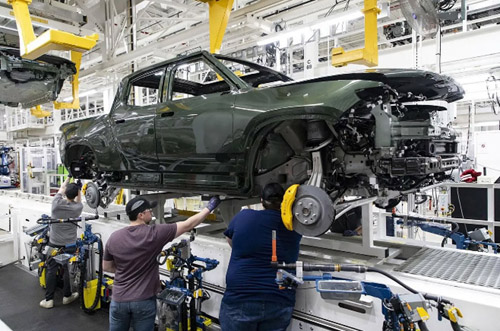
The Canadian government has unveiled a comprehensive strategy to support the auto-making sector, focusing on reskilling and workforce retention. On February 5, 2026, Prime Minister Mark Carney announced a series of measures aimed at helping the industry navigate immediate challenges while preparing for future demands. This initiative, while centered on the auto sector, highlights a broader federal commitment to workforce development across various industries.
In his announcement, Carney emphasized the importance of maintaining jobs and skills within the auto sector, stating, “Canadian auto workers are among the best in the world. Their expertise is our competitive advantage.” The government plans to invest $570 million to provide employment assistance and reskilling for up to 66,000 workers across Canada, including those affected by changes in the auto industry.
Key Support Measures for Workers and Industry
The federal plan includes several critical components aimed at mitigating the impact of current economic pressures. A new Work-Sharing grant will support employees by preventing layoffs and enabling businesses to retain skilled workers. Additionally, a workforce alliance will be established, bringing together industry leaders, labor representatives, and training partners to address operational bottlenecks and stimulate private investment.
Patty Hajdu, Minister of Jobs and Families, reinforced the government’s commitment to the auto sector by stating, “This strategy is about backing those workers with the training, investment, and certainty they need to build the future of the auto sector in Canada.” This investment is seen as pivotal in securing good jobs and enhancing Canada’s position as a global leader in automotive manufacturing.
While the auto sector is a focal point, the principles of this reskilling initiative are expected to be applicable across various industries. For example, similar strategies could be employed at Canada Post, where employees may be reskilled to adapt to the evolving operational landscape.
Broader Economic Implications
The approach taken by the Canadian government is reminiscent of recent developments in the steel industry. Last fall, Algoma Steel accepted a $500 million government-backed loan, which included $400 million from the federal government and $100 million from the provincial government. In return, Algoma Steel committed to pivoting its production towards new market needs, demonstrating how targeted investments can reshape industries for future growth.
This macro-economic strategy, guided by Carney’s leadership, aims to stabilize product lines, create new job opportunities, and diversify markets both domestically and for export. By investing in workers and adapting to technological advancements, the Canadian government seeks to ensure that the nation’s industries remain competitive in a rapidly changing global economy.
As the auto-making sector and other industries prepare for the future, the emphasis on reskilling and workforce development underscores a significant shift towards sustainable economic practices. The federal government’s proactive measures highlight the importance of adaptability in the face of ongoing economic challenges, setting a precedent for other sectors to follow as they navigate the complexities of modern commerce.

Create Your Own Stained Glass Heart at FrogWerkz Workshops

Marcus Lewis Outlines Ambitious Agenda for 2026 Congressional Bid

DeKalb County Community Foundation Appoints Kyle White as Manager

Fungi Transform Carrot Waste into Sustainable Protein Source

Urgent Action Needed: B.C. Paramedics Vote on Potential Strike

Frankfurt Artist Unveils Innovative Digital Audio Player Concept

Elk Valley Resources Invests $250,000 in Bummers Flats Restoration

Explore February Activities at Plano Public Library

Elk Valley Resources Funds Key Wetland Restoration Project

Discover Osoyoos: B.C.’s Hidden Gem for Winter Getaways

Brandon University’s Failed $5 Million Project Sparks Oversight Review

Microsoft Confirms U.S. Law Overrules Canadian Data Sovereignty

Winnipeg Celebrates Culinary Creativity During Le Burger Week 2025

Montreal’s Groupe Marcelle Leads Canadian Cosmetic Industry Growth

New SĆIȺNEW̱ SṮEȽIṮḴEȽ Elementary Opens in Langford for 2025/2026 Year

Tech Innovator Amandipp Singh Transforms Hiring for Disabled

Dragon Ball: Sparking! Zero Launching on Switch and Switch 2 This November

EngineAI Unveils T800 Humanoid Robot, Setting New Industry Standards

Digg Relaunches as Founders Kevin Rose and Alexis Ohanian Join Forces

Canadiens Eye Elias Pettersson: What It Would Cost to Acquire Him
-
 Education5 months ago
Brandon University’s Failed $5 Million Project Sparks Oversight Review
-
 Science6 months ago
Microsoft Confirms U.S. Law Overrules Canadian Data Sovereignty
-
 Lifestyle5 months ago
Winnipeg Celebrates Culinary Creativity During Le Burger Week 2025
-
 Health6 months ago
Montreal’s Groupe Marcelle Leads Canadian Cosmetic Industry Growth
-
 Education5 months ago
New SĆIȺNEW̱ SṮEȽIṮḴEȽ Elementary Opens in Langford for 2025/2026 Year
-
 Science6 months ago
Tech Innovator Amandipp Singh Transforms Hiring for Disabled
-
 Technology6 months ago
Dragon Ball: Sparking! Zero Launching on Switch and Switch 2 This November
-
 Business2 months ago
EngineAI Unveils T800 Humanoid Robot, Setting New Industry Standards
-
 Technology3 weeks ago
Digg Relaunches as Founders Kevin Rose and Alexis Ohanian Join Forces
-
Top Stories2 months ago
Canadiens Eye Elias Pettersson: What It Would Cost to Acquire Him
-

 Education6 months ago
Red River College Launches New Programs to Address Industry Needs
-

 Business5 months ago
Rocket Lab Reports Strong Q2 2025 Revenue Growth and Future Plans
-

 Technology6 months ago
Google Pixel 10 Pro Fold Specs Unveiled Ahead of Launch
-

 Education6 months ago
Alberta Teachers’ Strike: Potential Impacts on Students and Families
-

 Technology4 months ago
Discord Faces Serious Security Breach Affecting Millions
-

 Business6 months ago
BNA Brewing to Open New Bowling Alley in Downtown Penticton
-

 Lifestyle4 months ago
Canadian Author Secures Funding to Write Book Without Financial Strain
-

 Science6 months ago
China’s Wukong Spacesuit Sets New Standard for AI in Space
-

 Business6 months ago
New Estimates Reveal ChatGPT-5 Energy Use Could Soar
-

 Business1 month ago
Nvidia and AMD CEOs Unveil AI Innovations at CES 2026
-

 Business4 months ago
Hydro-Québec Espionage Trial Exposes Internal Oversight Failures
-

 Top Stories4 months ago
Patrik Laine Struggles to Make Impact for Canadiens Early Season
-

 Business6 months ago
Dawson City Residents Rally Around Buy Canadian Movement
-

 Technology6 months ago
Future Entertainment Launches DDoD with Gameplay Trailer Showcase