
Business
From Glamour to Cramped: The Decline of Canadian Air Travel

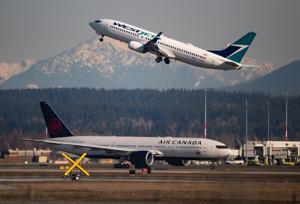
Flying in Canada has undergone a significant transformation from the lavish experiences of the past to today’s often uncomfortable journeys. The shift in the airline industry can be traced back to the deregulation of the sector in the mid-1980s, which fundamentally altered competition and service in air travel.
In 1971, Air Canada introduced an innovative concept: transforming the upper deck of its Boeing 747-100s into a dance floor for first-class passengers. With disco music and mirrored walls, the “flying nightclub” was a novel way to attract travelers. As former flight attendant Heather Tregaskes reminisced, “Sometimes stewardesses would even dance with customers.” This experience, however, lasted only a year before the airline opted to replace the dance floors with more seats for profit.
The decline of passenger comfort and service is attributed to Air Canada’s and WestJet’s dominance in the Canadian airline market. According to John Gradek, a lecturer at McGill University, the competitive environment that initially inspired premium services began to deteriorate after the deregulation of the airline industry in March 1985. The consolidation of power by these two major airlines has led to a market where they control between 56 to 78 percent of domestic passenger traffic at primary airports, as reported by the Competition Bureau.
In 2024, the average domestic airfare with Air Canada reached $966 (approximately $694 USD), nearly double that of the average fare in the United States, which was $532 (about $382 USD). Experts suggest that high taxes and fees imposed by governments and third-party entities contribute significantly to these elevated prices. Additionally, the absence of competitive pressure has allowed both airlines to sustain high fares while offering diminished services.
The rise of low-cost carriers in the early 2000s prompted traditional airlines to adopt an “unbundling” approach, charging extra fees for services that were once included, such as checked baggage and in-flight meals. Gülnaz Bülbül, an associate professor at the University of Waterloo, noted that this shift reflects a global trend in the airline industry. Airlines now seek alternative revenue streams amid narrow profit margins, which can be as low as three to five percent in favorable years.
Peter Fitzpatrick, a spokesperson for Air Canada, defended the airline’s pricing strategies, asserting that competition is essential in a free market. He claimed that new domestic players have emerged in recent years, increasing competition. Yet, despite these assertions, the market remains “highly concentrated,” with many consumers feeling the effects of limited options.
The experience of flying in Canada has further deteriorated, highlighted by recent controversies surrounding WestJet’s decision to reduce legroom on economy seats. Following public backlash, the airline reversed this decision, but it underscores a broader trend of shrinking accommodations in the aviation sector. For instance, passengers on Air Canada’s early 747s enjoyed an estimated 33 inches of seat pitch and 19 inches of width. Today, modern aircraft offer only 31 inches of pitch and 17 inches in width.
Experts suggest that potential solutions to improve the flying experience in Canada include enhancing competition, improving passenger protections, and reducing the fees that contribute to high airfares. Gabor Lukacs, president of Air Passenger Rights, emphasized that the government could take stronger measures, similar to recent actions by European regulators, to enhance passenger rights.
Hicham Ayoun, a spokesperson for Transport Canada, highlighted that the Air Passenger Protection Regulations (APPR) aim to increase transparency regarding additional fees airlines charge. However, many believe more comprehensive reforms are necessary. Gradek proposed that the government should consider implementing price floors for Air Canada and WestJet on certain routes, allowing new competitors to enter the market without facing predatory pricing.
As Canadians become accustomed to the realities of a duopolistic airline market, it may be time to re-evaluate regulatory approaches to ensure that air travel becomes more accessible and passenger-friendly once again.

iShares Core Dividend Growth ETF Faces Challenges; Alternatives Suggested

Discover 7 Scenic Hikes Near Calgary to Explore This Spring

Scientists Uncover Life’s Building Blocks in Ryugu Asteroid Samples

Windsor-Essex Unveils New Action Plan to Combat Substance Use

Boost Your Business Visibility with These Local SEO Strategies

East Algoma OPP Urges Public to Limit Travel Amid Hazardous Conditions

Universities Must Rethink Failure to Support Student Growth

Canada Invests $6.4 Million to Boost Green Shipping Corridors

Stony Plain Secures 14th Consecutive Award for Financial Reporting Excellence

Rhythm Pharmaceuticals Reports Strong Q4 Growth Ahead of FDA Decision

Brandon University’s Failed $5 Million Project Sparks Oversight Review

Microsoft Confirms U.S. Law Overrules Canadian Data Sovereignty

Winnipeg Celebrates Culinary Creativity During Le Burger Week 2025

Discover Aritzia’s Latest Fashion Trends: A Comprehensive Review

New SĆIȺNEW̱ SṮEȽIṮḴEȽ Elementary Opens in Langford for 2025/2026 Year

EngineAI Unveils T800 Humanoid Robot, Setting New Industry Standards

Montreal’s Groupe Marcelle Leads Canadian Cosmetic Industry Growth

Tech Innovator Amandipp Singh Transforms Hiring for Disabled

Dragon Ball: Sparking! Zero Launching on Switch and Switch 2 This November

Digg Relaunches as Founders Kevin Rose and Alexis Ohanian Join Forces
-
 Education7 months ago
Brandon University’s Failed $5 Million Project Sparks Oversight Review
-
 Science8 months ago
Microsoft Confirms U.S. Law Overrules Canadian Data Sovereignty
-
 Lifestyle7 months ago
Winnipeg Celebrates Culinary Creativity During Le Burger Week 2025
-
 Lifestyle4 months ago
Discover Aritzia’s Latest Fashion Trends: A Comprehensive Review
-
 Education7 months ago
New SĆIȺNEW̱ SṮEȽIṮḴEȽ Elementary Opens in Langford for 2025/2026 Year
-
 Business4 months ago
EngineAI Unveils T800 Humanoid Robot, Setting New Industry Standards
-
 Health8 months ago
Montreal’s Groupe Marcelle Leads Canadian Cosmetic Industry Growth
-
 Science8 months ago
Tech Innovator Amandipp Singh Transforms Hiring for Disabled
-
 Technology8 months ago
Dragon Ball: Sparking! Zero Launching on Switch and Switch 2 This November
-
 Technology3 months ago
Digg Relaunches as Founders Kevin Rose and Alexis Ohanian Join Forces
-
 Top Stories4 months ago
Canadiens Eye Elias Pettersson: What It Would Cost to Acquire Him
-

 Lifestyle4 weeks ago
Canmore’s Le Fournil Bakery to Close After 14 Successful Years
-

 Health7 months ago
Eganville Leader to Close in 2026 After 123 Years of Reporting
-

 Education8 months ago
Red River College Launches New Programs to Address Industry Needs
-

 Top Stories4 months ago
Nicol Brothers Shine as Wheat Kings Dominate U18 AAA Hockey
-

 Business7 months ago
Rocket Lab Reports Strong Q2 2025 Revenue Growth and Future Plans
-

 Business8 months ago
BNA Brewing to Open New Bowling Alley in Downtown Penticton
-

 Education6 months ago
Alberta Petition Aims to Redirect Funds from Private to Public Schools
-

 Education8 months ago
Alberta Teachers’ Strike: Potential Impacts on Students and Families
-

 Technology6 months ago
Discord Faces Serious Security Breach Affecting Millions
-

 Technology8 months ago
Google Pixel 10 Pro Fold Specs Unveiled Ahead of Launch
-

 Lifestyle5 months ago
Edmonton’s Beloved Evolution Wonderlounge Closes, New Era Begins
-

 Business7 months ago
Iconic Golden Lion Restaurant in South Surrey to Close After 50 Years
-

 Science8 months ago
China’s Wukong Spacesuit Sets New Standard for AI in Space