
Technology
Queen’s Research Celebrates Major Milestones in 2025

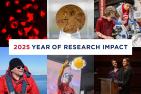
December serves as a reflective month, allowing individuals to consider the achievements of the past year. For Queen’s University, 2025 was marked by significant milestones, including a decade since the awarding of the Nobel Prize in Physics to Dr. Art McDonald and the introduction of a new Strategic Research Plan. This article highlights some of Queen’s most notable research accomplishments throughout the year, ranging from advances in nanoscience to the application of artificial intelligence in legal contexts.
Breakthroughs in Nanoscience
At the forefront of innovation, Queen’s Carbon to Metal Coating Institute (C2MCI) is pioneering the use of thin organic coatings to enhance metal protection. This groundbreaking work has implications far beyond industrial applications. Researchers are exploring how these coatings can be utilized in developing a novel cancer therapy that specifically targets and destroys tumors while preserving healthy cells. The transformative potential of this approach could change the landscape of cancer treatment, offering hope to patients worldwide.
Advancing Legal Accessibility through AI
In efforts to democratize legal support, the Conflict Analytics Lab (CAL) at Queen’s has introduced OpenJustice, a no-code AI platform designed to enhance accessibility for small law firms and pro-bono lawyers. The initiative has garnered substantial backing, receiving $1.3 million in funding to ensure high-quality AI assistance is available for legal professionals across Canada and beyond. This project aims to bridge the gap in legal resources, making it easier for practitioners to navigate complex legal challenges.
Another highlight of 2025 was the recognition of Bhavin Shastri, a leading researcher in physics, engineering physics, and astronomy. His work on neuromorphic photonics, which mimics the brain’s ability to process information in parallel, has positioned him as a key figure in the development of faster and more energy-efficient light-based computing systems. For his significant contributions, he was awarded the prestigious 2025 Sloan Research Fellowship in Physics, underscoring the importance of his research to the future of computing technology.
Together, these achievements reflect Queen’s University’s commitment to pushing the boundaries of knowledge and innovation. The year 2025 not only celebrated past successes but also set the stage for future advancements in various fields. As the university continues to foster research that addresses pressing global challenges, its impact on society is sure to resonate for years to come.

Navigating Life’s Irritations: A Humorous Take on Aging

Saanich Implements Fixed-Fee Water Rate to Stabilize Budgets

Airdrie Town Hall Addresses Classroom Overcrowding Concerns

Saanich Shifts Water Rates to Fixed Fees to Stabilize Budgets

Mobile Clinic Launches to Support Rural Hospitals Near Ottawa

Canadian Doctors Warn U.S. Vaccine Cuts Could Endanger Health

Canada Dismisses Reports of Potential Ban on Social Media Platform X

Hawaii Enacts Law to Ensure Authentic Macadamia Nut Labeling

Richmond Launches Professional Development Series for Artists

SSENSE Co-Founders Secure Deal to Reacquire Luxury Retailer

Brandon University’s Failed $5 Million Project Sparks Oversight Review

Microsoft Confirms U.S. Law Overrules Canadian Data Sovereignty

Winnipeg Celebrates Culinary Creativity During Le Burger Week 2025

Montreal’s Groupe Marcelle Leads Canadian Cosmetic Industry Growth

Tech Innovator Amandipp Singh Transforms Hiring for Disabled

Dragon Ball: Sparking! Zero Launching on Switch and Switch 2 This November

New SĆIȺNEW̱ SṮEȽIṮḴEȽ Elementary Opens in Langford for 2025/2026 Year

Red River College Launches New Programs to Address Industry Needs

Rocket Lab Reports Strong Q2 2025 Revenue Growth and Future Plans

Google Pixel 10 Pro Fold Specs Unveiled Ahead of Launch
-
 Education4 months ago
Brandon University’s Failed $5 Million Project Sparks Oversight Review
-
 Science5 months ago
Microsoft Confirms U.S. Law Overrules Canadian Data Sovereignty
-
 Lifestyle4 months ago
Winnipeg Celebrates Culinary Creativity During Le Burger Week 2025
-
 Health5 months ago
Montreal’s Groupe Marcelle Leads Canadian Cosmetic Industry Growth
-
 Science5 months ago
Tech Innovator Amandipp Singh Transforms Hiring for Disabled
-
 Technology5 months ago
Dragon Ball: Sparking! Zero Launching on Switch and Switch 2 This November
-
 Education5 months ago
New SĆIȺNEW̱ SṮEȽIṮḴEȽ Elementary Opens in Langford for 2025/2026 Year
-
 Education5 months ago
Red River College Launches New Programs to Address Industry Needs
-
 Business4 months ago
Rocket Lab Reports Strong Q2 2025 Revenue Growth and Future Plans
-
 Technology5 months ago
Google Pixel 10 Pro Fold Specs Unveiled Ahead of Launch
-
 Top Stories4 weeks ago
Canadiens Eye Elias Pettersson: What It Would Cost to Acquire Him
-

 Technology3 months ago
Discord Faces Serious Security Breach Affecting Millions
-

 Education5 months ago
Alberta Teachers’ Strike: Potential Impacts on Students and Families
-

 Business1 month ago
EngineAI Unveils T800 Humanoid Robot, Setting New Industry Standards
-

 Business5 months ago
BNA Brewing to Open New Bowling Alley in Downtown Penticton
-

 Science5 months ago
China’s Wukong Spacesuit Sets New Standard for AI in Space
-

 Lifestyle3 months ago
Canadian Author Secures Funding to Write Book Without Financial Strain
-

 Business5 months ago
New Estimates Reveal ChatGPT-5 Energy Use Could Soar
-

 Business5 months ago
Dawson City Residents Rally Around Buy Canadian Movement
-

 Business3 months ago
Hydro-Québec Espionage Trial Exposes Internal Oversight Failures
-

 Technology5 months ago
Future Entertainment Launches DDoD with Gameplay Trailer Showcase
-

 Top Stories4 months ago
Blue Jays Shift José Berríos to Bullpen Ahead of Playoffs
-

 Technology5 months ago
World of Warcraft Players Buzz Over 19-Quest Bee Challenge
-

 Top Stories3 months ago
Patrik Laine Struggles to Make Impact for Canadiens Early Season