
Technology
Innovative Exoskeleton Empowers Injured Dogs to Relearn Movement

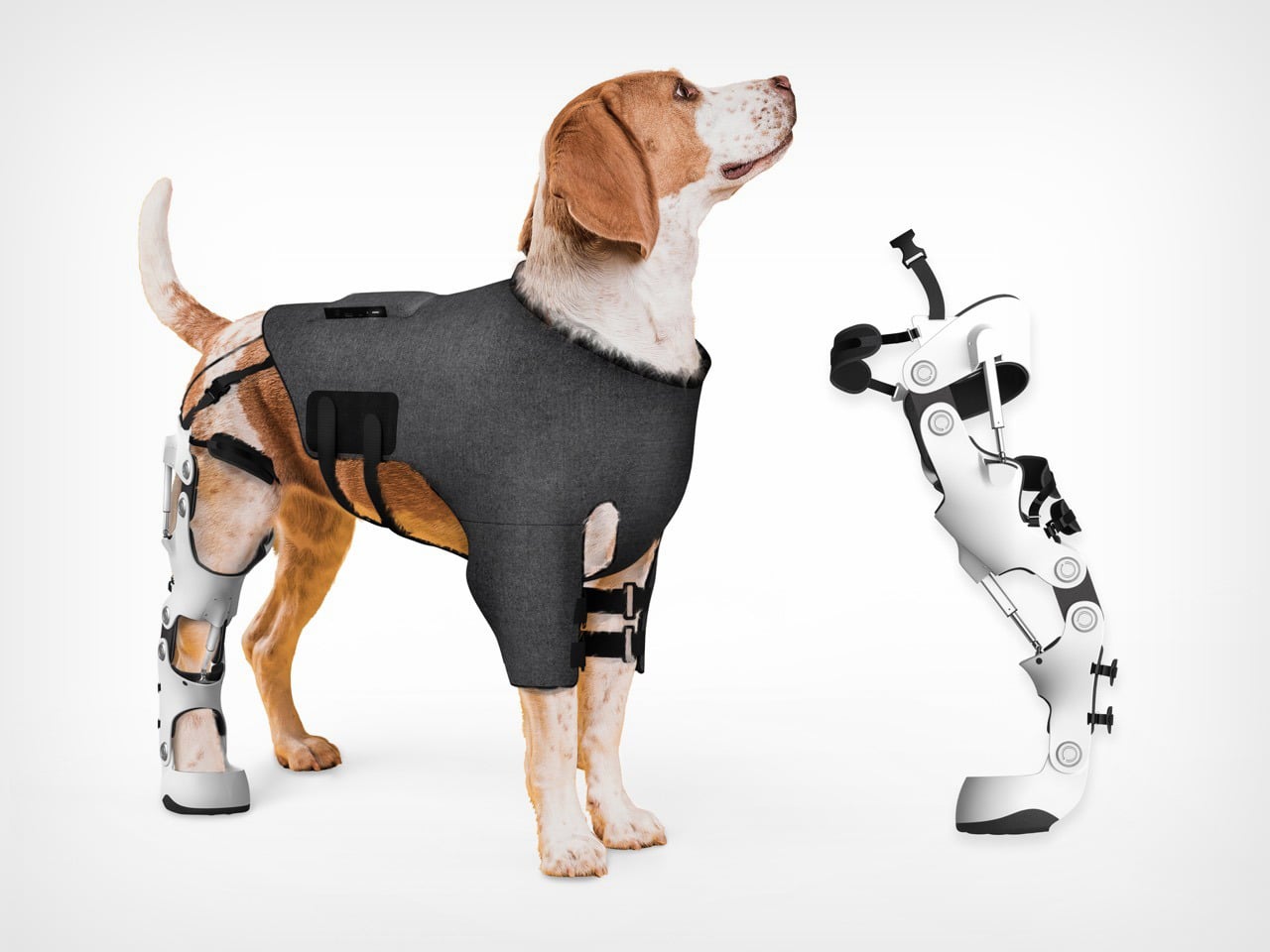
A groundbreaking rehabilitation device, the Pet Power Assistive Exoskeleton, is enabling injured dogs to regain their ability to move in a more natural and supportive manner. Designed by Leijing Zhou, this innovative solution uses advanced technology to help pets recover from mobility issues, merging emotional insight with engineering expertise.
The inspiration for this project stemmed from a news report about prosthetic limbs for disabled pets. While these existing solutions were well-meaning, they often lacked comfort and adaptability, failing to provide adequate support for recovery. Zhou’s own experience caring for a dog with a hind limb injury highlighted the need for a more effective rehabilitation approach. This led to the realization that while human rehabilitation technology has advanced significantly, similar progress in animal care remains limited.
The Pet Power Assistive Exoskeleton distinguishes itself by focusing on understanding a dog’s intentions rather than imposing movement. Utilizing principles from active exoskeleton systems in stroke rehabilitation, the device employs surface electromyographic sensors to detect muscle signals from a dog’s healthy forelimb. As the animal attempts to move, these signals are analyzed in real time, allowing the system to predict necessary movements for the impaired hind limb. This method enables the device to activate precise mechanical assistance, aligning the injured leg with the dog’s natural movements.
This collaborative approach transforms rehabilitation into a supportive experience, where the dog leads the process and the technology adapts. As a result, movement becomes more fluid and instinctive, encouraging proper gait patterns and contributing to a more confident recovery.
Personalization is a key aspect of the design. Each dog has distinct physical characteristics and injury profiles, which is why the exoskeleton is crafted using advanced 3D printing techniques based on individual body scans. This ensures a customized fit that distributes weight evenly, enhancing comfort and stability. The use of lightweight materials, soft memory foam padding, and non-slip surfaces prioritizes long-term wearability, making the device suitable for both clinical rehabilitation and everyday activities.
Development of the Pet Power Assistive Exoskeleton took place between 2023 and March 2025 in Hangzhou, requiring extensive research and iterative testing. One significant challenge was the interpretation of muscle signals in animals, an area with limited existing data. The process involved translating biological signals into reliable movement predictions through repeated field tests and careful observation of canine behavior. Additionally, designers faced the complexity of creating a robust structure that could assist movement while remaining gentle and non-restrictive.
Ultimately, the Pet Power Assistive Exoskeleton signifies a pivotal shift in veterinary care, viewing pets not merely as recipients of aid but as active participants in their rehabilitation. By combining empathy with intelligent technology, this project aims to restore not just mobility, but also dignity and independence to animals, allowing them to experience the joy of movement once more.

iShares Core Dividend Growth ETF Faces Challenges; Alternatives Suggested

Discover 7 Scenic Hikes Near Calgary to Explore This Spring

Scientists Uncover Life’s Building Blocks in Ryugu Asteroid Samples

Windsor-Essex Unveils New Action Plan to Combat Substance Use

Boost Your Business Visibility with These Local SEO Strategies

East Algoma OPP Urges Public to Limit Travel Amid Hazardous Conditions

Universities Must Rethink Failure to Support Student Growth

Canada Invests $6.4 Million to Boost Green Shipping Corridors

Stony Plain Secures 14th Consecutive Award for Financial Reporting Excellence

Rhythm Pharmaceuticals Reports Strong Q4 Growth Ahead of FDA Decision

Brandon University’s Failed $5 Million Project Sparks Oversight Review

Microsoft Confirms U.S. Law Overrules Canadian Data Sovereignty

Winnipeg Celebrates Culinary Creativity During Le Burger Week 2025

Discover Aritzia’s Latest Fashion Trends: A Comprehensive Review

New SĆIȺNEW̱ SṮEȽIṮḴEȽ Elementary Opens in Langford for 2025/2026 Year

EngineAI Unveils T800 Humanoid Robot, Setting New Industry Standards

Montreal’s Groupe Marcelle Leads Canadian Cosmetic Industry Growth

Tech Innovator Amandipp Singh Transforms Hiring for Disabled

Dragon Ball: Sparking! Zero Launching on Switch and Switch 2 This November

Digg Relaunches as Founders Kevin Rose and Alexis Ohanian Join Forces
-
 Education7 months ago
Brandon University’s Failed $5 Million Project Sparks Oversight Review
-
 Science8 months ago
Microsoft Confirms U.S. Law Overrules Canadian Data Sovereignty
-
 Lifestyle7 months ago
Winnipeg Celebrates Culinary Creativity During Le Burger Week 2025
-
 Lifestyle4 months ago
Discover Aritzia’s Latest Fashion Trends: A Comprehensive Review
-
 Education7 months ago
New SĆIȺNEW̱ SṮEȽIṮḴEȽ Elementary Opens in Langford for 2025/2026 Year
-
 Business4 months ago
EngineAI Unveils T800 Humanoid Robot, Setting New Industry Standards
-
 Health8 months ago
Montreal’s Groupe Marcelle Leads Canadian Cosmetic Industry Growth
-
 Science8 months ago
Tech Innovator Amandipp Singh Transforms Hiring for Disabled
-
 Technology8 months ago
Dragon Ball: Sparking! Zero Launching on Switch and Switch 2 This November
-
 Technology3 months ago
Digg Relaunches as Founders Kevin Rose and Alexis Ohanian Join Forces
-
 Top Stories4 months ago
Canadiens Eye Elias Pettersson: What It Would Cost to Acquire Him
-

 Lifestyle4 weeks ago
Canmore’s Le Fournil Bakery to Close After 14 Successful Years
-

 Health6 months ago
Eganville Leader to Close in 2026 After 123 Years of Reporting
-

 Education8 months ago
Red River College Launches New Programs to Address Industry Needs
-

 Top Stories4 months ago
Nicol Brothers Shine as Wheat Kings Dominate U18 AAA Hockey
-

 Business7 months ago
Rocket Lab Reports Strong Q2 2025 Revenue Growth and Future Plans
-

 Business8 months ago
BNA Brewing to Open New Bowling Alley in Downtown Penticton
-

 Education6 months ago
Alberta Petition Aims to Redirect Funds from Private to Public Schools
-

 Education8 months ago
Alberta Teachers’ Strike: Potential Impacts on Students and Families
-

 Technology6 months ago
Discord Faces Serious Security Breach Affecting Millions
-

 Technology8 months ago
Google Pixel 10 Pro Fold Specs Unveiled Ahead of Launch
-

 Lifestyle5 months ago
Edmonton’s Beloved Evolution Wonderlounge Closes, New Era Begins
-

 Business7 months ago
Iconic Golden Lion Restaurant in South Surrey to Close After 50 Years
-

 Science8 months ago
China’s Wukong Spacesuit Sets New Standard for AI in Space