
Science
Farmers Test Deep Banding Technique to Enhance Crop Efficiency

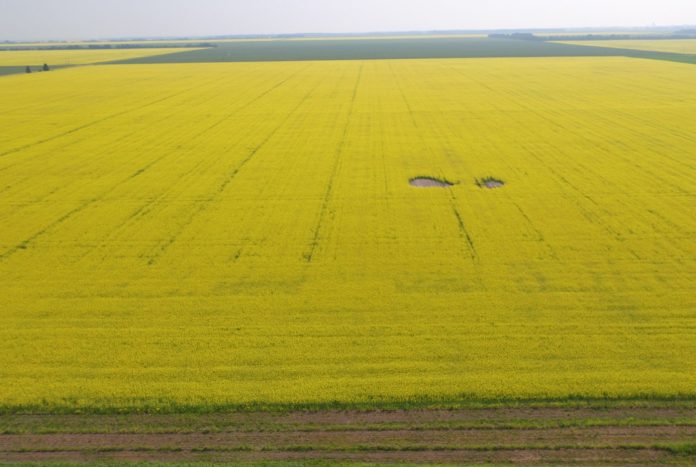
Farmers in the South Peace region are exploring a new agricultural technique known as deep banding, which promises to improve crop efficiency and reduce costs. This method involves injecting essential nutrients like phosphorus and potassium into the soil at depths of four to six inches, rather than applying them at the surface. By reducing the frequency of fertilizer applications, farmers hope to streamline their operations while maintaining soil fertility.
SARDA Ag Research has been instrumental in this initiative, collaborating closely with local producers to test the effectiveness of deep banding. The technique is particularly beneficial for no-till or reduced-tillage farming, where traditional methods of nutrient application may not be as effective.
Norm Boulet, a grain farmer involved in the trial, explained that the conventional practice typically requires farmers to apply nitrogen fertilizer in the fall to prepare for the following year’s crop. He noted, “Deep banding the nutrient speeds up seeding by reducing the amount of products we have to deal with through the drill at seeding.” By placing nutrients deeper in the soil, they become more accessible to plant roots when needed, potentially enhancing crop growth.
During the trial, Boulet’s farm deep banded 200 lbs per acre of phosphorus fertilizer, a significant increase from the usual 50 lbs per acre applied at seeding time. The aim was to ensure sufficient nutrients were available for up to four years, aligning with the farm’s crop rotation schedule. “We were not expecting a yield increase but were concerned that as the phosphorus was used up over time, we might see a yield decrease,” Boulet stated.
The trials, which began in 2021, involved a 50-acre field where the residual phosphorus was deep banded. Boulet highlighted that preliminary results showed no yield loss over the initial years, which is a promising indicator for the method’s viability.
The research also emphasizes the economic advantages of deep banding. Farmers can purchase fertilizers in the fall when prices are generally lower, potentially leading to significant savings on input costs. Boulet expressed that if this practice proves effective, it could reduce labor and handling during the busy spring planting season. “If I were to be offered a very good price on MAP in the fall and had the time to deep band the product, I would certainly consider it,” he added.
The trial focused on using monoammonium phosphate (MAP), which contains 11 percent nitrogen and 52 percent phosphorus. Boulet explained that phosphorus is not very mobile in the soil, making it crucial to apply it at a depth where it will not be disturbed by typical farming operations. “We wanted to ensure it was low enough it wouldn’t be disturbed and brought to the surface with our normal seeding or tillage operations,” he noted.
In terms of yield and grain quality, Boulet reported that the trial yielded results consistent with traditional methods. “We harvested strips on and off the treatment area and weighed the samples using the grain cart which is equipped with scales,” he said. The findings indicated that deep banding did not adversely affect yield or quality, which included measurements of protein, bushel weight, and grading.
The potential benefits of deep banding could be especially significant for farmers with smaller equipment. Boulet mentioned that those using air drills with limited compartments could find deep banding advantageous, allowing them to carry more seed or different fertilizers at planting time. This efficiency could enable them to cover more acres per day and better utilize available soil moisture.
While the trials have been promising, Boulet shared that the economic landscape for fertilizers fluctuated dramatically in the years following the trial’s establishment, making the adoption of deep banding more complex. “Unfortunately, fertilizer prices jumped drastically the year following the trial establishment and adopting it didn’t seem to make economic sense for us,” he noted.
In conclusion, the deep banding trial conducted by SARDA Ag Research represents a significant effort to modernize agricultural practices in the South Peace region. Boulet’s experience underlines the importance of research and adaptation in farming, as well as the potential of innovative practices to improve both productivity and cost-efficiency. For further information on deep banding techniques, interested parties can contact the SARDA Ag Research office at (780) 837-2900.

Navigating Life’s Irritations: A Humorous Take on Aging

Saanich Implements Fixed-Fee Water Rate to Stabilize Budgets

Airdrie Town Hall Addresses Classroom Overcrowding Concerns

Saanich Shifts Water Rates to Fixed Fees to Stabilize Budgets

Mobile Clinic Launches to Support Rural Hospitals Near Ottawa

Canadian Doctors Warn U.S. Vaccine Cuts Could Endanger Health

Canada Dismisses Reports of Potential Ban on Social Media Platform X

Hawaii Enacts Law to Ensure Authentic Macadamia Nut Labeling

Richmond Launches Professional Development Series for Artists

SSENSE Co-Founders Secure Deal to Reacquire Luxury Retailer

Brandon University’s Failed $5 Million Project Sparks Oversight Review

Microsoft Confirms U.S. Law Overrules Canadian Data Sovereignty

Winnipeg Celebrates Culinary Creativity During Le Burger Week 2025

Montreal’s Groupe Marcelle Leads Canadian Cosmetic Industry Growth

Tech Innovator Amandipp Singh Transforms Hiring for Disabled

Dragon Ball: Sparking! Zero Launching on Switch and Switch 2 This November

New SĆIȺNEW̱ SṮEȽIṮḴEȽ Elementary Opens in Langford for 2025/2026 Year

Red River College Launches New Programs to Address Industry Needs

Rocket Lab Reports Strong Q2 2025 Revenue Growth and Future Plans

Google Pixel 10 Pro Fold Specs Unveiled Ahead of Launch
-
 Education4 months ago
Brandon University’s Failed $5 Million Project Sparks Oversight Review
-
 Science5 months ago
Microsoft Confirms U.S. Law Overrules Canadian Data Sovereignty
-
 Lifestyle4 months ago
Winnipeg Celebrates Culinary Creativity During Le Burger Week 2025
-
 Health5 months ago
Montreal’s Groupe Marcelle Leads Canadian Cosmetic Industry Growth
-
 Science5 months ago
Tech Innovator Amandipp Singh Transforms Hiring for Disabled
-
 Technology5 months ago
Dragon Ball: Sparking! Zero Launching on Switch and Switch 2 This November
-
 Education5 months ago
New SĆIȺNEW̱ SṮEȽIṮḴEȽ Elementary Opens in Langford for 2025/2026 Year
-
 Education5 months ago
Red River College Launches New Programs to Address Industry Needs
-
 Business4 months ago
Rocket Lab Reports Strong Q2 2025 Revenue Growth and Future Plans
-
 Technology5 months ago
Google Pixel 10 Pro Fold Specs Unveiled Ahead of Launch
-
 Top Stories4 weeks ago
Canadiens Eye Elias Pettersson: What It Would Cost to Acquire Him
-

 Technology3 months ago
Discord Faces Serious Security Breach Affecting Millions
-

 Education5 months ago
Alberta Teachers’ Strike: Potential Impacts on Students and Families
-

 Business1 month ago
EngineAI Unveils T800 Humanoid Robot, Setting New Industry Standards
-

 Business5 months ago
BNA Brewing to Open New Bowling Alley in Downtown Penticton
-

 Science5 months ago
China’s Wukong Spacesuit Sets New Standard for AI in Space
-

 Lifestyle3 months ago
Canadian Author Secures Funding to Write Book Without Financial Strain
-

 Business5 months ago
New Estimates Reveal ChatGPT-5 Energy Use Could Soar
-

 Business5 months ago
Dawson City Residents Rally Around Buy Canadian Movement
-

 Business3 months ago
Hydro-Québec Espionage Trial Exposes Internal Oversight Failures
-

 Technology5 months ago
Future Entertainment Launches DDoD with Gameplay Trailer Showcase
-

 Top Stories4 months ago
Blue Jays Shift José Berríos to Bullpen Ahead of Playoffs
-

 Technology5 months ago
World of Warcraft Players Buzz Over 19-Quest Bee Challenge
-

 Top Stories3 months ago
Patrik Laine Struggles to Make Impact for Canadiens Early Season