
Lifestyle
New Bridge Name Ignites Debate Over Historical Significance

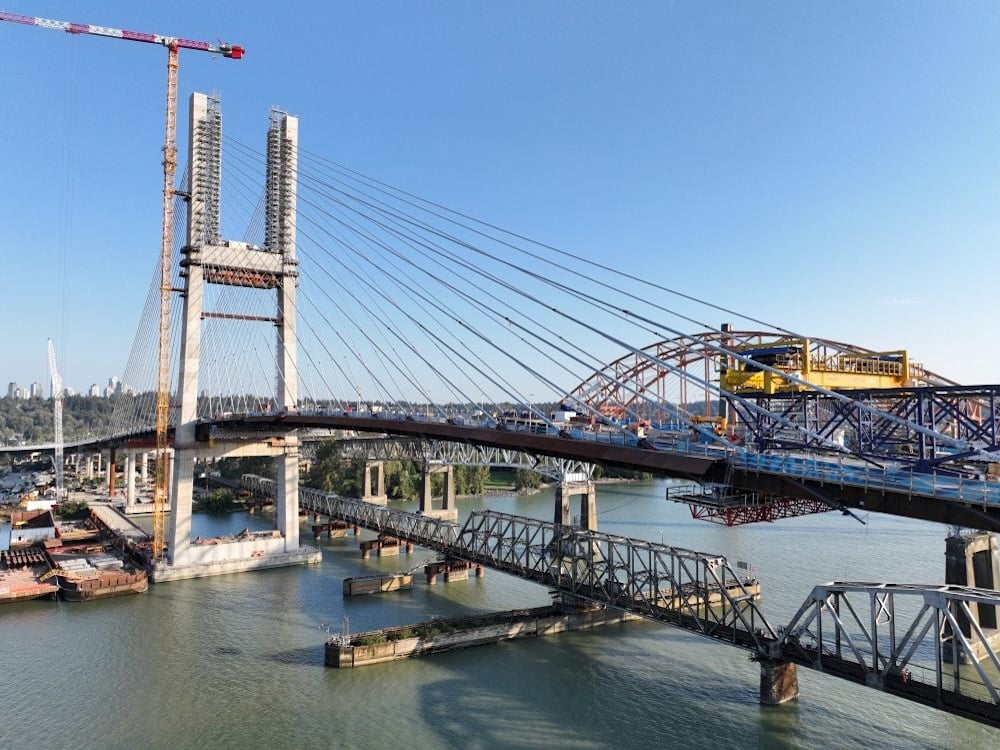
The newly named bridge connecting Surrey and New Westminster, known as stal̓əw̓asəm, has sparked significant debate since its announcement on Monday. Critics on social media have expressed concern that the decision to move away from the traditional name “Pattullo” erases historical context. However, proponents assert that the new name encapsulates a deeper aspect of shared history between First Nations and non-Indigenous Canadians.
stal̓əw̓asəm (pronounced “stall-o-awesome”) was gifted to the province by the Kwantlen First Nation and the Musqueam Indian Band. In Indigenous culture, names are considered valuable possessions, and the act of gifting one signifies deep respect and significance. The bridge is located on the site of the former village of qiqéyt (pronounced “qay’qayt”), a historic point of First Contact between Indigenous peoples and European settlers.
The name qiqéyt derives from the word “qay,” meaning death, and emphasizes the historical practice of interring bodies in trees, a custom steeped in cultural significance. This village was a vibrant fishing community surrounded by red berries and featured a central longhouse used for worship. Salmon runs originating from qiqéyt attracted people from across the region.
Historically, the Kwantlen First Nation played a crucial role during a famine that struck the area, providing food relief to the Kwikwetlem people in exchange for labor to reclaim marshy land for village expansion. This labor contributed to the infrastructure that supports the bridge today.
In 1808, Simon Fraser undertook a significant journey commissioned by the North West Company to explore the Pacific region. His expedition led him to qiqéyt, where he met Whattlekainum, an influential leader of the Kwantlen. The meeting was marked by hospitality but also tension, as Fraser disregarded local warnings about potential conflicts with the Musqueam people. His arrogance nearly led to disaster, but Whattlekainum intervened, ensuring Fraser’s safe passage through the territory.
The bridge’s name is not merely a geographic label; it reflects the rich history of collaboration and conflict that has shaped the region. The area where the stal̓əw̓asəm bridge now stands symbolizes the wealth and generosity of the Kwantlen people, as well as their enduring connection to the land and its waterways.
As discussions continue regarding the bridge’s name, some critics have raised valid points about the representation of Indigenous languages. There is a call for transparency in how names are transliterated into English. While the name stal̓əw̓asəm may pose challenges in pronunciation for some, it carries immense cultural weight. The name combines “stal̓əw̓,” referring to both the river and the Indigenous people of the land, and “asəm,” meaning viewing point. This encapsulates not only a physical viewpoint of the river but also the historical narrative of the Stó:lō people, of whom the Kwantlen are a part.
In the broader context, the decision to rename the bridge reflects a growing recognition of Indigenous history in British Columbia. The site has endured numerous transformations over the centuries, from being a thriving village to facing the encroachment of settlers and infrastructure projects such as the railroad and the original bridge.
The stal̓əw̓asəm bridge represents a new chapter in the ongoing story of reconciliation and recognition of Indigenous contributions to the area. As the community grapples with the implications of this name change, it serves as a reminder of the complex history that continues to shape relationships among the region’s diverse populations.

Navigating Life’s Irritations: A Humorous Take on Aging

Saanich Implements Fixed-Fee Water Rate to Stabilize Budgets

Airdrie Town Hall Addresses Classroom Overcrowding Concerns

Saanich Shifts Water Rates to Fixed Fees to Stabilize Budgets

Mobile Clinic Launches to Support Rural Hospitals Near Ottawa

Canadian Doctors Warn U.S. Vaccine Cuts Could Endanger Health

Canada Dismisses Reports of Potential Ban on Social Media Platform X

Hawaii Enacts Law to Ensure Authentic Macadamia Nut Labeling

Richmond Launches Professional Development Series for Artists

SSENSE Co-Founders Secure Deal to Reacquire Luxury Retailer

Brandon University’s Failed $5 Million Project Sparks Oversight Review

Microsoft Confirms U.S. Law Overrules Canadian Data Sovereignty

Winnipeg Celebrates Culinary Creativity During Le Burger Week 2025

Montreal’s Groupe Marcelle Leads Canadian Cosmetic Industry Growth

Tech Innovator Amandipp Singh Transforms Hiring for Disabled

Dragon Ball: Sparking! Zero Launching on Switch and Switch 2 This November

New SĆIȺNEW̱ SṮEȽIṮḴEȽ Elementary Opens in Langford for 2025/2026 Year

Red River College Launches New Programs to Address Industry Needs

Rocket Lab Reports Strong Q2 2025 Revenue Growth and Future Plans

Google Pixel 10 Pro Fold Specs Unveiled Ahead of Launch
-
 Education4 months ago
Brandon University’s Failed $5 Million Project Sparks Oversight Review
-
 Science5 months ago
Microsoft Confirms U.S. Law Overrules Canadian Data Sovereignty
-
 Lifestyle4 months ago
Winnipeg Celebrates Culinary Creativity During Le Burger Week 2025
-
 Health5 months ago
Montreal’s Groupe Marcelle Leads Canadian Cosmetic Industry Growth
-
 Science5 months ago
Tech Innovator Amandipp Singh Transforms Hiring for Disabled
-
 Technology5 months ago
Dragon Ball: Sparking! Zero Launching on Switch and Switch 2 This November
-
 Education5 months ago
New SĆIȺNEW̱ SṮEȽIṮḴEȽ Elementary Opens in Langford for 2025/2026 Year
-
 Education5 months ago
Red River College Launches New Programs to Address Industry Needs
-
 Business4 months ago
Rocket Lab Reports Strong Q2 2025 Revenue Growth and Future Plans
-
 Technology5 months ago
Google Pixel 10 Pro Fold Specs Unveiled Ahead of Launch
-
 Top Stories4 weeks ago
Canadiens Eye Elias Pettersson: What It Would Cost to Acquire Him
-

 Technology3 months ago
Discord Faces Serious Security Breach Affecting Millions
-

 Education5 months ago
Alberta Teachers’ Strike: Potential Impacts on Students and Families
-

 Business1 month ago
EngineAI Unveils T800 Humanoid Robot, Setting New Industry Standards
-

 Business5 months ago
BNA Brewing to Open New Bowling Alley in Downtown Penticton
-

 Science5 months ago
China’s Wukong Spacesuit Sets New Standard for AI in Space
-

 Lifestyle3 months ago
Canadian Author Secures Funding to Write Book Without Financial Strain
-

 Business5 months ago
New Estimates Reveal ChatGPT-5 Energy Use Could Soar
-

 Business5 months ago
Dawson City Residents Rally Around Buy Canadian Movement
-
 Business3 months ago
Hydro-Québec Espionage Trial Exposes Internal Oversight Failures
-

 Technology5 months ago
Future Entertainment Launches DDoD with Gameplay Trailer Showcase
-

 Top Stories4 months ago
Blue Jays Shift José Berríos to Bullpen Ahead of Playoffs
-

 Technology5 months ago
World of Warcraft Players Buzz Over 19-Quest Bee Challenge
-

 Top Stories3 months ago
Patrik Laine Struggles to Make Impact for Canadiens Early Season